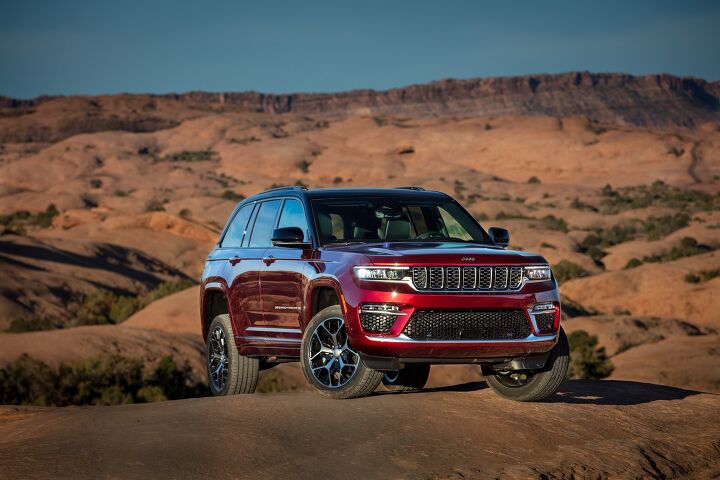
Jeep looks like it may indeed bring the V8 back to the Grand Cherokee. Having faced some stiff criticism after moving away from Hemi-powered platforms, Stellantis seems to be doing what it can to appease Mopar fans across numerous brands.
News comes by way of The Drive, which asked Joe Aljajawi — who served as Stellantis’ Vehicle Integration and Validation Manager for the current Jeep Grand Cherokee — about the odds of restoring the V8 to the model.
“I would say for the Grand Cherokee customers that we are listening to you, and then stay tuned for more,” Aljajawi said.
That’s hardly a promise. But it’s also pretty suggestive, especially considering how keen the company has been on bringing back V8 options as a sign of good faith to customers.
Jeep dropped the Hemi V8 after Stellantis took over the former FCA brands and started downsizing powertrains across the board. On the Grand Cherokee, the 5.7-liter V8 was available until 2023. The long-wheelbase variant would follow suit in 2024, leaving the model with just the 3.6-liter Pentastar V6.
The plug-in hybrid 4xe variant has been discontinued moving forward. However, the 2026 model year will receive the new 2.0-liter “Hurricane 4 Turbo” that we’ll be discussing later.
Having tested the 3.0-liter, twin-turbo, inline, six-cylinder Hurricane Stellantis leveraged as a replacement on numerous models formerly equipped with the 5.7-liter V8, there’s actually very little to gripe about from an experiential standpoint. It’s smooth and offers oodles of power. But it’s not been made available on the Grand Cherokee.
One could argue that, if it weren’t for packaging issues and Americans strongly gravitating to the sound of a V8, there would be no real reason for the company to bother bringing back the Hemi.
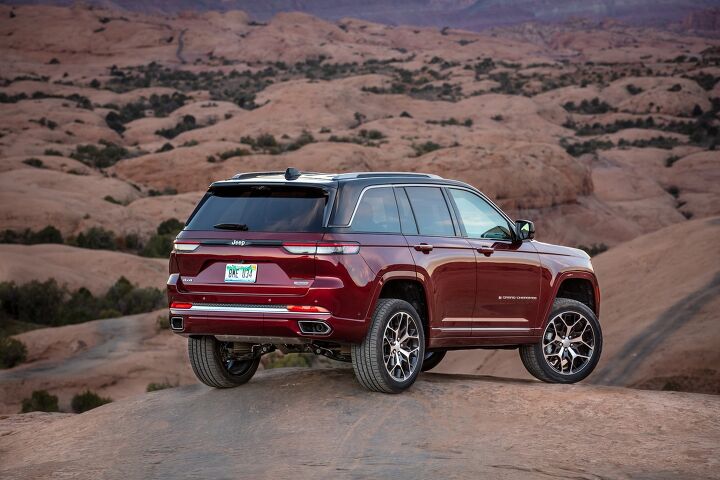
However, there are reasons to prefer the V8 that come down to more than matters of taste.
For starters, V8-equipped models typically offer more towing capacity. Older Grand Cherokees running on eight cylinders yielded tow ratings that were a half-ton better than what’s available currently. While towing may be something we tend to associate more with pickup trucks, SUVs do plenty and this kind of thing undoubtedly matters to customers.
Another major issue is one of perceived luxury and overall value. We have seen loads of brands downsizing engines in recent years in an effort to reduce production costs and appease emission regulators — only to cheese off their clientele in the process.
On some models this is fine, perhaps even desirable if it results in a noticeable improvement in fuel economy or overall performance. Car buyers would likewise be enamored if the tiny powertrain trend resulted in lower MSRPs. But we haven’t really seen that happening and people aren’t broadly purchasing large SUVs because they’re interested in hypermiling or seeing how much money they can save.
With Jeep positioning a 2.0-liter turbo four produces 324 horsepower and 332 pound-feet of torque as the next new engine for the Grand Cherokee, there are also concerns regarding longevity. One cannot help but wonder how the unit will cope with years of hard use compared to an under-stressed V8 boasting even better power figures. Meanwhile, the true purpose of that unit is being called into question as the United States has finally reduced emission standards.
One of the biggest reasons automakers have been pushing SUVs and pickups was due to the fact that they were given more leeway by the government in terms of emissions. This is also why smaller cars began to fall out of favor. Automakers weren’t prioritizing their development or marketing because they were harder to make compliant with regulators and boasted weaker profit margins.
But we’re now seeing some of the smallest engines currently available being fitted to some of the heaviest vehicles ever produced. That’s fine when it’s being supplanted by hybridization and the resulting powertrains have proven themselves as bulletproof and just as capable as their predecessors. However, this hasn’t been the case either.
While hybrids and turbochargers can often make up the difference in terms of power and fuel economy, they can also result in added cost, weight, and complexity. These days, customers are frequently paying more for vehicles that give with one hand while taking away with the other. With emissions softening in the U.S., there may be fewer reasons to make those compromises and fewer excuses for automakers to adhere to the trend of powertrain downsizing.
In the long term, engineers will undoubtedly develop smaller hybrid units that would absolutely embarrass today’s largest combustion engines in every conceivable metric. But we’re tragically forced to live in the present and have to cope accordingly.
However, Stellantis bringing back the V8 at a price point that mimics what we saw before 2023 seems unlikely. Odds are good that Jeep will attempt to make the large motors part of a premium package, likely gatekeeping it behind the Grand Cherokee’s highest trim levels. Paying more money for a larger engine is to be expected. We’re just concerned that Jeep might use the concept of scarcity to see how much it can get customers to pay for the Hemi badge.
But that’s all speculative until the automaker says otherwise.
[Images: Jeep]
Become a TTAC insider. Get the latest news, features, TTAC takes, and everything else that gets to the truth about cars first by subscribing to our newsletter.
via Autobuzz Today
Comments
Post a Comment