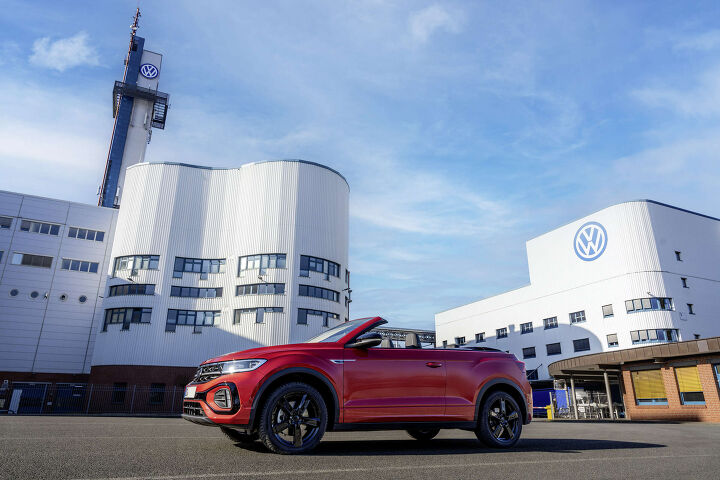
Volkswagen is reportedly in the midst of discussions with an Israeli defense company, named Rafael Advanced Defense Systems, about converting its Osnabrück plant to produce weapons. The facility was reportedly in danger of being shuttered indefinitely, with the deal being framed as a way to retain over 2,000 local jobs.
Volkswagen Group apparently has ethical concerns regarding the production of offensive weapons, so the talks are reportedly focused on the prospect of the facility manufacturing components for Israel’s “Iron Dome” missile defense network.
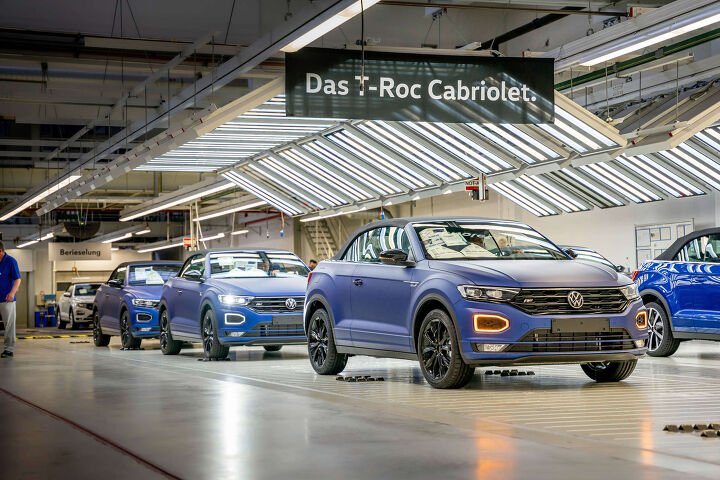
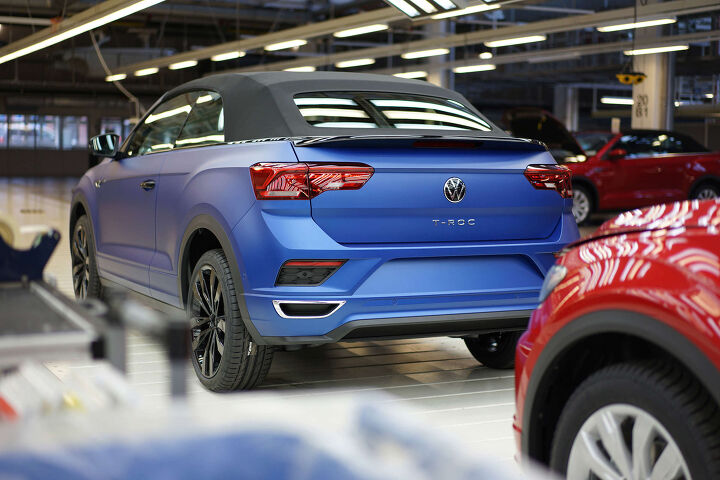
According to the Financial Times, VW had previously been in talks with German arms and armored vehicle manufacturer Rheinmetall. The Osnabrück facility is presently responsible for building the Volkswagen T-Roc Cabriolet (pictured), which is slated to end production by the middle of 2027. But that deal is rumored to have stagnated, despite the duo having worked together in the past on military trucks.
Details about the prospective arrangement with Rafael Advanced Defense Systems are limited. Volkswagen has clearly been trying to decide what it should do with its Osnabrück plant and just about everything seems to be on the table. Volkswagen has suggested leasing the plant to other companies, using it to build low-volume specialty vehicles from one of its subbrands, or simply selling it off to another business.
It sounds as though the deal would be a collaborative project where VW manufactured components on behalf of the Israeli weapons firm. But the company has been unwilling to confirm anything with the press and has been very careful to avoid language that would make it sound like it’s producing weapons.
"The production of weapons by Volkswagen AG remains ruled out," a spokesperson recently told Euronews Business, adding that it did not want to "engage in speculation regarding further plans for the Osnabrück site."
While it confirmed that it was "in dialogue with various market players,” it stated that nothing concrete had been decided. Still, there are numerous outlets suggesting insiders are confirming the deal as more-or-less completed.
Considering that automakers are looking at declining volumes and mounting global conflict, military contracts may become highly sought after. People may not be able to afford to buy modern automobiles at the rates they used to. But governments may still be willing to leverage tax dollars to pay for weapons systems as war continues to spread.
Most of the world’s largest automakers have spent at least some of their time moonlighting as weapons manufacturers. A few have even kept one foot in the door in the hopes of garnering lucrative government contracts. For example, General Motors has a division wholly devoted to military applications called GM defense.
But it’s more common to see brands pivoting manufacturing efforts as needed. Volkswagen originated as a union-backed initiative to create affordable, reliable cars at the behest of the German government in 1937. But it only took a couple of years before World War II broke out in earnest and its facilities were repurposed to produce military vehicles.
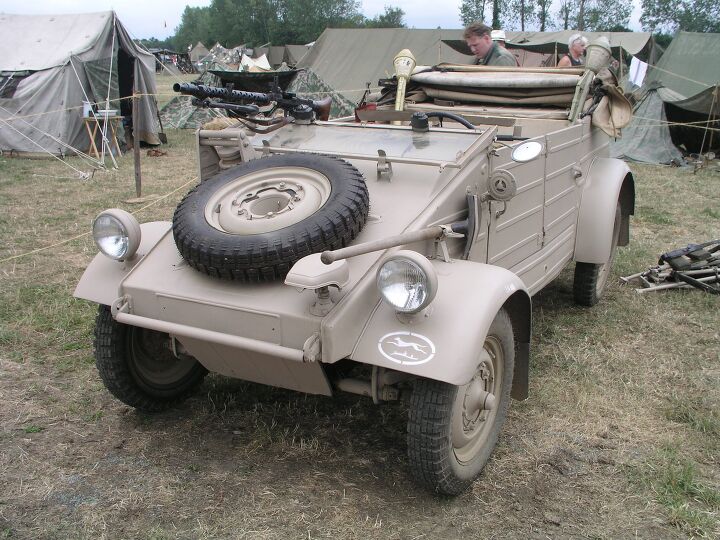
The company continued building military vehicles after the war, primarily for the British and American armies, and would sporadically manufacture units for the German army during the Cold War. But it really hasn’t done much since then.
Considering that Germany has been strengthening its relationship with Israel in recent years, the deal with VW seems plausible. Germany even expanded its deal for the Israeli-made Arrow-3 hypersonic missile defense to the tune of $6.5 billion last December. The European nation has also been buying Israeli-designed trophy systems to be adapted for military vehicles and there’s even been talk of establishing an “Iron Dome” over German airspace.
That alone might be sufficient to solidify plans for Volkswagen’s Osnabrück factory. But the unionized labor force would still need to sign onto the plan. While government support of Israel remains quite strong, civilian support has been on the decline. A poll referenced by the Jerusalem Post in 2025 even suggested that a majority of Germans (62 percent) strongly opposed Israeli military actions — potentially confronting VW’s Osnabrück employees with a difficult decision.
Volkswagen isn’t doing well right now and already has a deal with the relevant labor union to eliminate roughly 40,000 jobs over the next several years. Those people will eventually need jobs.
Meanwhile, European automakers have shown a general willingness to spend more of their R&D budget on military programs — presumably in anticipation that they’ll be able to profit during wartime while economic conditions make it more difficult to sell automobiles.
Renault is preparing to manufacture long-range drones. While these were originally framed these as “defensive drones” to be used for surveillance, they can and will be adapted to carry munitions should the military wish to use them in attacking targets. Stellantis likewise looked to be considering manufacturing weapons, especially in Italy, as a way to cope with declining vehicle sales. However, corporate leadership has since expressed that it doesn’t see its future overlapping with the defense industry.
That said, Stellantis still provides vehicles for law enforcement and government agencies, some of which featured armor and turrets used for mounting weapons. The latter units come by way of corporate partnerships with businesses like the Canadian defense firm Roshel and are quite common within the industry. Just about every high-volume automaker on the planet sells something to government entities — even if they don’t technically qualify as defense contracts.
[Images: Volkswagen Group; Flying Camera/Shutterstock]
Become a TTAC insider. Get the latest news, features, TTAC takes, and everything else that gets to the truth about cars first by subscribing to our newsletter.
via Autobuzz Today
Comments
Post a Comment