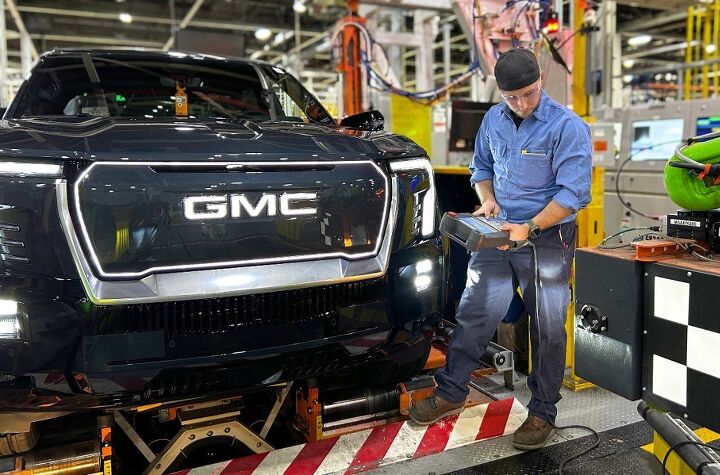
General Motors’ Factory Zero is certainly living up to its name. Production at the facility has been paused again, resulting in roughly 1,300 workers being laid off.
Responsible for manufacturing the GMC Hummer, GMC Sierra, Chevrolet Silveradio, and Cadillac Escalade IQ EVs, the plant has experienced numerous production stalls. Hiccups first manifested during April of 2025, when GM leadership began to fret over production schedules. Limited layoffs followed.
By October, the company had already pivoted Factory Zero to a manufacturing schedule of just two shifts. This was done in tandem with broader restructuring efforts targeting EV operations. All told, nearly 3,500 workers were presumed to have been laid off. Heading into November, Factory Zero was subsequently idled for about a month to further cope with insufficient demand.
Operations would resume by the start of 2026. However, General Motors announced that Factory Zero would be losing another shift on January 5th.
The latest closure began on March 16th and will reportedly last until April 13th, according to the company. "Factory Zero will temporarily adjust production to align EV production with market demand," spokesperson Kevin Kelly was quoted as saying by The Detroit News. "Impacted employees will be placed on a temporary layoff and may be eligible for subpay and benefits in accordance with the GM-UAW national contract.”
The UAW is trying to remain optimistic about the situation.

“I just hope we can bounce back, especially when gas prices are rising,” UAW Local 22 President James Cotton told The Drive this week. “I think EVs are the future.”
Automakers and the UAW had better hope that EVs are the future, because they certainly are not the present. We recently covered how automotive finance departments are stressing over the value of secondhand electrics coming off-lease. But this is just a drop in the bucket, considering the astronomical levels of money automakers have spent on developing electric vehicles and establishing the necessary manufacturing capabilities.
Over $2 billion was spent just converting the century-old Detroit-Hamtramck Assembly (a former Chrysler plant purchased by GM in 1985) into the modernized “Factory Zero.” The facility was supposed to serve as the physical representation of General Motors’ commitment to electrification — which seems fitting considering how badly it has struggled.
Last year, General Motors reported that it had spent around $7 billion (globally) drawing down EV operations due to insufficient demand. That’s not even the money the company spent to establish new facilities or finalize EV development programs, that’s just what it spent in order to address how poorly the electrification strategy had been executed.

Domestic demand for electrified models has fallen way below industry estimates. But things haven’t played out well in China either. Western manufacturing had made all manner of deals in Central Asia, even partnering with Chinese brands by effectively handing over their technology, in order to gain access to the market.
The original assumption was that Chinese customers would eventually embrace Western brands in a manner similar to what the Japanese experienced in North America. While Chinese drivers did seem drawn to a few premium nameplates. The locals overwhelmingly prefer Chinese EVs and have even begun to spurn foreign combustion models as economic conditions worsen. While some claim to see it as their patriotic duty to buy from the homeland, Chinese buyers also prioritize domestic brands simply because they tend to be more affordable.
Obviously, the above has negatively impacted General Motors’ EV aspirations on a global scale. But the very premise that Factory Zero wasn’t going to encounter problems is similarly laughable.
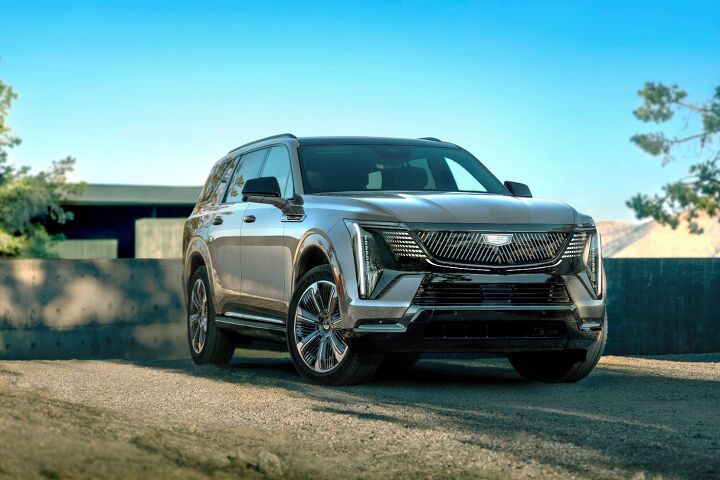
While the facility had a long history of occasionally producing some of GM’s more eclectic models, pivoting to “Factory Zero” resulted in the site building some of its most-niche products yet. The GMC Hummer is a 9,000-pound, all-electric offroader that starts above $90,000 and can easily be configured to cost upwards of $120,000. The Chevrolet Silverado and GMC Sierra EV are a tad more mainstream, with a starting MSRP that ranges between about $70,000 and $110,000. Then there is the Cadillac Escalade IQ (below), which is often plopped on dealer lots with starting MSRPs between $130,000 and $155,000.
None of the above models could be considered volume leaders and EV sales growth for all automakers has declined rather dramatically since the elimination of $7,500 federal EV tax credit last September. Meanwhile, these vehicles are in a price range that customers have signaled they can no longer afford.
We’ve also seen Donald Trump turn away from the Biden administration’s overtly pro-EV policies and rollback emissions regulations. This removes much of the financial subsidies that automakers were counting on to help promote the sale of expensive electric models. But it also frees up companies to build more combustion models featuring larger engines — something many customers have been asking for.
Presently, the only issue that’s likely to help EV sales are the suddenly high fuel prices. But customers concerned about monthly fuel expenditures will presumably not splurge on a six figure EV.
Realistically speaking, it’s hard to imagine Factory Zero having much of a future without there being a change in leadership that brings back stringent emissions requirements and EV subsidization. But endlessly propping up the industry’s EV aspirations with tax dollars, while simultaneously attempting to restrict the types of vehicles Americans can own, hardly seems like an ideal solution. Those policies weren’t very popular with drivers before Trump took office and likely won’t be after he leaves.
Ping-pong policies also wouldn’t help the industry sort itself out. Now deregulated, automakers have signaled that they are divesting from electrification to reprioritize combustion models. Should there be an election that forces them back toward building more electrics shortly after those vehicles begin arriving at dealerships in a few years, the industry would likely be thrown into another tailspin.
[Images: General Motors]
Become a TTAC insider. Get the latest news, features, TTAC takes, and everything else that gets to the truth about cars first by subscribing to our newsletter.
via Autobuzz Today
Comments
Post a Comment