The National Transportation Safety Board is recommending standardized performance requirements for automated vehicle technologies after determining that an "overreliance" of these systems contributed to two fatal crashes.
We recently covered the Insurance Institute for Highway Safety (IIHS) making some broad claims about how added driver assistance features meant improved safety. The NTSB seems to be indicating the opposite, citing two fatal crashes that involved Ford’s BlueCruise system.
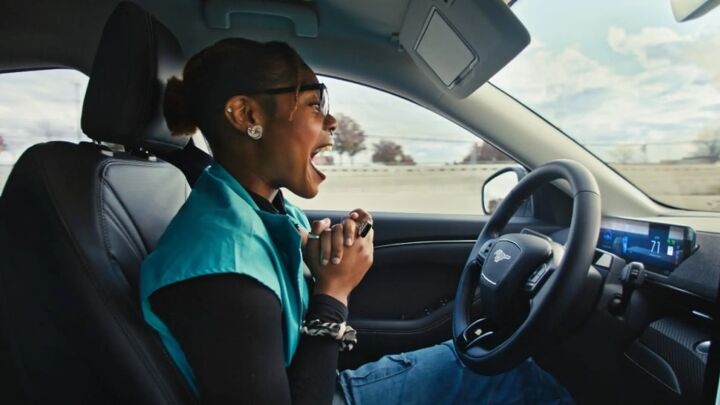
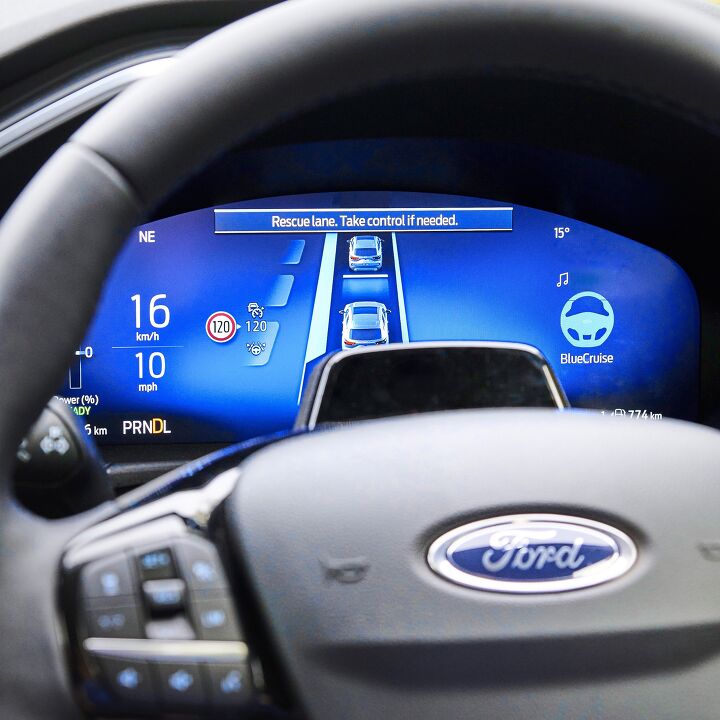
For those unfamiliar, BlueCruise is a driver assistance feature equipped to certain models that allows hands-free driving on select highways. The system has gotten a fair bit of praise in the past. However, like Tesla’s Full Self-Driving (FSD), it has become the subject of criticism from the National Transportation Safety Board.
The federal safety agency recently published a paper ( h/t AutoGuide) calling for “standardized performance requirements and greater oversight to improve the safety of automated vehicle technology” in response to a pair of fatal incidents that took place in 2024.
From the NTSB:
In a Feb. 24, 2024, crash in San Antonio, a Ford traveling east in the center lane of Interstate 10 struck a stationary 1999 Honda CR-V. The Honda driver was killed, and the Ford driver sustained minor injuries. In a March 3, 2024, crash in Philadelphia, a Ford traveling north in the left lane of Interstate 95 struck two stationary vehicles — a 2012 Hyundai Elantra and a 2006 Toyota Prius — causing them to collide with a passing Toyota Corolla. The drivers of the Prius and Elantra were killed. The Ford driver sustained minor injuries, and the Corolla driver was uninjured. In both crashes, no driver-applied or system-initiated braking or steering was recorded in the moments before impact.
Despite assurances from automakers and insurance companies that these systems are basically foolproof, testing has shown that advanced driver assistance features often have sizable blindspots. Inclement weather, subpar roadways, and even dirty sensors can sometimes cause problems. However, the NTSB seems more upset that there’s been a lack of standardization and federal monitoring.
This is true. Automakers have been given an unprecedented amount of leeway to test and implement these features, including systems that claim to offer automated driving, at both the state and federal levels. We even covered one of the National Highway Traffic Safety Administration’s earliest attempts at regulating “self-driving” vehicles in 2017.
Prior actions under the Obama administration basically sought to come up with standardized nomenclature to be used by future regulatory actions while the tech was in its infancy.
By 2017, the Trump administration was developing a technical-sounding framework aimed at destroying regulatory red tape. Most of what automakers wanted to do would have been considered illegal under the Federal Motor Vehicle Safety Standards (FMVSS) and the government basically wanted to see companies accelerate development of the technology.
Considering how aggressive government regulators tend to be, the oversight on advanced driving systems was shockingly lax. But it was also clear that legislators had only the vaguest understanding of the technology, especially when it was still so novel. This trend continued, with most states likewise giving automakers the ability to test on public roads.
The only real exception was the NTSB, which had launched numerous investigations into Tesla after numerous vehicles utilizing FSD had been involved in severe (often fatal) accidents. Tesla was the first company to field hand-free driving features at scale and was therefore also the first to fall under a microscope.
Ford is presumably the next on the docket. But we’d wager the NTSB’s concerns could be applied to any automaker selling automobiles with similar advanced driving features.
“This investigation highlights the urgent need for stronger safety standards and better oversight of automated driving systems,” noted NTSB chairwoman Jennifer Homendy. “Manufacturers and federal regulators must ensure these technologies are designed, monitored and implemented in ways that keep all our road users safe. We cannot take a ‘hands off’ approach to hands-free driving technology. Lives depend on it.”
The NTSB is primarily worried about a lack of standardization and federal oversight (particularly for SAE Level 2). According to the agency, it’s perturbed that there are “no federal requirements for these systems to record data during crashes, which often means that manufacturers lack the needed information to comply with NHTSA’s standing general order requiring them to report crashes involving this technology.” Additional criticisms were thrown at allowing drivers to customize BlueCruise to operate above the posted speed limit.
State-level regulations likewise often require automakers to “self report” accidents. But these regulations are often pretty vague about what qualifies as report worry, with the relevant report still hinging upon whatever the automaker chooses to disclose.
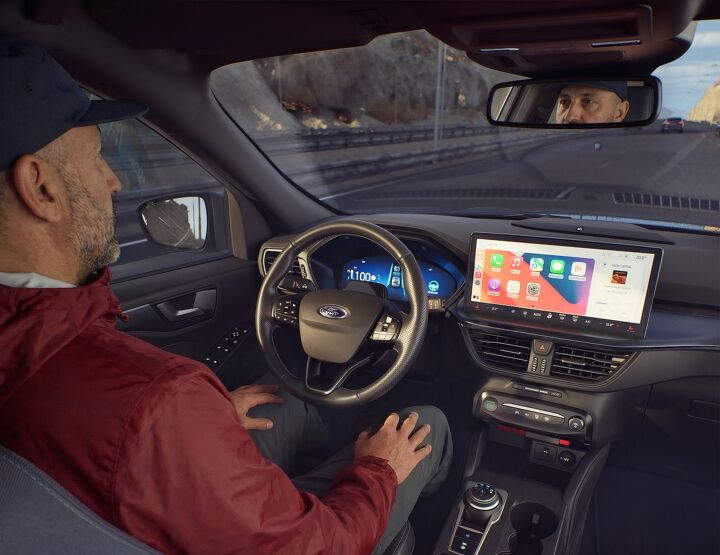
Investigators likewise concluded that driver monitoring systems were “found to be ineffective at detecting driver distraction or disengagement.” The NTSB criticized that the units allowed for drivers to glance away from the road and had no way of differentiating between someone paying attention to the road ahead or looking at a screen that may simply be situated in front of them.
While we’d like to commend the NTSB for being critical of systems that the rest of the government has opted to ignore, some of its conclusions are a little unsettling. The agency recommended stronger federal guidelines, standardized performance standards, crash data recording, automatic crash reporting, changes to BlueCruise that would disallow speeding, and improved driver monitoring systems to detect distraction.
Requiring improved crash reporting and higher performance standards are presumably items that would guarantee an overall boost in safety. But the government (along with insurance companies and automakers) has been borderline obsessive about mandating driver surveillance — not only for semi-autonomous driving features but also as a way to prohibit impaired individuals from operating an automobile.
In-cabin cameras are a wildly invasive concept and nothing is going to convince motorists otherwise. Some will certainly argue that people are already being surveilled at an unprecedented scale via connected devices. But this goes beyond that and comes with numerous drawbacks.
For starters, a lot of these features offer little more than a veneer of safety. Testing shows they’re not always dependable. Improved driver monitoring isn’t going to make much of a difference, especially when the entire concept of something like BlueCruise is to cede control over to the vehicle. However, drivers will remain legally liable when they’re in a wreck. Insurance companies will assuredly want access to any footage of a driver in the hopes that it can be used to deny them coverage.
Automakers and the government are effectively encouraging motorists to check out behind the wheel by allowing these systems to be installed in the first place. But they’re also demanding that citizens be permanently monitored so they can be held liable whenever a faulty advanced driving feature causes an accident. That hardly makes the juice worth the squeeze for the end user.
[Images: Ford Motor Co.]
Become a TTAC insider. Get the latest news, features, TTAC takes, and everything else that gets to the truth about cars first by subscribing to our newsletter.
via Autobuzz Today
Comments
Post a Comment