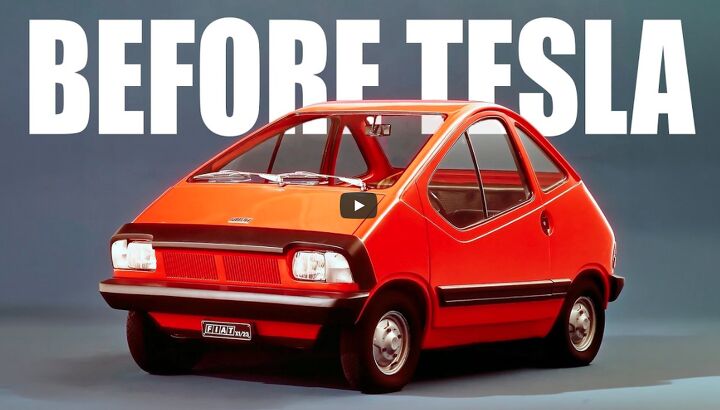
The Fiat X1/23 is one of those quietly brilliant ideas that didn’t fail because it was wrong, but because the world around it simply wasn’t ready. Today, you can’t move without hearing of or seeing electric cars.
They’re everywhere — whispering through traffic, packed with screens, promising to save the planet while simultaneously needing three software updates before breakfast. But back in 1972, the idea of an electric car wasn’t fashionable. It wasn’t even particularly sensible. It was, at best, an experiment. And that’s exactly what Fiat built.
The TTAC Creators Series tells stories and amplifies creators from all corners of the car world, including culture, dealerships, collections, modified builds and more.
An AI-generated transcript edited by a staffer is below.
[Image: YouTube Screenshot]
Become a TTAC insider. Get the latest news, features, TTAC takes, and everything else that gets to the truth about cars first by subscribing to our newsletter.
This transcript discusses the forgotten Fiat X1/23, an experimental electric city car developed by Fiat in 1972, arguing that it was far ahead of its time.
The narrator explains that while electric vehicles are now common and heavily promoted, the idea of an EV in the early 1970s was considered impractical and experimental. Fiat introduced the tiny X1/23 at the Turin Motor Show, but it received little attention because Fiat focused instead on profitable mainstream models like the Fiat 124, Fiat 500, and Fiat 124 Spider.
The X1/23 was designed specifically for short urban trips. At just over two meters long, it was extremely compact and featured a strict two-seat layout. Its lightweight electric motor produced about 13–14 kW, powered by heavy lead-acid batteries mounted low in the chassis. The car could reach about 70 km/h and travel roughly 70–80 km on a charge—figures the narrator argues were actually practical for city driving, even by modern standards.
One of the most remarkable aspects of the car was its early use of regenerative braking technology, decades before it became common in modern EVs. Although primitive, the system recovered small amounts of energy during braking to recharge the batteries, showing that Fiat was already experimenting with solutions to electric vehicles’ biggest limitation: range.
The transcript emphasizes that the X1/23 failed not because the concept was flawed, but because the world lacked the technology and infrastructure needed to support it. Battery technology was expensive and inefficient, charging infrastructure did not exist, and there was almost no consumer demand for electric cars. Fiat ultimately abandoned the project and returned to producing affordable gasoline-powered cars like the Fiat 127 and Fiat 131.
The narrator concludes that modern city EVs are essentially fulfilling the same vision Fiat explored in 1972: small, efficient electric cars for urban mobility. The difference is that today’s technology, infrastructure, and public attitudes finally make the concept viable. The X1/23 is presented not as a failed experiment, but as a remarkably accurate preview of the future of urban transportation.
via Autobuzz Today
Comments
Post a Comment