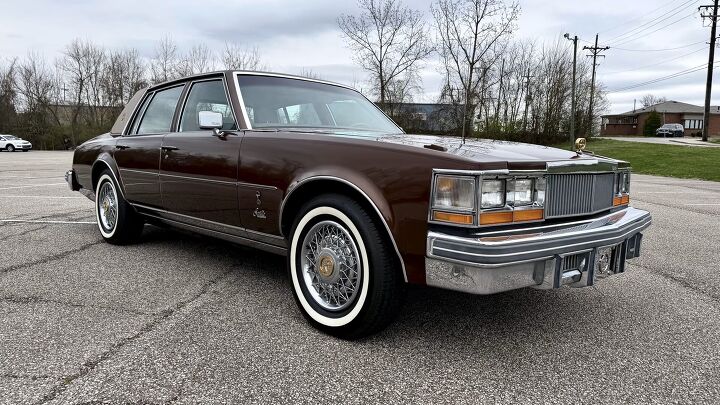
Once in a blue moon a vehicle surfaces that’s so rare and special it demands memorialization on the internet. Such a vehicle appeared at auction last week, so today we pause our Wagoneer coverage and revert to the original style of the Rare Rides series: coverage of a singular vehicle. Stopping us in our tracks is a flawless Cadillac Seville Gucci from 1979.
European luxury imports were a big problem for America’s domestic luxury makers from the early '70s onward. As the quality of American cars declined, simultaneously European car manufacturers began to increase their footprint on American soil. European cars offered alternative styling to the American brougham barge and achieved better fuel economy while delivering increasingly greater prestige.
That greater prestige was in a smaller package, too. Younger buyers increasingly rejected the “225 inches” type requirements of their parents, opting for luxury cars of smaller sizes. The European options cost more than their American counterparts, but beyond a certain income threshold that difference ceased to matter.
Younger buyers from that point onward leaned into imported vehicles, a trend that has continued for over 60 years now. In the '70s, Detroit’s luxury brands were left with no option but to adapt. And one of the first of those adaptations was the Cadillac Seville. Launched in May 1975 (creatively, to boost sales numbers) as a 1976 model, the Seville was Cadillac’s first midsize car.
The basis of the Seville was the X-body, used by compact vehicles at GM’s lesser brands since 1961. By the '70s the X branched to many successful models, in particular the Chevrolet Nova. In shorter wheelbase guise, the platform became the F-body Camaro and Pontiac Firebird in 1967.
A few years later Cadillac engineers took the 111-inch wheelbase of the '70s X-body and lengthened it to 114.3 inches to make the “K-body” for the Seville. The new K platform was exclusive to the Seville, though it used the same steering linkage and front suspension components as the X-body vehicles.
Underneath its square hood, the Seville used only Oldsmobile engines. Both engines were 350 cubic inches (5.7-liter), available in regular V8 or craptastic diesel V8 guises. We’ve covered the latter in full at Abandoned History, four years ago now! Both engines were paired to the very sturdy three-speed THM-400.
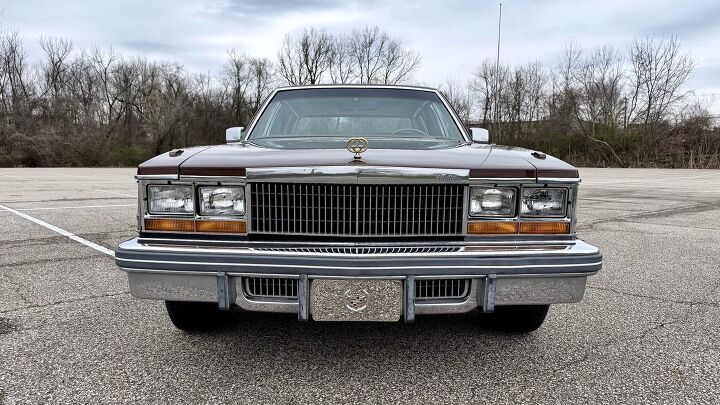
Bill Mitchell penned a design that had to look modern, but still like a Cadillac. This was probably easier to achieve at the front than the rear, as the rear end had to forego the traditional Cadillac fins and upright tail lamps. Inside the look was more modern as well, with contemporary ribbed (not button tufted) interiors and a more restricted use of wood trim.
The more modern and minimal theme was lost over time, however, as by the late '70s Cadillac leaned back into Brougham with the Elegante package. A hugely expensive trim package in 1979 at $4,005 ($19,527 adjusted) it piled on the gingerbread. And though it was the smallest vehicle in the portfolio, Seville was already Cadillac’s most expensive model and toppled the Eldorado as its most prestigious vehicle. Immediately successful, it rocketed to sales of nearly 57,000 units in 1978.
Its most successful year was also the year the Seville’s most expensive variant debuted. A short era of designer and automaker collaboration had dawned, and Lincoln led the charge with the Designer Edition Continental Mark V models. They were huge, hugely expensive, and very profitable. And an Italian wanted in on the action.
Aldo Gucci (1905-1990) saw the Cadillac Seville as prestigious luxury motoring, and pressed Cadillac for a special designer edition. He envisioned “another stone in the necklace of Gucci’s success,” and made the appropriate inquiries to Cadillac. Cadillac consented, and a deal was struck. Aldo worked with Cadillac directly on the design of the special Seville.
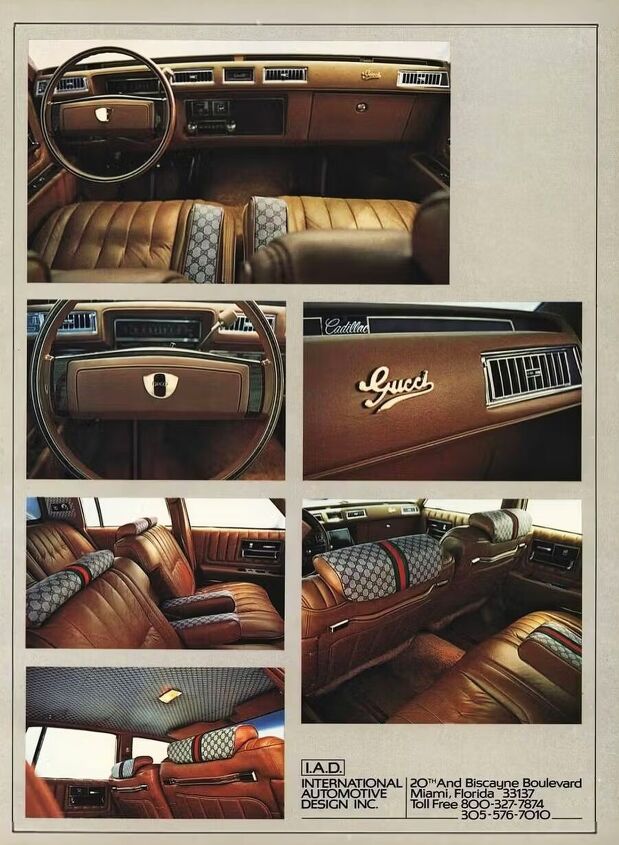
The car that resulted was not a nationally distributed model and did not appear in the company brochure. Rather it was a limited run of coach built examples, created by International Automotive Design in Miami. They were available solely through one dealer in Miami, Braman Cadillac (still operating today). The model debuted at the Fontainebleau Resort in Miami in 1978 by Aldo himself.
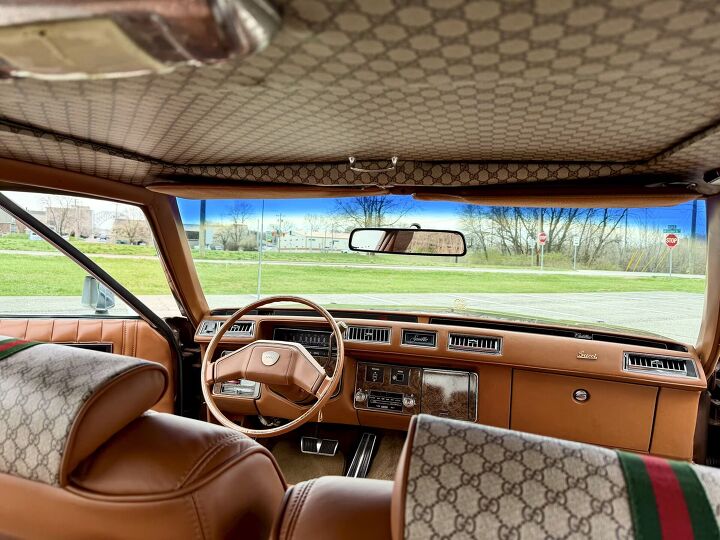
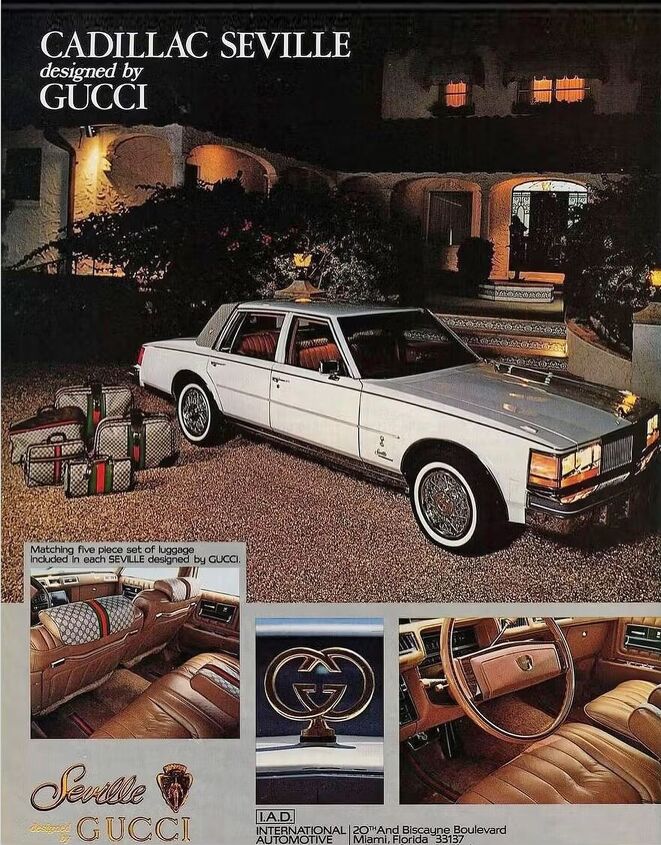
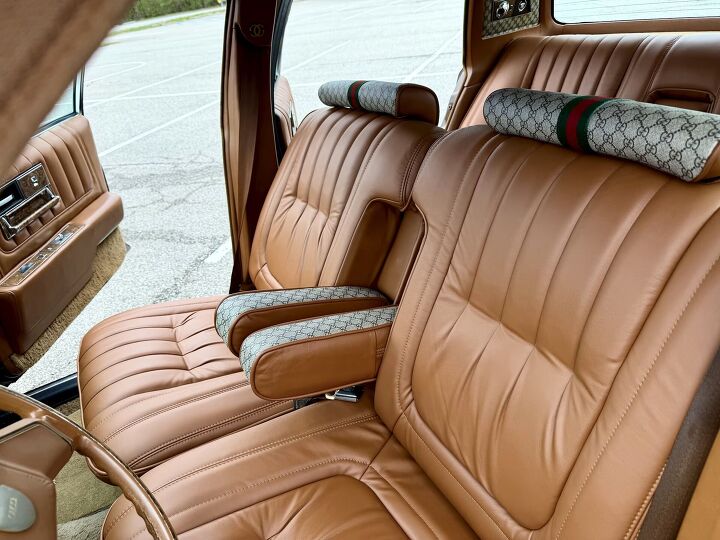
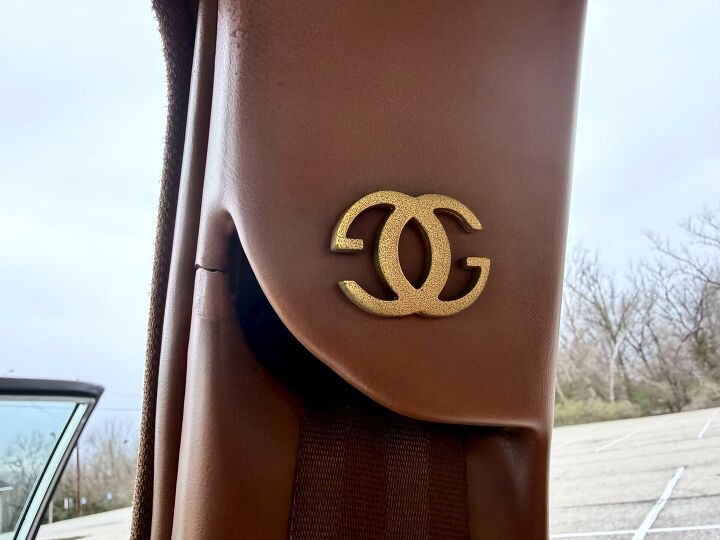
At $19,900 ($106,033 adj.) it was the most expensive Cadillac available and swathed in Gucci in every possible way. The company’s interlocking G monogram material was everywhere, as well as its interlocking logo, script logo, horse bit logo, and traditional shield logo. Crucially, logos were gold plated.
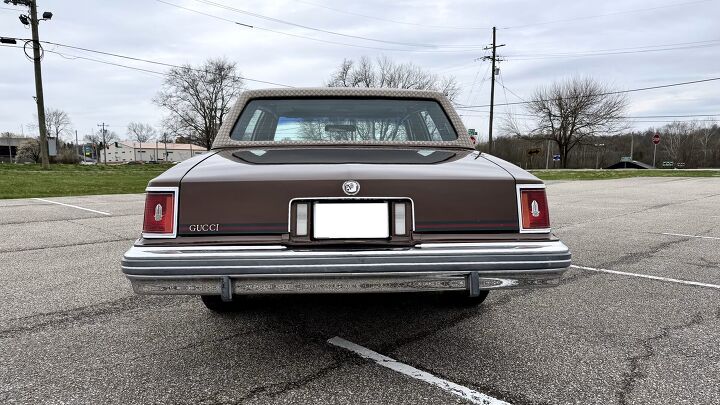
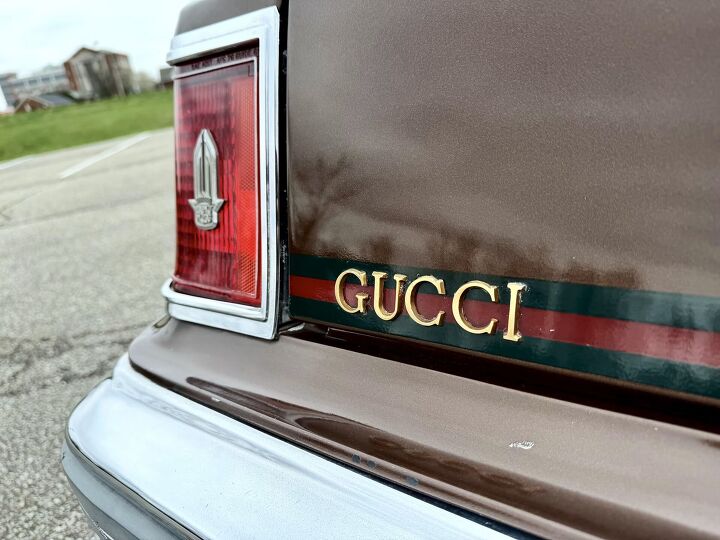
The exterior wore a Gucci hood ornament instead of a Cadillac one. The wheel logos were changed as well. Custom pinstriping at the rear in the company’s traditional red and green was decorated by gold GUCCI block lettering. The rear section wore a carriage roof in monogrammed Gucci cloth, with golden shield logos. In the trunk was a five-piece set of custom-designed luggage bespoke to the car, which would have covered a decent chunk of the cost of entry.
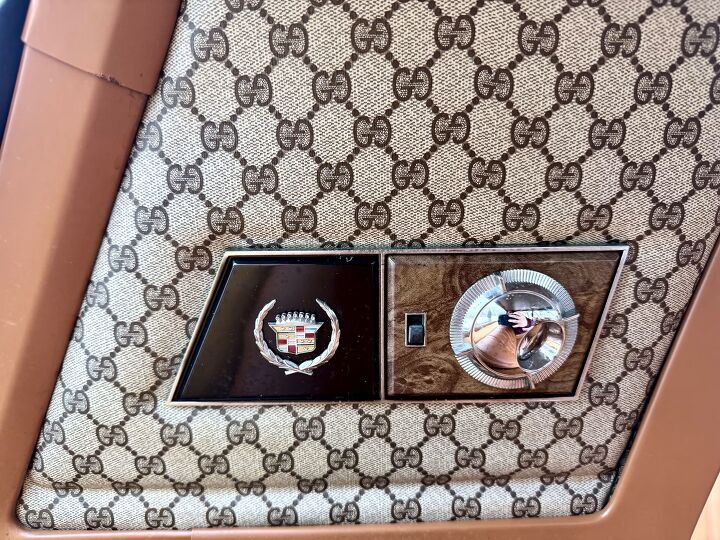
Inside was more monogram material on headrests, armrests, seats, pillars, and the headliner. Gucci logos abounded on the wheel, dashboard, pillars, door panels, and there was an embroidered red and green stripe on the floor mats. It was excessive and fit the late '70s timeline perfectly.
The final year of the original Seville was 1979, and indeed the Gucci version. It’s estimated that 200 to 300 special examples were produced. The world moved on from the extreme automotive chintz shortly thereafter, and the Gucci Seville looked dated very quickly. As a result, they were not kept as collector items and were often neglected and poorly maintained.
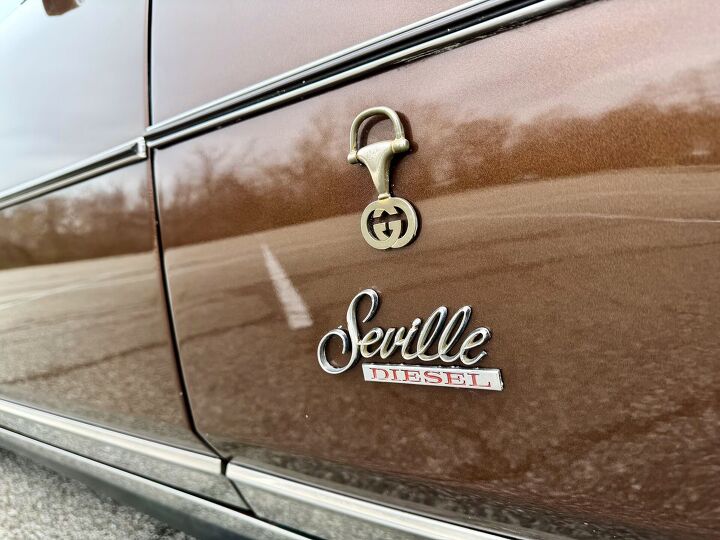
That’s where our stunning Rare Ride comes in, as part of perhaps two or three that remain in excellent condition. All the trim, badges, materials, and even the monogrammed headliner are intact. As a metallic brown, it’s the least selected of the available colors (black, white). And perhaps most unusually it was specified with the Oldsmobile diesel engine. The photo of the gold horsebit Gucci logo on the fender with “Seville” and “DIESEL” is a complete anachronism.
This stunning Seville sold at auction in Indianapolis this past week for an undisclosed sum. The only incompleteness comes from the absent luggage set. The Seville should surely be added to a museum collection and driven sparingly. A complete time capsule the likes of which we will never see again. Bookmark the link to all those photos or save them in your files!
[Images: seller, GM]
Become a TTAC insider. Get the latest news, features, TTAC takes, and everything else that gets to the truth about cars first by subscribing to our newsletter.
via Autobuzz Today
Comments
Post a Comment