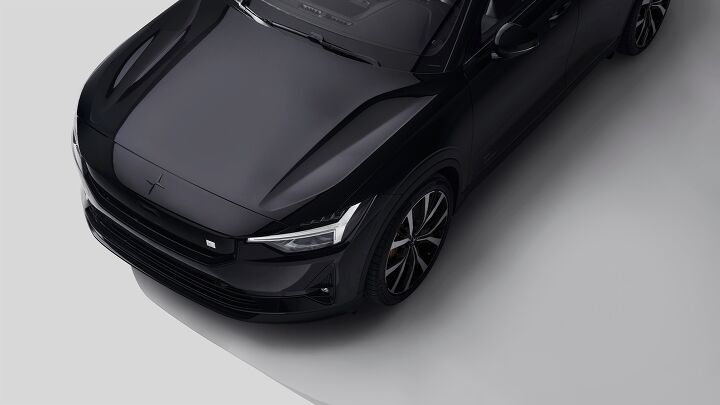
Polestar has announced that it will be leaving the United States to prioritize the European market and some are wondering what that means for its preexisting customers.
Officially, the automaker has stated that the decision hinged on the forthcoming “Connected Vehicle Rule” that’s supposed to prohibit the sale of connected automobiles using code that originated from China or Russia. Framed as a national security issue by the Bureau of Industry and Security, which serves as part of the U.S. Department of Commerce, the rule is supposed to come into play at the start of next year.
Its regional sales were also rather poor and only getting worse — all of which was previously covered by our own Michael Strong.
While the company will continue developing new vehicles, we won’t be seeing any of those. But we doubt that will be stressing out too many drivers. Polestar sold an estimated 5,400 vehicles in the U.S. last year. While that’s still better than what we’ve seen from some other brands that have miraculously managed to stick around in this country (e.g. Alfa Romeo), it still represented a 58 percent decline in volume from the previous year.
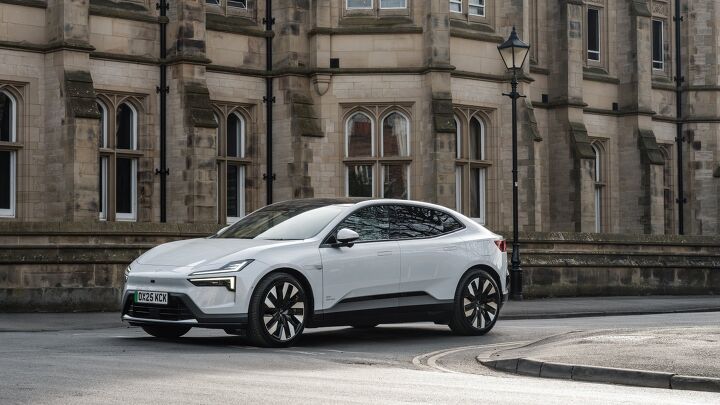
Considering that global volumes managed to increase by 34 percent within the same period, Polestar likely has no reason to spend the necessary funds to try and accommodate the United States in terms of where its software/hardware originates from. Americans have broadly turned on electrified models following the elimination of EV tax credits and Polestar wasn’t exactly doing a meaningful amount of business on the market to begin with.
Europe has been far kinder to Polestar and doesn’t seem to mind purchasing Chinese-based vehicles, particularly if they happen to be electrified. Therefore, it will become the basket where the automaker will be keeping the largest number of eggs.
That said, there are still thousands of Polestar customers that are wondering what will happen after the automaker leaves the U.S. next year. Others will have leased their vehicle and might be concerned about who is going to handle the paperwork. Some people may even want to purchase a secondhand Polestar model after 2027, and are wondering how that might work.
Customers based in the U.S. should still be able to purchase whatever Polestar has left in stock through the remainder of the year. But it looks like the plan is to liquidate its regional marketing and sales staff rather quickly. While the automaker’s limited number of dealerships are said to persist, offering continued service of Polestar vehicles in addition to selling used models, one wonders how long they can realistically stay in business without new inventory coming in each year.
The automaker has also said it will need to start working with Volvo on a myriad of issues, which will presumably include sales and service.

We don’t have all the answers just yet — and it sounds like Polestar is in a similar situation. But we can make some educated guesses based on what we’ve seen before.
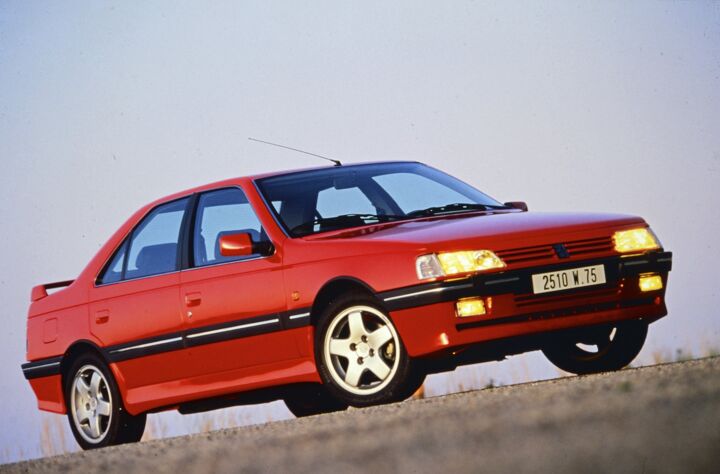
Peugeot pulled out of the U.S. in 1991 and promised to continue servicing vehicles for at least a decade. But over half of its preexisting dealer network was shuttered within the first six months. While some dual-branded dealerships (typically VW) continued to service Peugeot vehicles for a time, the practice didn’t last much longer than a few years.
By 1995, most Americans who still owned a Peugeot were having to go to independent mechanics that specialized in European automobiles. Meanwhile, the relevant parts just became more expensive and difficult to import. The same went for the labor costs, as few mechanics had any experience working on the cars. If you weren’t already living in a major metropolitan area, the odds of you even finding someone who knew French automobiles would have been extremely slim.
Peugeot was legally obligated to continue to do what was required to ensure those vehicles could be properly maintained. But claiming it managed to do so for the full 10 years feels like a stretch. Realistically, anyone attempting to have work done on their Peugeot after 1995 would be encountering parts that cost up to three times more than what would have been considered normal on Japanese or American automobiles of a similar vintage. Labor costs were typically double. Since parts frequently had to be ordered from overseas after domestic stockpiles were depleted, repairs likewise tended to take significantly longer than average.
Considering the Polestar dealer body is significantly smaller than Peugeot's was when it left the country, we’re a little worried that servicing those vehicles will become an issue rather quickly. Our assumption is that Volvo dealerships will ultimately become responsible for everything as standalone Polestar service centers begin to vanish. But we have no way of knowing how long that will last or what legal obligations it would be under.
The silver lining is that several Polestar models share a lot of common architecture with Volvo products. Zhejiang Geely Holding Group likewise owns both brands, presumably making components a little easier to source over the long term — especially since international shipping is much more convenient now than it would have been in the 1990s.
However, there will undoubtedly be a day within the next several years where owning a Polestar automobile becomes more troublesome than most drivers are willing to endure. Considering that Volvo may eventually end up subjected to the same “Connected Vehicle Rule,” that day may also come much sooner than expected.
Those hoping to turn their EV into a collectible may want to be extremely proactive in terms of maintenance before that happens. Meanwhile, those who bought their Polestar as a daily driver should probably try to get as much use out of it as possible before any hypothetical parts shortages manifest. In either case, it wouldn’t hurt to learn as much as you can about your automobile in the event that you’ll eventually be the one having to do all the work.
[Images: Polestar; Peugeot]
Become a TTAC insider. Get the latest news, features, TTAC takes, and everything else that gets to the truth about cars first by subscribing to our newsletter.
via Autobuzz Today
Comments
Post a Comment