
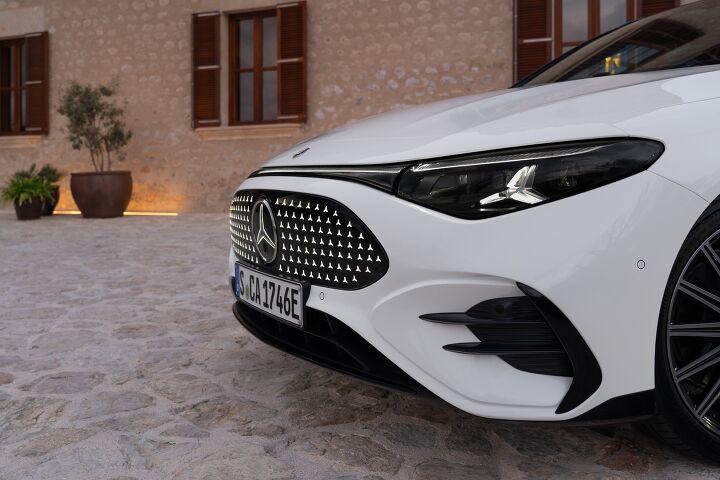
Last week, the United States Senate Commerce Committee approved new legislation that could endanger Mercedes-Benz and Volvo Cars’ ability to sell vehicles within what has historically been one of their largest markets.
Assuming the proposal becomes law, any automaker with over 15 percent of its ownership controlled by Chinese entities will be prohibited from selling vehicles within the United States.
Introduced by Senator Bernie Moreno (R-Ohio), and co-sponsored by Senator Elissa Slotkin (D-Michigan), the bill would ban the import, sale and operation of vehicles manufactured by companies deemed “foreign entities of concern” by nature of being based in certain nations deemed adversarial. While the current focus is on China, other countries would be incorporated further down the line. The bill would also ban the use of connected vehicle technologies developed by those countries, which is something Congress seems particularly interested in of late.
“This is a very simple thing that we’re doing today, and quite frankly, I wish our allies had done this before. What we’re doing is we’re preventing a massive national security threat,” Moreno said while presenting the legislation. “Now, I don’t want anybody listening to this to worry about their automobile, but your automobiles today are roving electronic devices.”

At the time of this writing, Geely chairman Li Shufu owns 9.7 percent of Mercedes via his Tenaciou3 Prospect Investment Limited investment firm. The Beijing-based BAIC Group owns an additional 9.9 percent, resulting in about 20 percent of Mercedes-Benz being held by Chinese entities.
We’ve already seen Polestar decide to pack its bags to focus its energy on Europe after the U.S. government decided it was too closely connected to China. Despite existing under similar circumstances, Volvo Cars looks to have appeased regulators and will be allowed to persist after promising to make a few changes. Those issues stemmed from earlier cybersecurity concerns pertaining to the hardware and software used on connected vehicles as expressed by the U.S. Department of Commerce's Bureau of Industry and Security.
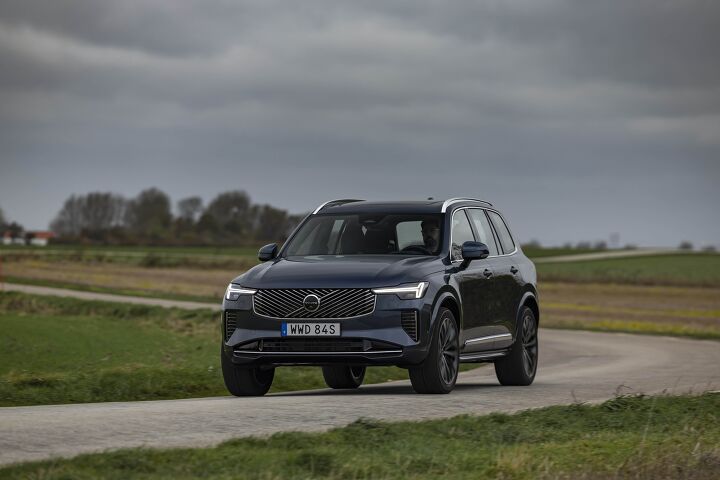
Under the newly proposed legislation, Volvo could actually be in a much worse position than the German brand due to it being owned primarily by the Zhejiang Geely Holding Group — which managed to acquire 78.7 percent of the company.
The good news for Mercedes is that exceptionally large automotive companies have a knack for getting governments to do their bidding. Even when unwanted legislation does crop up, subsequent revisions are frequently made to appease the industry. However, this is often predicated upon the relevant brands being a financial powerhouse or a majority of companies seeking a similar resolution.
It has arguably always been this way.
For example, Henry Ford was extremely opposed to the concept of financing automobiles. He believed the entire premise of debt was morally wrong, primarily advantaged banks, and would eventually create a nationwide economic crisis. But his rivals at Dodge and General Motors were eager to normalize vehicle financing by the 1920s — as they were keen to sell more extravagant automobiles with higher price tags while making some profits off interest.
The Dodge brothers sued Henry Ford in 1919 after he cut shareholder dividends to redirect money into the business. Ford wanted to lower the already low price of the Model T and raise worker wages, which he believed would encourage employees to purchase more automobiles while also helping to discourage consumer debt. The Michigan Supreme Court ruled against Henry Ford, ordering him to pay out millions in dividends to shareholders (which included the Dodge brothers).
This established a national legal precedent for shareholder primacy in the United States, which explains basically every modern decision the automotive sector has made, and led to the swift normalization of automotive loans. It likewise set the stage for GM to surpass Ford as America’s largest vehicle manufacturer, due largely to the former immediately embracing the concept of monthly payments. In contrast, Henry Ford wouldn’t allow vehicle financing for years until it became crystal clear that it was the only way for the company to remain competitive. By the time the Great Depression had arrived and credit became the most common way for Americans to purchase a new vehicle.
Claims were made that the legal actions taken against Ford involved sustained pressure from the automaker’s rivals to have the courts see things their way. But this would only be the first major instance. Automakers have repeatedly lobbied the government to soften or create loopholes in fuel efficiency requirements since the 1970s and later pushed for lucrative subsidies tied to electric vehicle manufacturing. Many also opposed safety regulations (e.g. seatbelt laws, mandatory airbags) due to concerns that they would result in higher manufacturing costs — successfully delaying them for years.

Refocusing on Mercedes’ current problems, the above examples show us one of two ways in which things could play out. The German automaker could attempt to use its size to influence legislators or find itself on the receiving end of rival lobbying. At present, both appear to be taking place.
According to Reuters, Senator Ted Cruz (who chairs the Senate Commerce Committee) noted that proposed rule changes would indeed impact Mercedes-Benz. He likewise said that GM had been pushing for the legislation as a way to remove regional competition for Cadillac. But Cruz allegedly indicated that the committee would like to avoid any prospective sales bans of Mercedes in the U.S.
He previously criticized the proposal as being “overly broad.”
Senator Bernie Moreno has indicated that a worst-case scenario would see Benz having until 2030 to comply on the issue of Chinese ownership and could potentially get government waivers that would exempt it from any bans. But this brings into question the entire purpose of the legislation if a non-complaint automaker can be made exempt based on little more than it being a legacy automaker.
That said, banning the company would certainly come with domestic ramifications. Mercedes has said it employs roughly 10,000 people within North America, which it claims “safeguards an estimated 107,000 additional jobs across U.S. business suppliers and service providers.” That would include people who work as service technicians, dealer sales representatives, finance managers, etc.
Volvo Cars likewise has a meaningful footprint inside the U.S. But it’s pretty hard to square its ownership structure with the proposed requirements. For all intents and purposes, Geely’s nearly 80 percent stake in Volvo effectively makes it a Chinese brand.
[Images: ACHPF/Shutterstock; Mercedes-Benz; Volvo Cars]
Become a TTAC insider. Get the latest news, features, TTAC takes, and everything else that gets to the truth about cars first by subscribing to our newsletter.
via Autobuzz Today
Comments
Post a Comment