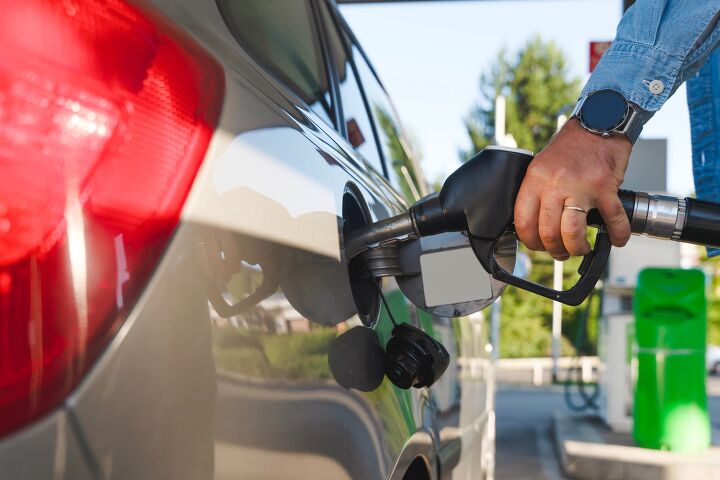
With energy prices having increased across the globe, claims have been made that fuel theft has followed suit. This year, countless reports have been released suggesting that both the United States and United Kingdom have endured a surge in petroleum-based criminal activity. But it’s difficult to know what’s legitimate and what amounts to little more than fear mongering.
Whatever the reality, the issue has become an extremely hot topic. We’ve seen statistical analysis of fuel thefts and numerous reports of retailers raising prices more than seemed warranted following the Strait of Hormuz, which closed in February due to the large-scale joint airstrikes targeting Iran.
In fact, passing new laws that would further discourage fuel stations from price gouging (which is already illegal) has become a popular promise from campaigning politicians. Fewer solutions have been presented regarding the stolen fuel, which is supposedly much more severe in the UK than it is in North America — at least at the retail level.
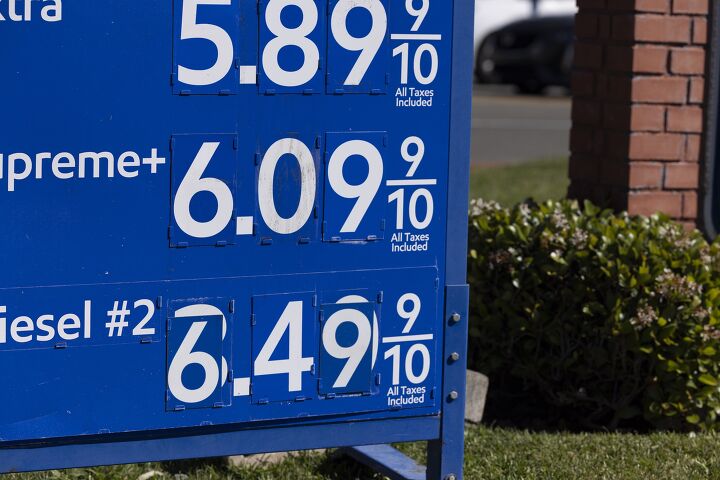
The inverse was true in terms of pricing. Depending on the type of fuel being purchased, Brits have experienced an increase of roughly 25 percent since the start of the war in February. Over the same timeframe, the U.S. saw gasoline prices jump by about 45 percent. Meanwhile, Canada's increase is estimated to ballpark around 22 percent.
Historically, a majority of fuel thefts were drive-offs perpetrated by individuals with extensive criminal records. The operating theory is that someone who was already wanted for something that would have garnered significantly higher penalties wouldn’t care about the lesser charge. However, the latest data alleges that an increasing number of fuel thefts now stem from individuals where this is their first offense.
It may not quite reach the levels of stealing a loaf of bread to feed your starving family. But one wonders how many British drivers are breaking the law because they’re sick of paying higher prices and how many can no longer afford to fill up for their daily commute due to additional economic strife.
From The Independent:
First-time offenders accounted for a 23 per cent rise in incidents and a 26 per cent increase in the volume of fuel stolen.
This contrasts with repeat offenders, who saw increases of 17 per cent and 20 per cent respectively.
These figures are derived from reports submitted by a representative sample of 550 forecourts [fuel stations] and encompass both 'drive-offs' — where no attempt to pay is made — and 'no means of payment' incidents, where customers claim an inability to settle their bill.
The above information is supposed to stem from the same analysis by fuel theft prevention firm Forecourt Eye, which tabulated data over the last five months. Overall, the organization estimated there has been a 20-percent increase in incidents of fuel theft inside the UK since Iran was first attacked five months ago.
However, we also need to recognize that Forecourt Eye is a loss-prevention business which promotes surveillance cameras leveraging AI-assisted identification tools (similar to currently-under-fire Flock Safety) and automated debt resolution services. It’s absolutely in the company’s best interests to scare everyone into thinking their fuel stations will be hemorrhaging money without their assistance. That’s not to suggest industry backed studies cannot offer useful data — just that it pays to be a little skeptical when considering the sources.
Keeping that in mind, Forecourt Eye is hardly the only group reporting surging fuel thefts. Last April, the BBC reported that it had calculated a 62-percent increase compared to the previous year. But this data came from Pay My Fuel, which is another business offering the same kind of plate-reading cameras and debt recovery services.
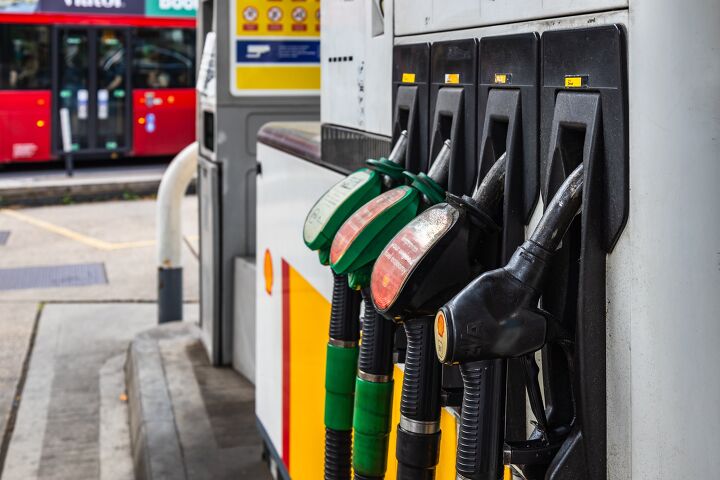
All of the above has at least been supported by data stemming from the Royal Automobile Club Foundation, which served as the statistical arm of the social organization that shares its name until it went independent in 1999. Now acting primarily as a research entity, the RAC Foundation, the group has issued reports of surging thefts starting well before this year. RAC suggested that there had been a 49-percent increase in annual fuel theft in 2025 and a 77-percent increase in 2023.
That suggests that stolen car juice has been a growing problem for quite some time, which could be related to earlier price increases stemming from the Russo-Ukrainian War. But much of that data stems from the British Oil Security Syndicate, which is yet another entity trying to sell things like cloud-based debt recovery systems and security consolidations.
While the businesses are indeed offering legitimate services, the associated statistics seem custom made to encourage readers to make use of them. For example, most of the reporting incorporates some kind of monetary average estimating just how much fueling stations are losing to theft over a given week or month. Considering the source, they almost read like a sales pitch — which is often regurgitated by major news outlets without a hint of nuance.
Still, an increased number of people either driving off or simply refusing to pay for their fuel seems plausible. As previously mentioned, prices have been rising just about everywhere on the planet with the last several months being particularly bad. Considering that many European countries already pay well above the global average for a gallon of gasoline (or liter of petrol), one could argue that the stage was already set for criminal activities.
The U.S. certainly saw a rise in fuel thefts during the oil crisis of the 1970s, which likewise originated from regional conflicts where the nation had supported Israel. With limited supplies, stations frequently attempted to gouge customers and desperate drivers (or industrious thieves) had resorted to syphoning fuel out of other people’s tanks.
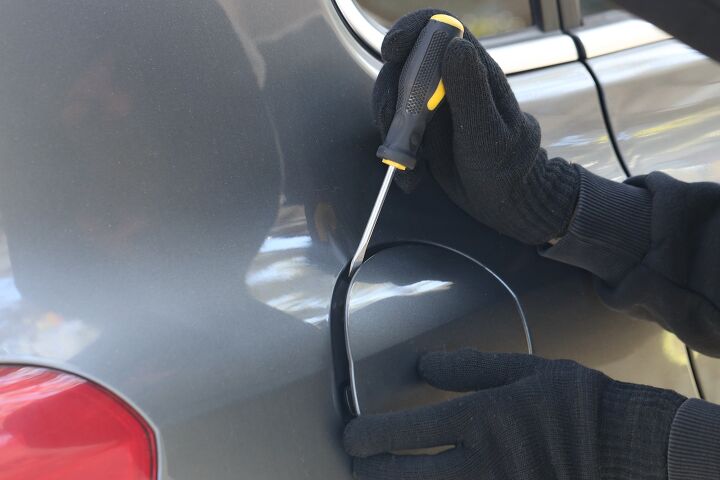
Attempting to do the latter on a modern automobile would be borderline impossible, however. Automakers have embraced numerous features to prevent syphoning, which is nice when you’re worried about having your fuel stolen but suboptimal when you need to pull some bad gasoline out of the tank. Most fuel stations are likewise pre-pay only, limiting the ability to steal fuel in most places.
Media outlets have claimed that the 2026 workaround for this has been for thieves to simply drill a hole in the bottom of the fuel tank. Earlier this year, the Washington Post even interviewed people who claimed to have been the victims of such attacks.
Despite catalytic converter theft having become an issue in recent years, it’s hard to believe that this method of stealing gasoline could be similarly lucrative. Attempting to catch fuel out of a leaking tank would be troublesome and thieves couldn’t possibly expect to get more than a few gallons per vehicle. However, we can basically guarantee that they’ll be absolutely drenched in combustible fluids. While we’re certain it happens, presumably increasing in frequency as fuel prices have risen, it still seems implausible that this would become a nationwide scourge before there’s been a complete societal breakdown.
Even though drive-offs are still reported, the majority of American gas stations now require pre-pay. As a result, most of the lower-quantity thefts look to be the result of pump hacking or criminals using stolen credit cards.
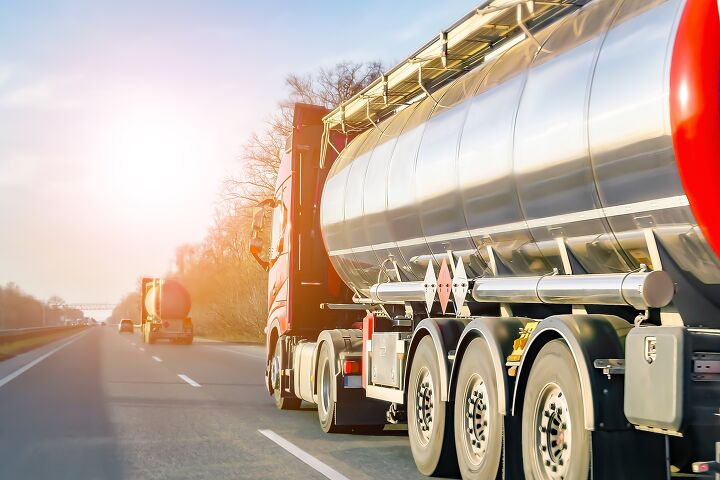
However, police departments have estimated that fuel-related crimes have increased by somewhere between 10 percent and 30 percent in the U.S. over the last 12 months. The brunt of this likely pertains to commercial trucking fleets where the thieves can take large amounts of diesel all at once. Organized criminals may even obtain/duplicate government or commercial fuel cars designed for fleet use. This allows them to steal massive amounts of fuel over extended periods of time before anyone notices.
North America likewise has the same kind of debt recovery and surveillance firms pushing statistics pertaining to fuel theft. But they seem to be fewer in number and featured less prominently in the media. Considering the conflicting data offered by those companies across the Atlantic, that might be for the best.
Sadly, that kind of leaves everyone guessing about how big of a problem fuel theft actually happens to be right now. It’s reasonable to assume we’ve seen an increase in recent years. But some of the rates being claimed by specific groups border on being unbelievable.
Your author would likewise argue that retail theft pales in comparison to what’s happening at the highest levels. The United States Treasury recently imposed sanctions on Mexican entities it claimed had ties to the Jalisco New Generation Cartel that was exporting fuel illegally. This was said to include both refined fuel and crude oil, generating hundreds of millions of dollars annually for the cartel each year.
Meanwhile, global oil concerns are still enjoying healthy profits as their customers endure higher prices at the pump. Regional wars have not only restricted the available energy, it’s likewise ensured that crude prices have remained fairly high.
Last month, Chevron reported its highest quarterly profit in six years. But it was hardly the only company that benefited. Analysts have estimated that the global oil and gas industry would see an extra $500 billion in profits by the end of this year that wouldn’t have existed prior to the United States and Israel striking Iran. With the Israelis likewise moving against other neighboring countries, the assumption is that shipping and drilling will remain constrained in the Middle East for quite some time.
With oil companies and their shareholders presently enjoying a sizable financial windfall, they’re unlikely to complain. But the general public certainly has and there are now three separate bills floating through the U.S. Congress seeking to tax those profits. Critics have suggested that this is just the government attempting to get its share after enabling the conditions that caused these regional wars and subsequent fuel prices. However, proponents of the bills believe that windfall taxes will ultimately discourage the companies from profiting off lower supplies and encourage them to spend more on drilling that would hopefully lower prices over time.
[Images: Irene Miller/Shutterstock; Matt Gush/Shutterstock; Tartezy/Shutterstock; New Africa/Shutterstock; photodaria/Shutterstock; Asif 31/Shutterstock]
Become a TTAC insider. Get the latest news, features, TTAC takes, and everything else that gets to the truth about cars first by subscribing to our newsletter.
via Autobuzz Today
Comments
Post a Comment