As the 1980s came to an end, it became apparent that trucks would be the future of commuting and family hauling in America. Isuzu was making a real effort to sell its cars here at that time, but the Trooper II was its biggest American sales star. Here's an early first-generation example, now residing in a Denver self-service boneyard.
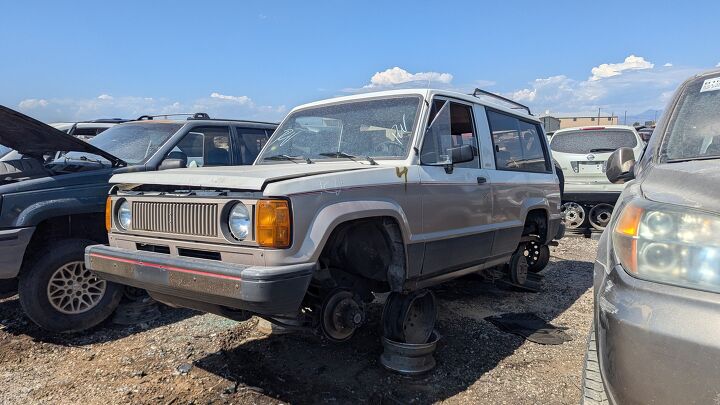
I'd gone to U-Pull-&-Pay that day to shoot a first-gen Mitsubishi Montero that popped up in the yard's online inventory, but it turned out to be pretty rough. Just a few rows away, however, was one of the nicest early Troopers I've seen in a junkyard this century.
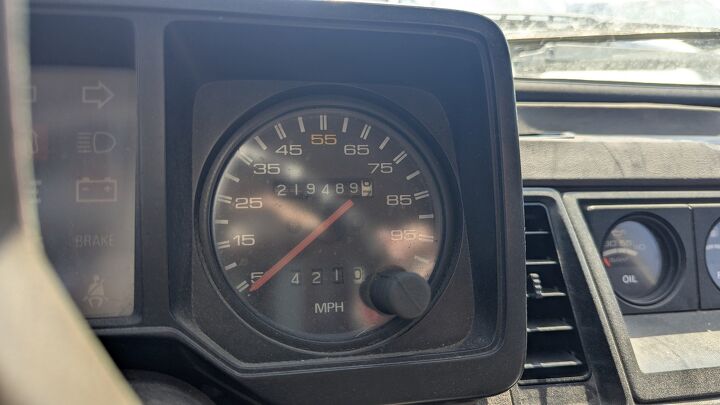
This truck's owner or owners took good care of it, and it reached a respectable final mileage total for an Isuzu product of its era.
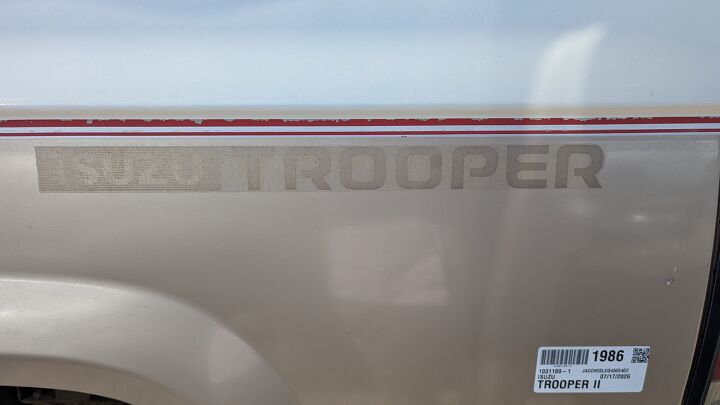
The Trooper was known in its homeland as the Bighorn. It was the Trooper elsewhere, mostly, but also got Jackaroo, Monterey, Caribe, Star and Korando Family badging. The long reach of the mighty GM Empire helped sales.
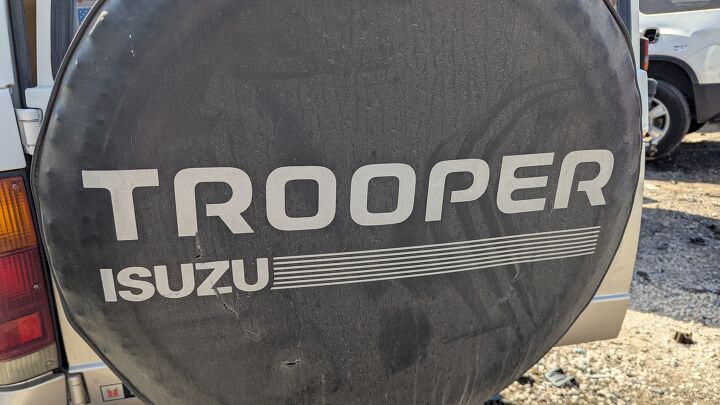
Among other things, it was a Chevrolet, an Opel, a Subaru, a Ssangyong, a Mekong, a Vauxhall, an Acura and a Honda.
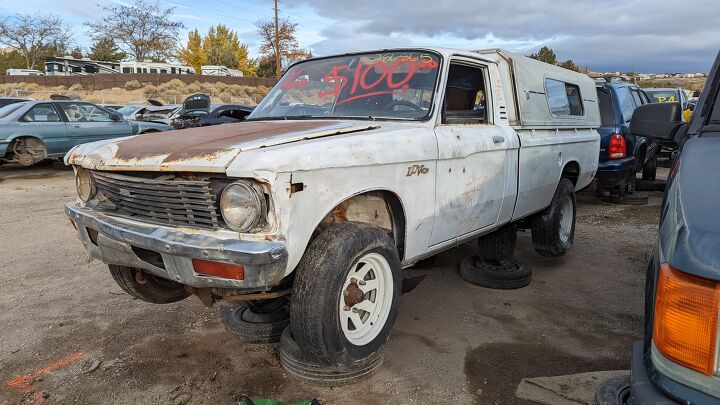
While a handful of Bellels and Belletts were imported privately, the first Isuzu model to be sold in quantity in the United States was a rebadged Isuzu Faster known as the Chevrolet LUV. Then there were Isuzu engines in Chevettes and, briefly, the Buick Opel by Isuzu.
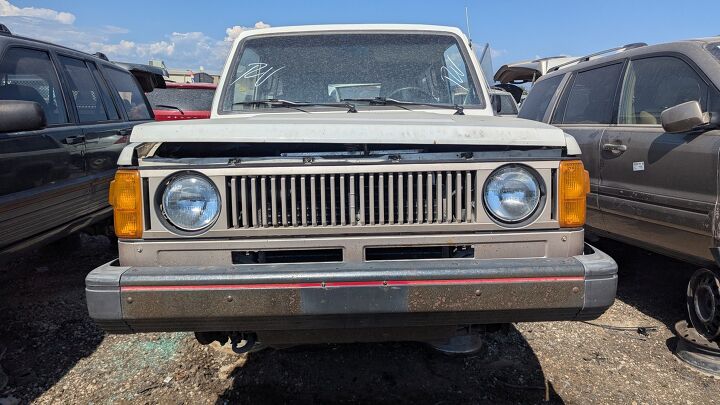
All this was good news for Isuzu, but the Trooper was the big hit. Arriving just in time to compete for sales with the likes of the XJ Cherokee and Montero, it became the star of American Izuzu showrooms.
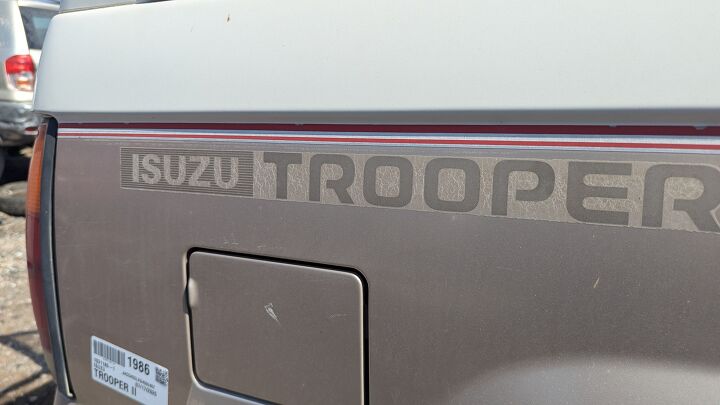
Most online sources will tell you that the first model year for the U.S.-market Trooper was 1981, but that is incorrect. According to my extensive library of price guides, the first Troopers sold here were 1984 models, same as the Cherokee and Montero. All the first-generation Troopers sold in the United States were badged as Trooper IIs.
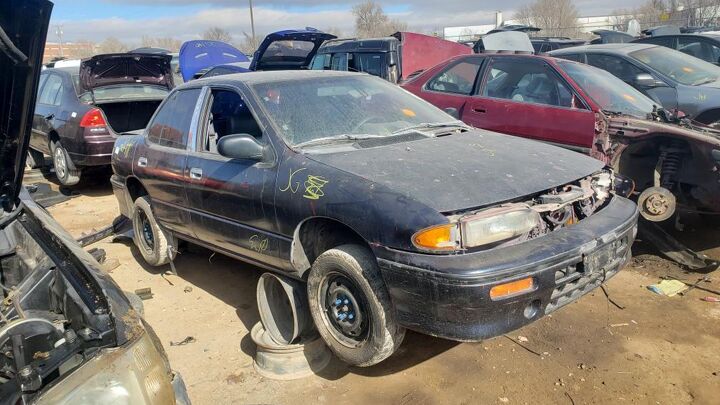
Isuzu continued selling cars in the United States as the 1990s dawned, but it was a truck company at heart and the Trooper had shown the way to open American wallets. The final Isuzu-built cars sold here were 1993 models: the Isuzu Stylus and the Geo Storm.
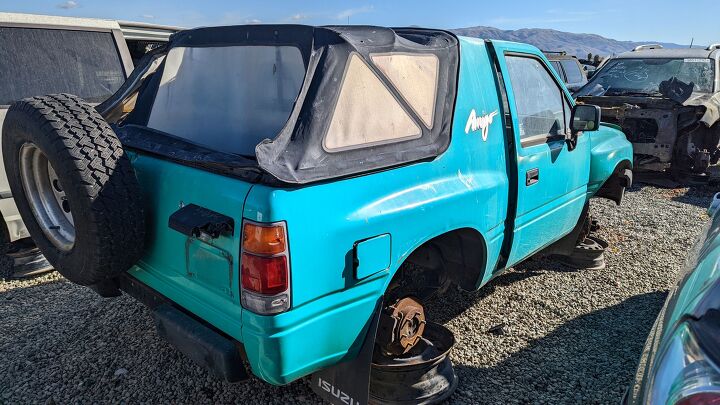
After that, American Isuzu dealers sold only trucks and truck-shaped vehicles (with the exception of the Oasis minivan, which was a rebadged Honda Odyssey and doesn't count). We got the Amigo, Rodeo, VehiCROSS and Axiom, in addition to the Pickup (the P'up name was ditched after 1987) and Trooper.
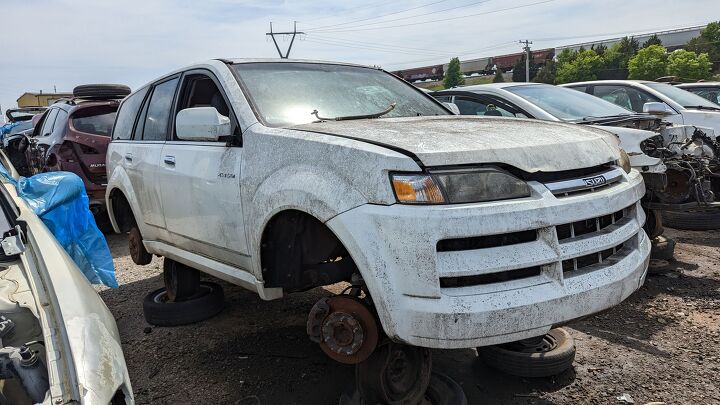
But all was not well for the Asian members of the Greater General Motors Co-Prosperity Sphere as the 1990s became the 2000s (see: Daewoo and Suzuki). The 2004 Axiom was the final Isuzu-designed light passenger vehicle offered in the United States.
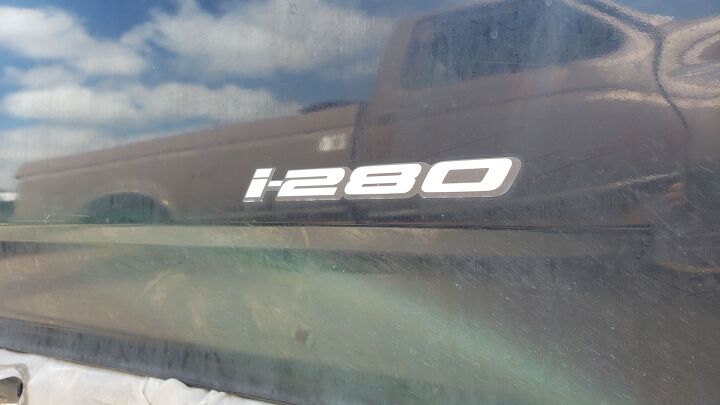
Things got really depressing for the proud manufacturer named for one of Japan's most sacred rivers. Isuzu dealers had been selling rebadged Chevy S-10s as Isuzu Hombres since the middle 1990s (Spanish speakers who missed chuckling about a vehicle called the Friend later enjoyed chortling about a vehicle called the Man), but then came the Isuzu-ized Chevy Trailblazer ( the Ascender) and the Chevy Colorado-twin Isuzu I-Series (perhaps the only badge-engineered 21st-century pickup more embarrassing than the Suzuki Equator).
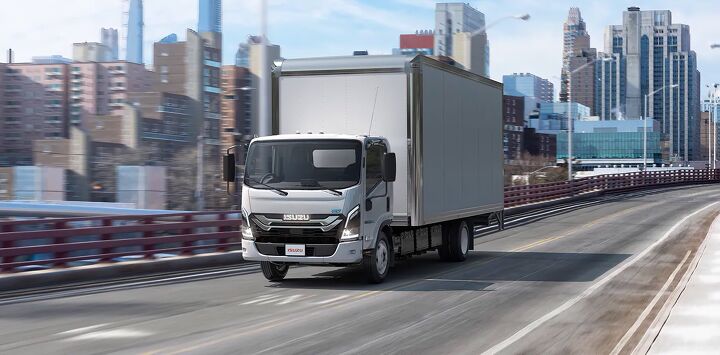
Isuzu still sells big commercial trucks here, of course, so there's a happy ending to the post-Trooper story.
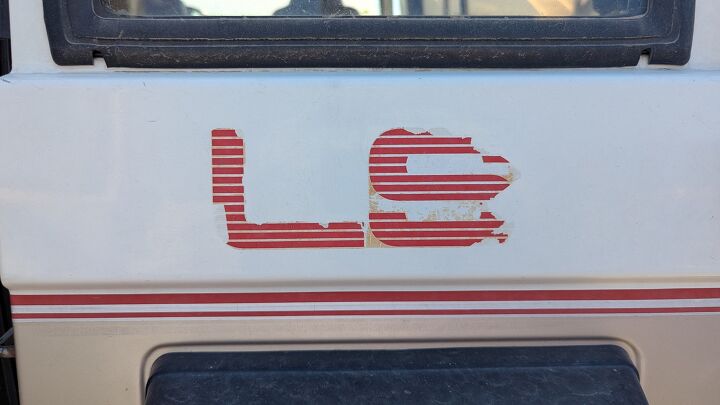
Today's Junkyard Find is the top trim level for the '86 Trooper II: the LS.
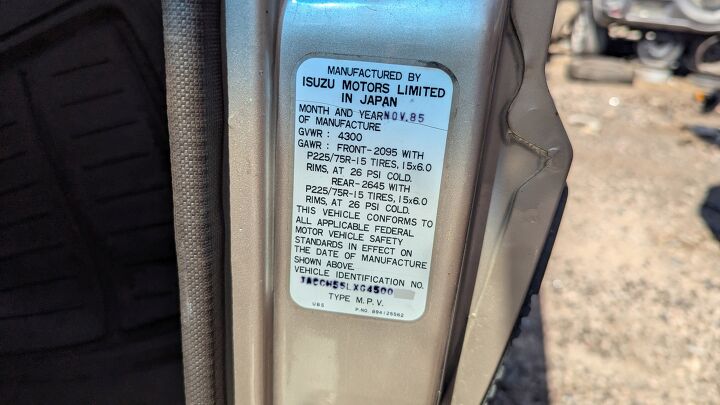
The MSRP for this truck before options was $10,349, or about $31,533 in 2026 dollars. That compared favorably to the 4-whee-drive (4WD) Cherokee two-door ($10,849) but was undercut significantly by the $9,839 Montero. Meanwhile, a new 4WD Ford Bronco II started at $11,501, while the 4WD Chevy S-10 Blazer cost $10,698.
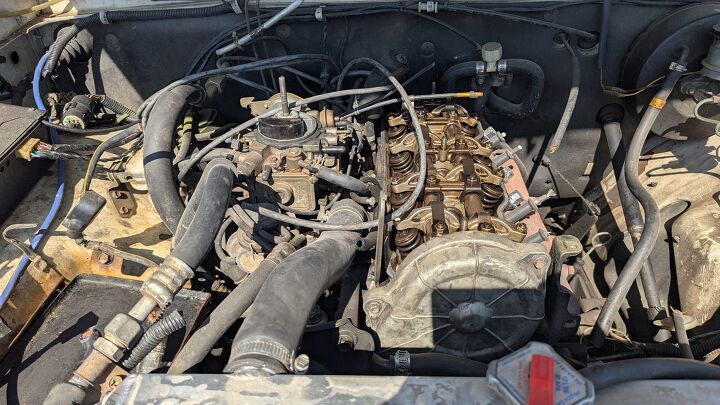
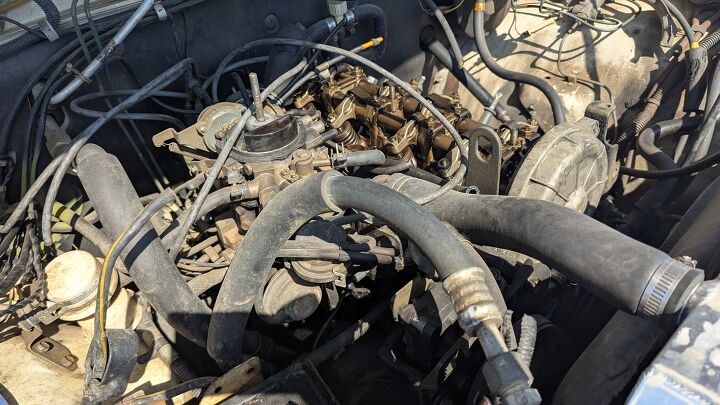
All of the above trucks came with four-cylinder engines as base equipment (in fact, the S-10 Blazer could be had with the Isuzu four-banger previously used in the LUV). The Trooper II for 1986 had just two available engines: the base 2.3-liter gasoline straight-four and the optional 2.2-liter diesel straight-four.
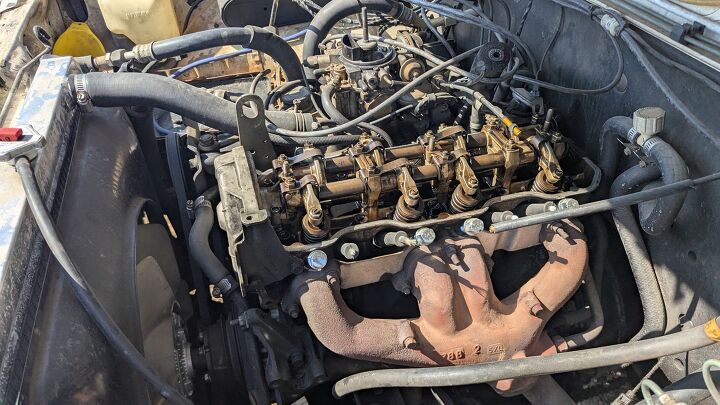
This engine was rated at 96 horsepower and 123 lb-ft of torque. It appears that the final owner removed the valve cover to diagnose a problem that proved too expensive to be worth dealing with.
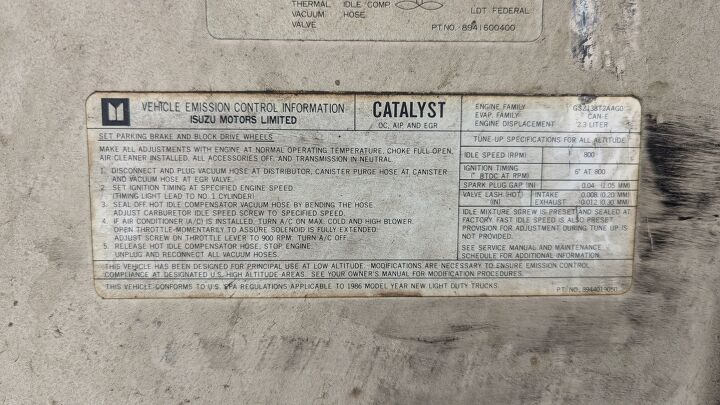
This truck, like nearly all U.S.-market Trooper IIs, has the gas engine.
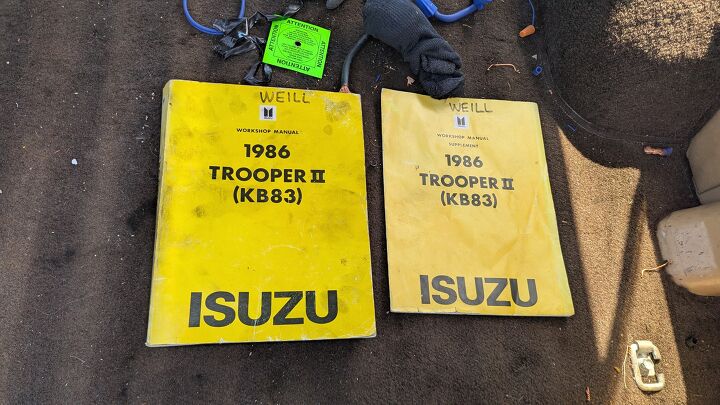
I should have bought these factory shop manuals while I was there, because they're worth real money on eBay. Their presence in the truck shows that at least one owner was willing and presumably able to do their own wrenching.
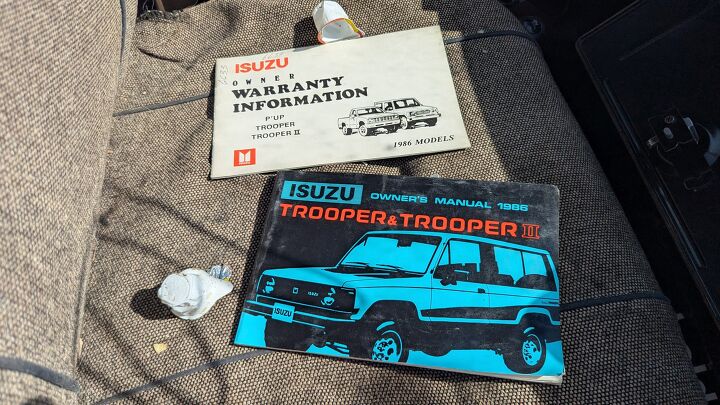
The original driver's manual and warranty booklet were still in the glovebox at the end.
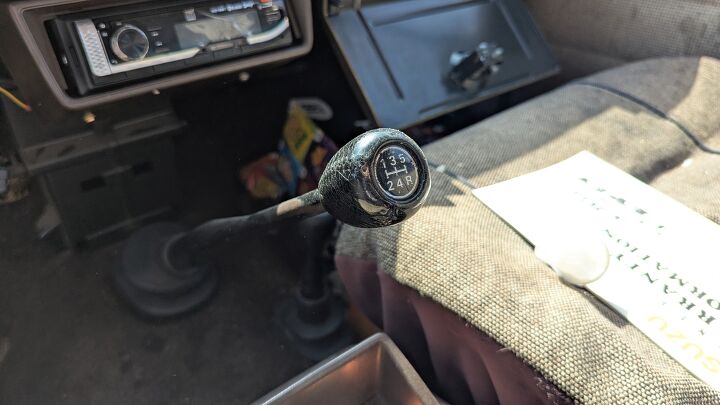
The base five-speed manual transmission combined with confusing 4WD rather than idiot-proof all-wheel drive (AWD) probably kept resale value down during this truck's final decades.
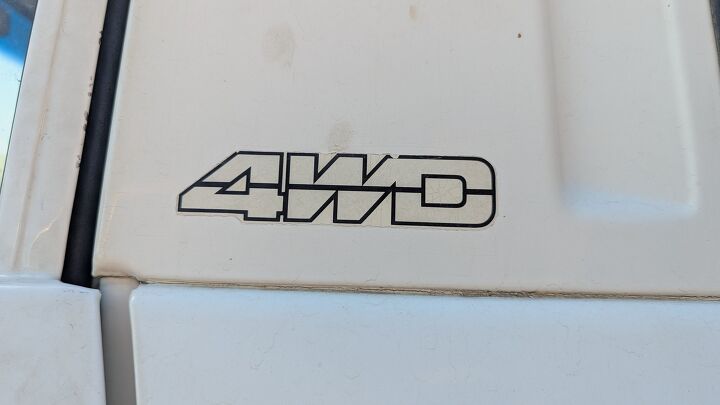
You mean you aren't supposed to use 4WD on dry pavement for year after year?
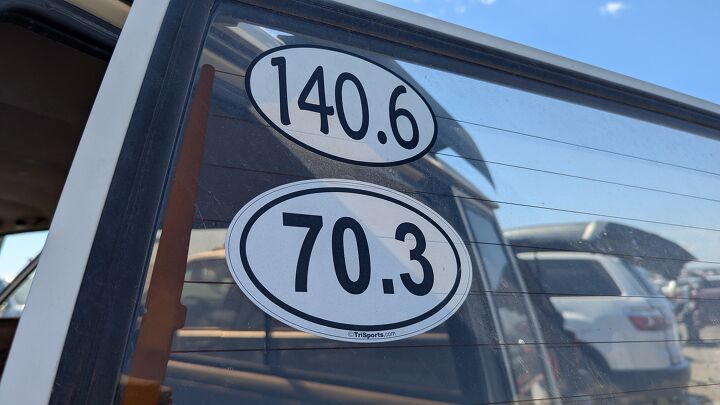
The final owner appears to have been an Ironman triathlon aficionado. An old reliable Trooper with a manual would have been a fine vehicle for getting into the mountains to train. Not a comfortable ride nor the best fuel economy, but got the job done.
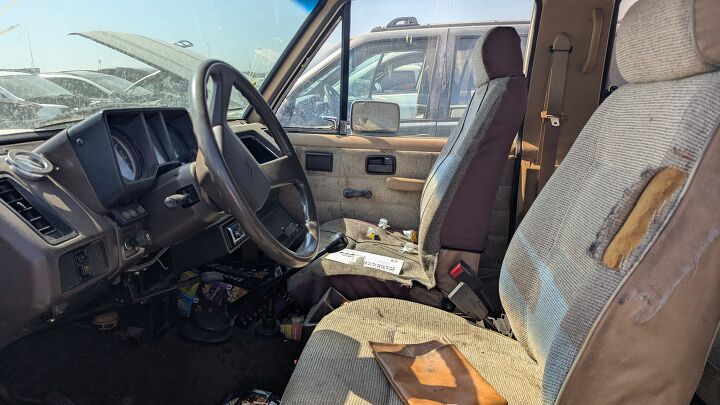
I'll bet it was tough to give up on this truck.
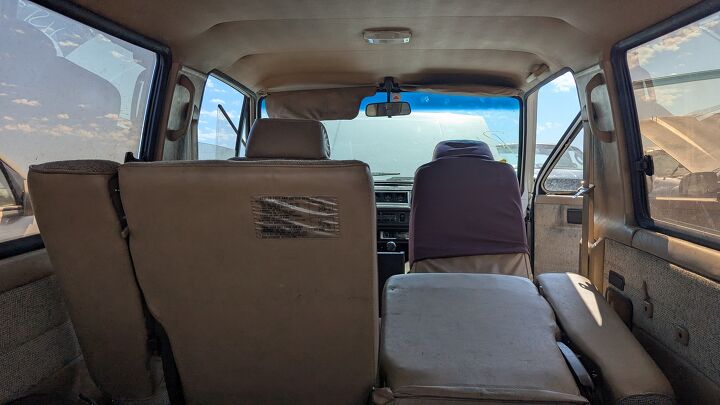
1986 Isuzu Trooper II in Colorado junkyard.
1986 Isuzu Trooper II in Colorado junkyard.
1986 Isuzu Trooper II in Colorado junkyard.
1986 Isuzu Trooper II in Colorado junkyard.
1986 Isuzu Trooper II in Colorado junkyard.
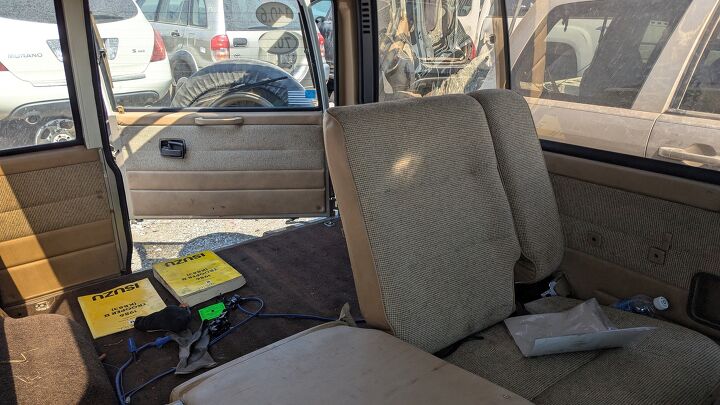
1986 Isuzu Trooper II in Colorado junkyard.
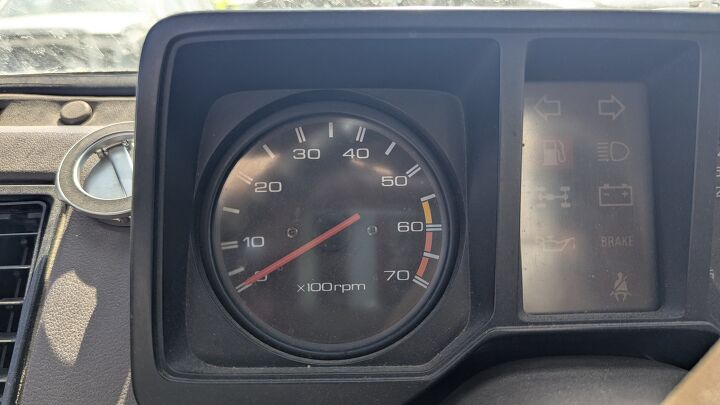
1986 Isuzu Trooper II in Colorado junkyard.
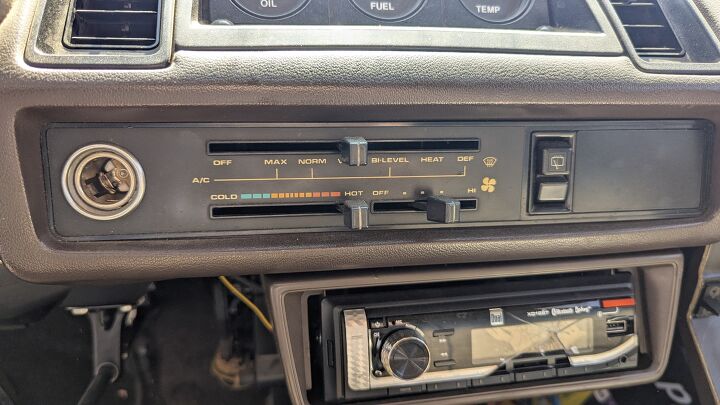
1986 Isuzu Trooper II in Colorado junkyard.
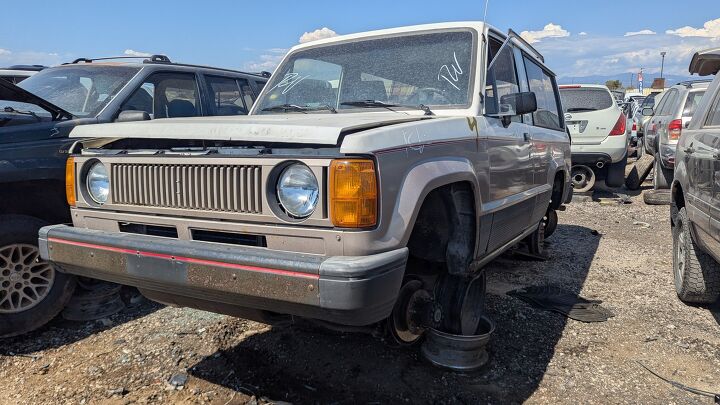
1986 Isuzu Trooper II in Colorado junkyard.
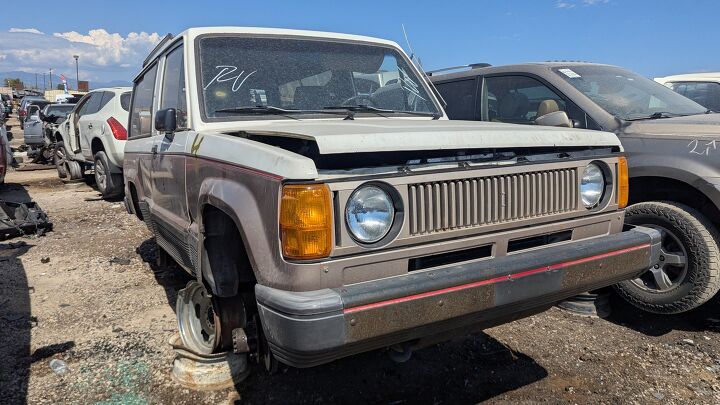
1986 Isuzu Trooper II in Colorado junkyard.
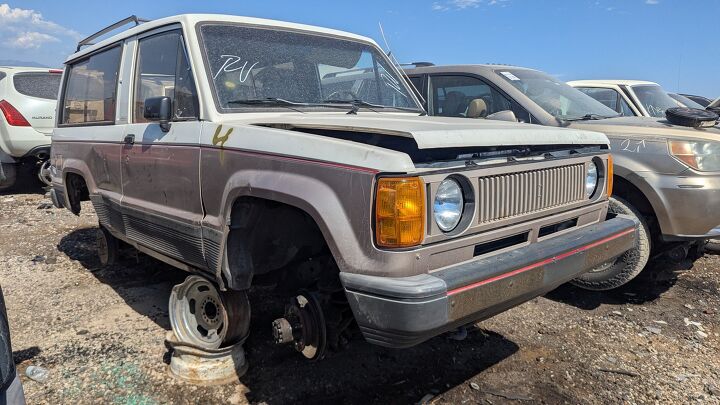
1986 Isuzu Trooper II in Colorado junkyard.
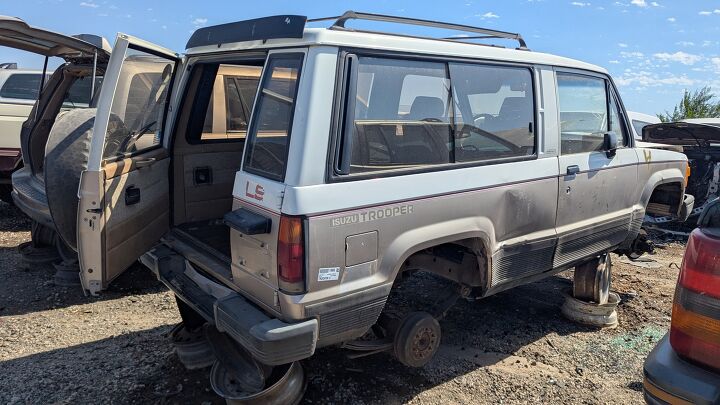
1986 Isuzu Trooper II in Colorado junkyard.
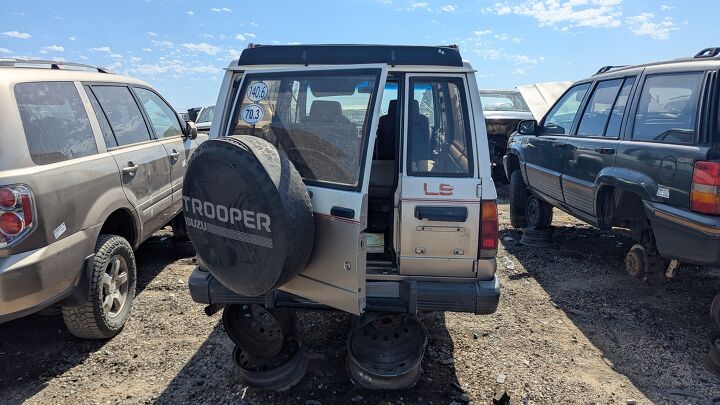
1986 Isuzu Trooper II in Colorado junkyard.
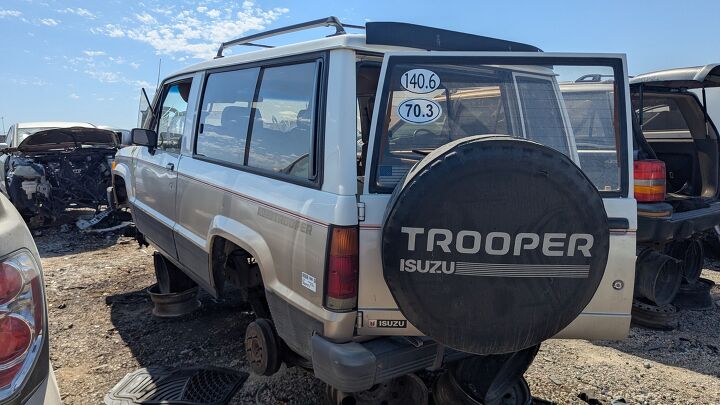
1986 Isuzu Trooper II in Colorado junkyard.
[Images: author]
Become a TTAC insider. Get the latest news, features, TTAC takes, and everything else that gets to the truth about cars first by subscribing to our newsletter.
via Autobuzz Today
Comments
Post a Comment