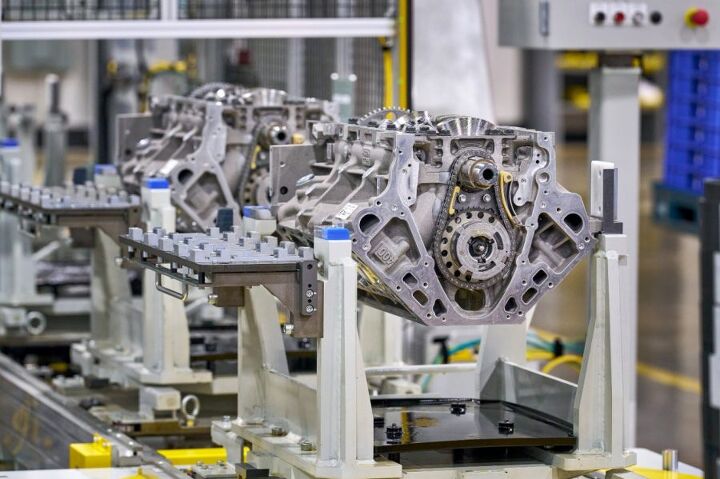
General Motors is hyping up the new V8 options that will be coming to updated versions of the Chevrolet Silverado and GMC Sierra — with other models presumed to follow. Considering the lackluster reputation gained by the V8 engines currently available on those models, the forthcoming changes will presumably be welcomed by customers.
With the United States recently pulling back on stringent vehicle emissions, domestic automakers feel comfortable fielding more V8 motors. This change is especially relevant for full-size pickups, as buyers have been voicing complaints about engine downsizing. While GM wisely kept V8s available, the engines themselves have developed a poor reputation.
The current 6.2-liter V8 (L87) has been faulted with faulty machining that could potentially leave connecting rods and crankshafts laden with debris. This can lead to clogged up oil pathways as clean oil becomes polluted by the rough surfaces shearing off material during normal operation. There have also been claims that some of the oil galleries may have been misaligned from the factory. These issues forced the manufacturer to launch a sizable recall and recommend owners pivot to a significantly heavier oil blend.
For the smaller 5.3-liter V8 (L76), which has been in production much longer than the 6.2-liter, the problems appear less pronounced. But we’ve still seen the more recent examples being accused of having issues with hydraulic lifters. The problem is assumed to stem from the active fuel management system installed to help the unit achieve emissions compliance. This is actually an issue that’s become increasingly common in loads of vehicles that feature some form of cylinder deactivation in an effort to reduce fuel consumption. The problem has actually become so pronounced over the last decade that modifying vehicles to deactivate the system has become extremely popular.
For 2027, General Motors has opted to replace the 5.3-liter with a new 5.7-liter and the 6.2-liter with a fresh 6.6-liter. Both of the new V8s use the latest small-block architecture that originally launched via the C8 Corvette (below).
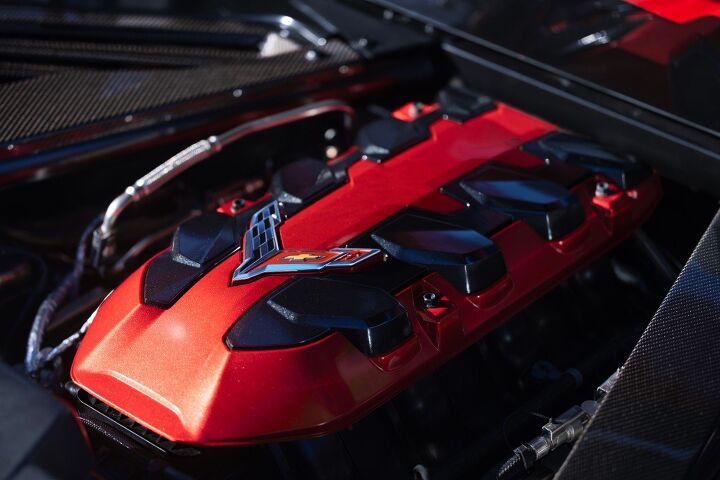
The base 5.7-liter V8 is said to output 402 horsepower and 428 pound-feet of torque, trumping the outgoing 5.3-liter unit by nearly 50 in both metrics. Meanwhile, the 6.6-liter motor makes a very respectable 481 horsepower and 501 pound-feet of torque — putting even more distance between itself and its predecessor.
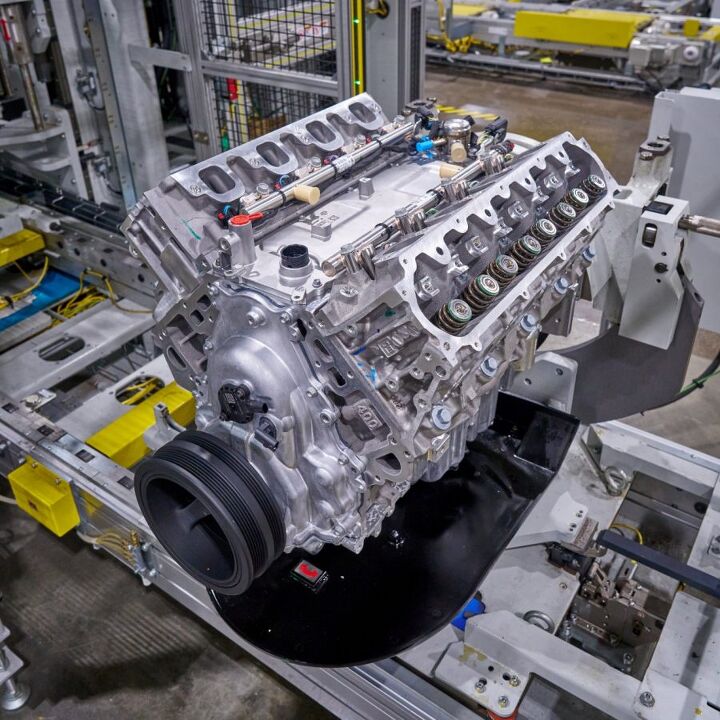
Performance gains were achieved by the new motors featuring more displacement and higher compression ratios (12.0:1 for the 5.3-liter and 12.5:1 for the 6.6-liter). But they’ve also been issued with an updated throttle body and an intake manifold that’s supposed to improve the engines’ aspiration.
Direct injection has been all the rage of late with manufacturers because it helps boost performance and efficiency. But many drivers (including your author) have griped about the change since it also promotes a swift buildup of carbon gunk on the intake valves. This requires previously unnecessary maintenance routines, unless the brand was wise enough to likewise retain port injection — which GM has decided to do with the new motors.
GM also seems keen to resolve any fears about lubrication, since issues with the outgoing V8s pertained to total engine seizures due to a lack of oil. The new motors are said to receive a variable oil pump, additional feed locations, and an oil cooler. All of this is in service of keeping the motor properly lubricated, presumably extending its lifespan. Manufacturer oil recommendations have also come up to a heavier-than-before 0w-30.
“These new V8 engines advance GM’s legendary Small Block architecture with greater capability, more advanced technology and the strength of GM’s manufacturing footprint behind them,” stated Tom Bishop, General Motors’ Chief Engineer for Small Block engines. “They’re engineered to provide truck customers the confidence and performance they expect from a GM V8.”
The larger of the two new V8s was said to be the most powerful naturally aspirated V8 engine in its class. Since the pickup segment loves to brag about being the best in literally anything, this is a pretty good get for the automaker — regardless of how it translates to the overall driving experience.
While the enhanced 2.7-liter TurboMax will continue to offer the best maximum payload on the automaker’s 1500 series full-size pickups, the 3.0-liter TurboMax Diesel remains better suited for towing applications. Meanwhile, the 5.3-liter V8 is probably the most well-rounded option overall thanks to its 13,700-pound towing capacity and 2,170-pound max payload. Despite being more powerful, the 6.6-liter unit lags behind in both respects. However, the final metrics will depend upon options and whether you’re buying a Silverado or Sierra, regardless of which engine you choose.
All engines for GM’s 2027 light-duty truck lineup will be paired with a 10-speed automatic transmission and can be had with the company’s optional 34-gallon fuel tank. The automaker said that the reservoir is capable of offering 900 miles between fillups on diesel models. But we imagine range should be pretty good on the gasoline-powered trucks — just nowhere near 900 miles.
Overall, we like what we’re hearing from General Motors about the new motors. The changes seem like welcome ones and directly address some of the concerns associated with the outgoing engines. GM has similarly promised to have done a surplus of testing to ensure reliability. But that’s usually the case with new motors and we won’t really know how it came together until they’ve been on the market for a few years.
From what we’ve been able to gather, it would also appear that the trucks will continue to feature Dynamic Fuel Management (cylinder deactivation), auto-stop start, and a conspicuous lack of an oil dipstick. These aren’t things that truck buyers appear to want and don’t realistically add tangible long-term benefits to owners. Granted, some improvements to fuel efficiency are the obvious exception. But that doesn’t apply when the resulting technology runs the risk of tainting dependability.
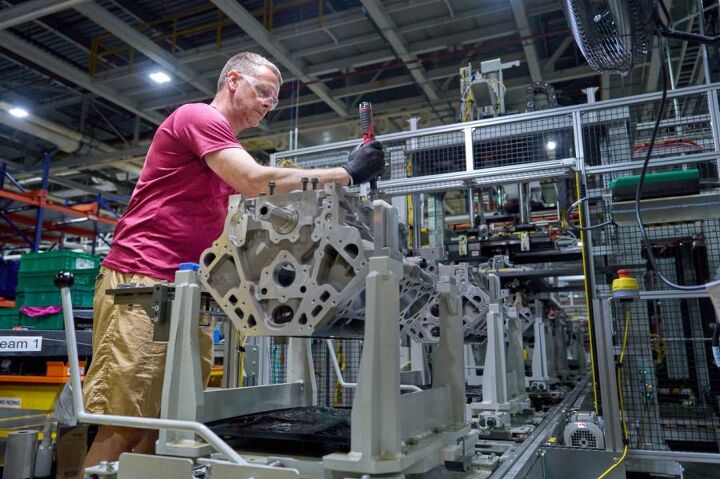
The new small block V8s will be built at GM’s Flint Engine Operations, with additional capacity planned for Tonawanda and St. Catharines. We’ll first see them installed into the 2027 GMC Sierra 1500 and Chevrolet Silverado 1500 later this year. Pricing on those vehicles (along with any additional changes) should be announced closer to launch.
[Images: General Motors]
via Autobuzz Today
Comments
Post a Comment