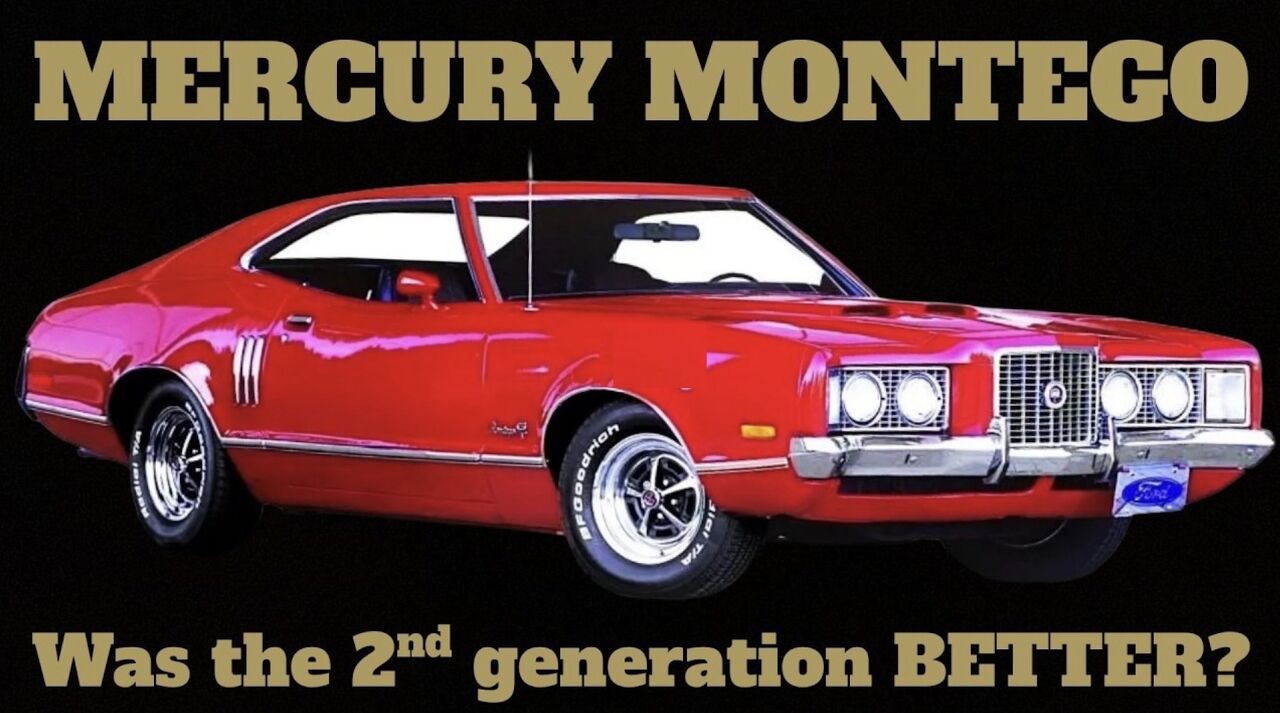
The Montego had done well for Mercury during its first generation selling roughly 100,000 units per year. This was roughly a third of Mercury’s total sales. The question was could the redesigned Montego do as well or better? We’ll address that question at the end of the video for now let’s take a look at the 2nd generation Mercury Montego.
The TTAC Creators Series tells stories and amplifies creators from all corners of the car world, including culture, dealerships, collections, modified builds and more.
An AI-generated transcript summary edited by a staffer is below.
[Image: Tony's Fords and Mustangs/YouTube]
Become a TTAC insider. Get the latest news, features, TTAC takes, and everything else that gets to the truth about cars first by subscribing to our newsletter.
Summary
The second-generation Mercury Montego debuted in September 1971 as a 1972 model, bringing a complete redesign that shifted the car toward traditional American luxury. Although based on the Ford Torino, the new Montego featured body-on-frame construction, updated styling, a more comfortable ride, and a broad range of engines and trim levels. Initially, it outsold the first-generation model, but sales declined significantly over the following years as fuel prices rose and similar Ford and Mercury vehicles competed for buyers.
1972: A Complete Redesign
Mercury replaced the original Montego with a substantially different vehicle, abandoning the unibody construction for a body-on-frame design intended to deliver a more substantial, big-car ride. The two-door models used a 114-inch wheelbase, while four-door hardtops and station wagons rode on a 118-inch wheelbase.
Exterior styling included a prominent egg-crate grille, quad headlights, slab-sided bodywork, recessed door handles, wider C-pillars, and a large rear bumper incorporating the brake lights, turn signals, and backup lamps.
Five principal model offerings were available:
- Montego: The base model.
- Montego MX: Added exterior trim and upgraded sound insulation.
- Montego MX Brougham: Featured deluxe wheel covers and a bench seat with a folding armrest.
- Montego GT: A sportier model offered as a two-door fastback or wagon, with performance styling, bucket-seat options, and additional instrumentation.
- Montego wagons: Available in MX and upscale MX Villager configurations, with the Villager receiving woodgrain exterior trim and upgraded interior appointments.
The engine lineup was extensive, ranging from a 250-cubic-inch inline-six producing 95 horsepower to several V8s. The most notable performance options included a 351 Cobra Jet V8 rated at 262 horsepower and a 429 Thunderjet V8 producing 205 horsepower. Transmission choices included a three-speed manual, an optional four-speed manual with a Hurst shifter, and a Select-Shift automatic.
The Cyclone name also returned, but only as an option package for the Montego MX and GT. It included distinctive decals, rocker-panel stripes, and restricted engine choices of the 351 Cobra Jet or 429 Thunderjet. With only 29 Cyclone-option cars built for 1972, it became one of Mercury's rarest performance offerings.
The automotive press responded favorably, with Road Test magazine naming the Montego MX Brougham its Car of the Year and the GT its Car of the Year for enthusiasts. Mercury sold 135,092 Montegos for 1972, exceeding the first-generation model's typical annual sales of approximately 100,000.
1973: Safety Regulations and Continued Growth
Federal regulations requiring passenger cars to withstand low-speed impacts without damaging safety or lighting components prompted Mercury to revise the Montego's front bumper, grille, and front fascia.
Mercury also reduced compression ratios across most of the engine lineup, lowering horsepower ratings. The 351 Cobra Jet retained its higher compression ratio and avoided the same change.
Despite these adjustments, sales climbed to 156,805 units, making 1973 the Montego's strongest year of this generation.
1974: The Shift Toward Luxury
The 1974 model year brought more substantial changes. The Montego platform was shared with the Mercury Cougar and Ford Elite, increasing the overlap among Ford Motor Company's midsize and personal-luxury offerings.
Federal requirements for rear bumpers capable of withstanding five-mph impacts led to another styling revision. Mercury discontinued the GT fastback, replacing its sporty appearance with an optional Sports Appearance Group featuring simulated hood scoops, racing mirrors, body stripes, raised-white-letter tires, a leather-wrapped steering wheel, and full instrumentation.
The engine lineup was revised considerably. The inline-six, 351 Cobra Jet, and 429 Thunderjet were discontinued. A new 460-cubic-inch V8 producing 220 horsepower became available, while the replacement 351 four-barrel V8 delivered just 163 horsepower.
Sales dropped to 91,458 units for 1974, a substantial decline from the previous year.
1975–1976: The End of the Line
By 1975, Mercury had repositioned the Montego as a more fully luxury-oriented car. The Sports Appearance Group disappeared, and the engine lineup became more limited. The standard V8 was a 351M (Modified) with a two-barrel carburetor producing 148 horsepower. Buyers could also choose 400- or 460-cubic-inch V8 engines.
Sales fell to 55,835 units in 1975. The 1976 Montego received no significant changes, and sales dropped further to 33,739 vehicles.
The 1976 model year marked the end of the Montego nameplate's second-generation run. The name would not return to a Mercury passenger car until 2005.
Why the Montego Ultimately Declined
The second-generation Montego initially succeeded because buyers appreciated its comfortable ride, traditional styling, and body-on-frame construction. However, several factors contributed to its eventual decline.
- The 1973 fuel crisis: The Montego was relatively heavy and delivered unimpressive fuel economy just as gasoline prices and fuel-economy concerns became increasingly important.
- Product overlap: The Mercury Cougar and Ford Elite shared its platform, while other Ford and Mercury models offered similar styling and features.
- Changing market positioning: The Montego gradually moved away from its sportier roots toward luxury, losing some of its original identity.
By 1977, Mercury discontinued the Montego as a separate model. The Cougar expanded to include four-door and wagon versions, with the wagon retaining much of the Montego's bodywork behind the front doors and receiving a Cougar-style front end.
Overall Takeaway
The 1972–1976 Mercury Montego demonstrates both the appeal and the limitations of Detroit's midsize cars during the 1970s. Its redesigned chassis, comfortable ride, distinctive styling, and powerful V8 options made it a sales success at launch. The 1973 peak of 156,805 units showed that Mercury's new direction initially resonated with buyers.
However, rising fuel costs, reduced engine output, declining demand for large cars, and increasing similarities among Ford Motor Company's products undermined its long-term prospects. The Montego began as a successful reinvention of Mercury's midsize offering but gradually lost its market position, disappearing after 1976 as the company consolidated its lineup around the Cougar.
via Autobuzz Today
Comments
Post a Comment