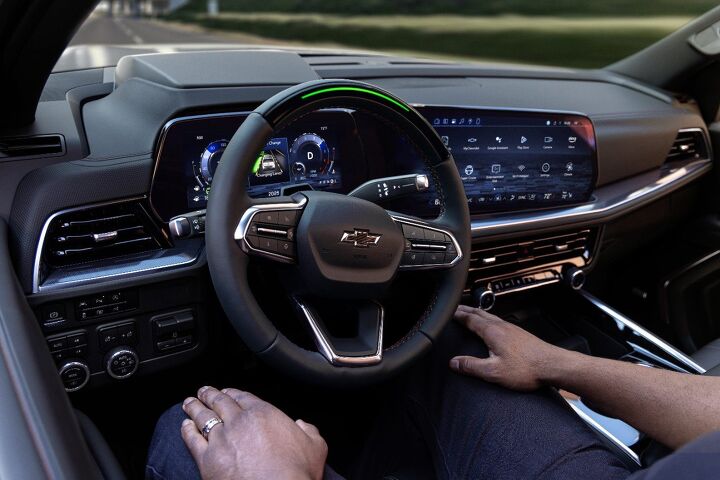
While much of the focus on General Motors' first-quarter earnings call revolved around rising material costs and guidance adjustments based on government tariff refunds, CEO Mary Barra also announced that roughly 90 percent of the code pertaining to autonomous driving was being written by artificial intelligence.
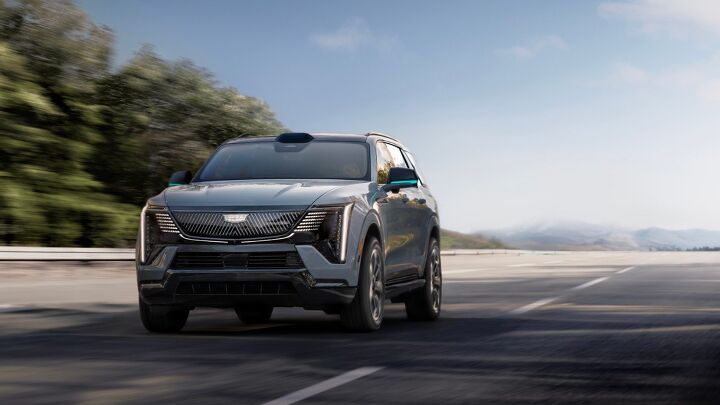
The next incarnation of GM’s Super Cruise semi-autonomous driving technology is supposed to be a major upgrade from the current system. Scheduled to launch in 2028 on the updated Cadillac Escalade IQ, the feature will reportedly go from being “hands-free” to something that will actually allow you to take your eyes off the road while rolling down the highway — provided that you’re still okay with being permanently monitored by in-cabin cameras.
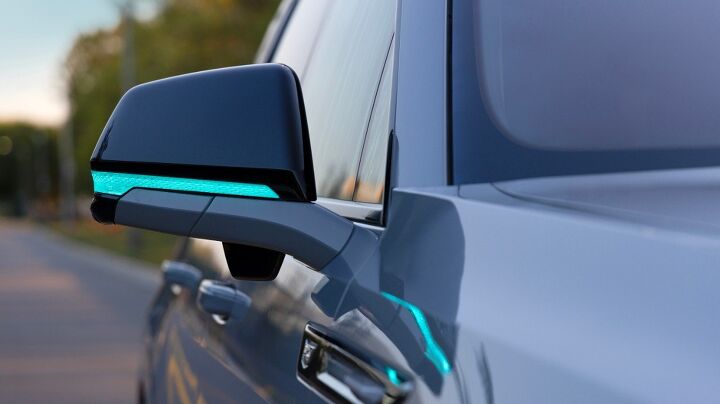
Vehicles will also have unique exterior lighting (below) that will indicate when they’re being driven autonomously, come with upgraded sensing equipment, and use the new SDV 2.0 (Software-Defined Vehicle) computing architecture. However, the resulting code will be overwhelmingly dependent upon AI.
CarScoops quoted Barra as saying “nearly 90 [percent] of the code written by our autonomy team is generated by AI,” adding "[the] way we’re building this technology is a reflection of how seriously we’re embracing AI across the enterprise.”
While artificial intelligence has proven itself capable of quickly writing code for all manner of applications, it does come with some drawbacks. Since algorithms are only as good as their training data, any resulting code will only be as good as whatever data GM originally fed into the system. The trade off is dramatically increased coding speed without much in the way of innovation.
Studies from 2023 have estimated that publicly available AI platforms that specialize in coding (e.g. ChatGPT, GitHub Copilot, or Amazon Q Developer) only manage to produce the correct code somewhere between 30 percent and 60 percent of the time. Additional research from the same timeframe also specified that less than three percent of developers possess a high level of trust in AI coding. Although 39 percent admitted to trusting it enough to use algorithmic coding to a limited degree, provided they could double check the work.
Another concern with AI-generated code is that it often doesn’t account for things like intellectual property or cybersecurity. Since artificial intelligence cannot truly understand context, it will often gloss over important aspects that fall outside the purview of the original prompt. Borrowing preexisting code can create other problems, too. In addition to potential IP theft, this can sometimes lead to bloated software that’s difficult to maintain and prone to be buggy.
Considering that Super Cruise is something people will quite literally be betting their lives upon, it seems reasonable for customers to expect nothing but the absolute best code from auto manufacturers.
GM has attempted to assuage concerns by noting that it’s capable of simulating a lifetime's worth of driving data every single day. While that’s certainly impressive, and presumably helps with bug testing, digital simulations are not reality. We’ve seen Waymo, which is often viewed as the industry leader in autonomous driving, frequently struggle when its test vehicles are thrown a curveball in the physical world.
At the end of the day, AI has proven itself to be fallible. Those that have interacted with AI-driven search engines will have undoubtedly noticed that they will occasionally just make things up. But it’s the new hotness for investors, so companies are keen to mention that they’re implementing artificial intelligence wherever possible.
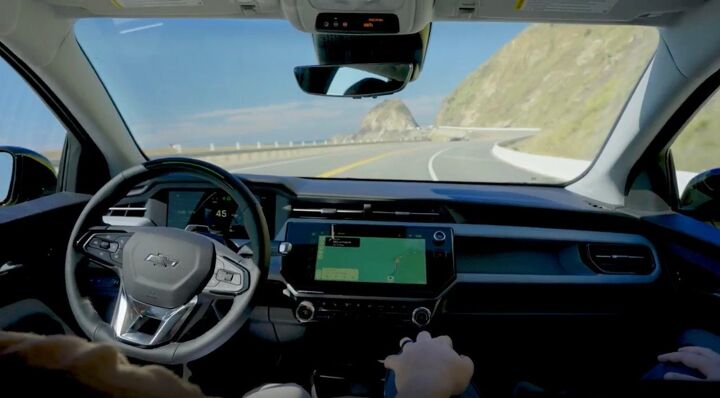
Obviously, the immediate consequences of having the software controlling autonomous driving systems fail would be quite a bit higher than Grok issuing a fake lasagna recipe. Digital assistants, which are becoming commonplace in modern automobiles, have also proven to be less-effective than advertised. So GM has a team of qualified individuals that are supposed to double check any code produced by AI. There is likewise a fleet of test mules that have been running the updated version of Super Cruise in California and Michigan.
The automaker wants to make clear that it's not simply handing the reins over to artificial intelligence. However, it still feels like the company is using its own customers to beta test the final results and we’ve already had too much of that from the automotive industry.
For some motorists, this won’t really change much. Software-defined vehicles, rampant data harvesting, in-cabin surveillance, the normalization of touch controls, and ceding user control via “Advanced Driver Assistance Systems” had already crossed the line of acceptability. However, there remains a subset of drivers that like the premise of Super Cruise and they’ll need to decide if they’re truly comfortable with it being AI coded.
[Images: General Motors]
via Autobuzz Today
Comments
Post a Comment