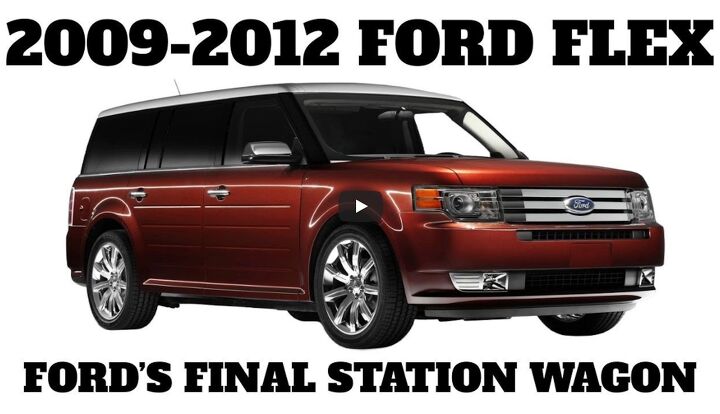
The Ford Flex – In 2005, Ford unveiled a Fairlane concept vehicle at the Chicago Auto Show and the overall response was positive. Those in charge at Ford felt this crossover could be a big hit with the North American buying public so they immediately green lighted it for production.
The Fairlane concept became the Ford Flex. A bit larger version but it closely retained the exterior look and feel of the concept car. Jim Farley stated the Ford could see as many as 100,000 flexes being sold in North America.
So how did that work out?
The TTAC Creators Series tells stories and amplifies creators from all corners of the car world, including culture, dealerships, collections, modified builds and more.
An AI-generated transcript summary, edited by a staffer, is below.
[Image: Tony's Fords and Mustangs/YouTube]
Become a TTAC insider. Get the latest news, features, TTAC takes, and everything else that gets to the truth about cars first by subscribing to our newsletter.
The transcript is a retrospective review of the early years of the Ford Flex, covering its development, features, reception, and sales performance from 2009–2012.
Key points:
- The Ford Flex originated from the 2005 Ford Fairlane concept, envisioned as a “Swiss Army knife” vehicle combining SUV space, car-like driving, and station wagon practicality. Ford expected it could sell up to 100,000 units annually.
- Introduced for the 2009 model year, the Flex was built on Ford’s D4 platform and styled by Peter Horbury with strong Volvo-inspired design cues and retro styling elements. It featured a boxy shape, spacious three-row seating for up to seven passengers, and fold-flat seats for cargo flexibility.
- The initial powertrain was a 262-horsepower 3.5L Duratec V6 paired with a six-speed automatic transmission, with optional all-wheel drive. The video highlights many standard and optional features, including leather seating, Ford Sync, navigation, panoramic roof options, trailer towing, DVD entertainment, and advanced safety systems.
- Trim levels included:
- SE (base)
- SEL (mid-level luxury features)
- Limited (top trim with premium technology and comfort features)
- Titanium (introduced in 2011 with sportier blacked-out styling)
- Trim levels included:
- In 2010, Ford added the 355-horsepower twin-turbo EcoBoost V6 and self-parking technology. Consumer Reports rated the Flex highly for affordability and reliability in the large SUV category.
- Sales declined steadily:
- 2009: 53,174 units
- 2010: 34,227
- 2011: 27,428
- 2012: 28,224
- Despite positive owner feedback and strong reliability ratings, the presenter argues the Flex underperformed because:
- Its unconventional styling was polarizing.
- Traditional SUVs were becoming far more popular, especially the Ford Explorer, which outsold the Flex by a large margin.
- Sales declined steadily:
- The video concludes by noting Ford hoped a major redesign for 2013 would revive sales, which the creator plans to cover separately.
via Autobuzz Today
Comments
Post a Comment