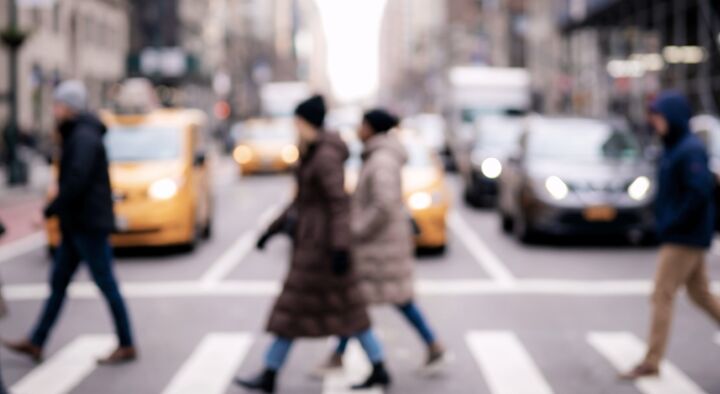
A recent study suggests that increases in average vehicle size have contributed to thousands of unnecessary pedestrian fatalities over the last few years.
The report comes by way of The New York Times, and leverages federal crash data as well as vehicle registrations from S&P Global and specifications from Expert AutoStats. The takeaway, according to the outlet, is that too much emphasis may have been placed on drunk or distracted driving in the past.
This is something other studies have absolutely noted before and was perhaps an issue that didn’t need this level of scrutiny to begin with. A basic understanding of physics should be enough to tell you that being struck by a 5,500-pound vehicle with a flat face would be less survivable than a 3,000-pound automobile with a hood low enough to give you a chance to roll over the top.
Disparities in vehicle size ( which we’ve covered extensively) have undoubtedly contributed to the overall spike in fatal accidents we’ve seen since the early 2010s. Older models were often significantly smaller and likewise lacked some of the safety features of newer vehicles. We saw per capita roadway fatalities increase as automakers prioritized larger automobiles and shifted away from active crash safety (e.g. passenger restraints, airbags, structural improvements) to prioritize “ crash prevention" (e.g. automatic emergency braking, lane keeping, pedestrian detection, driver monitoring).
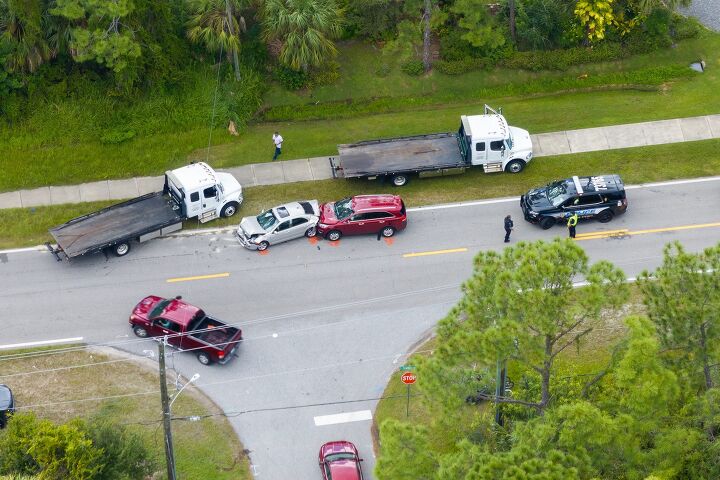
Pedestrians look to have had it even worse, significantly outpacing per capita rises in vehicular fatalities over the same timeframe. Recent improvements in roadway safety have been relatively modest for automobiles and borderline negligible for foot traffic.
While there is a wealth of evidence suggesting that increased instances of distracted driving (along with distracted walking) have played a meaningful role, modern vehicle designs have undoubtedly been a contributing factor.
Most sources show pedestrian fatalities declining steadily through the 2000s in the United States before starting to increase around 2009. This matches what we’ve seen on other markets, with the assumption being that widespread smartphone use may have tipped the scales. Some sources estimate that the number of pedestrian fatalities may have doubled from 2010-2022. More conservative outlets suggest a 50 percent increase over the same period.
In The New York Times report, the brunt of that data came by way of the National Highway Traffic Safety Administration (NHTSA) — which estimates that there were 4,109 pedestrian fatalities in 2009 and a whopping 7,522 in 2022.
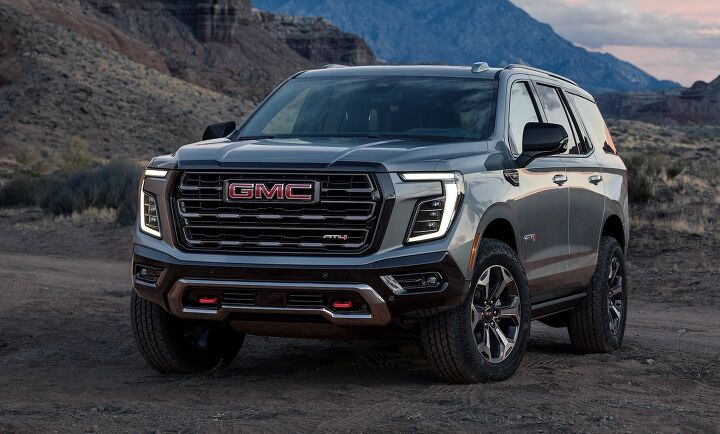
The biggest issue, according to the outlet, was the size and shape of modern SUVs and pickups. Supported by crash testing from Forensic Rock, the report notes that many events showed pedestrians being pushed forward by the vehicle only to be crushed beneath it moments later. This was assumed to be less of an issue with smaller vehicles, which had a better chance of seeing the victim roll over the hood before falling onto the pavement.
Another problem was said to be poor outward visibility. We’ve seen this issue worsen as all automobiles had their pillars sized up and windows sized down to improve crash test results. But pickups and SUVs tend to ride significantly higher, making it even more difficult to see what’s in their immediate surroundings.
Researchers went so far as to scan numerous popular truck models in order to determine how much larger their modern counterparts have gotten since the 1990s and early 2000s. In terms of blind spots, the report estimated that the GMC Sierra and Toyota Tacoma saw their outward visibility degrade by as much as 60 percent. Other models ranged between 25 percent and 100 percent. None of the pickups tested saw visibility improve, as all of them had embraced increasingly taller hoods and belt lines.
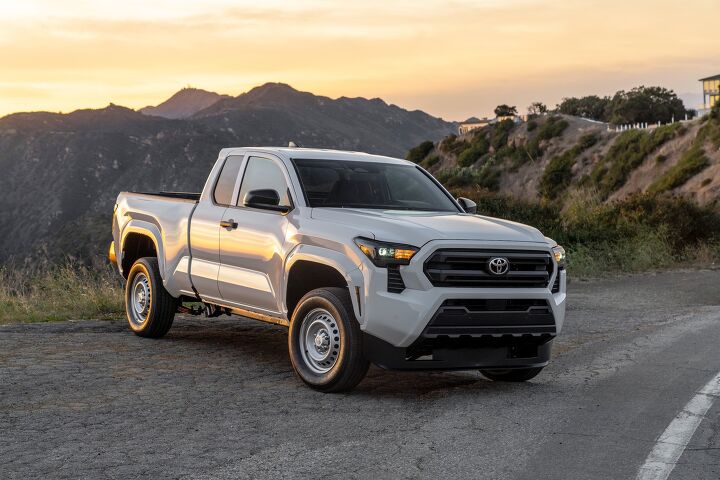
This even helped the team come up with a formula that estimated that pedestrian survivability declines by about 2.8 percent for every inch taller a vehicle’s hood becomes.
The report estimated that this combination of factors contributed to there being about 3,000 more pedestrian deaths over the last decade, with researchers suggesting the true number could be significantly higher if it took into account accidents occurring in places other than major roads. Since the NHTSA doesn’t include incidents that took place on private property, such as driveways or parking lots, there is a lot of wiggle room.
It’s certainly worth a look if you’re someone that’s interested in crash statistics. The data is good and cites numerous reputable sources, even if the final takeaway is not particularly groundbreaking. Much of what we’re seeing in the report further solidifies what many of us have suspected for years. But we would caution readers not to presume size is the only factor.
Underplaying distracted or intoxicated driving feels extremely short sighted. Modern cabins are clearly less intuitive than what was commonly available fifteen years earlier. Instances of drunk driving also saw a meaningful spike after 2020. Even though rates for intoxicated drivers look to have been decreasing more recently, they remain slightly higher than what would have been considered average between 2009 and 2019. We likewise know that modern ADAS systems ( such as pedestrian detection) have been a mixed bag in terms of their true effectiveness. All of the above items unquestionably contribute to the total number of fatalities, regardless of which singular factor happens to be the most relevant in terms of impacting pedestrian safety.
[Images: sabdo palon/Shutterstock; Bilanol/Shutterstock; General Motors; Toyota; RossHelen/Shutterstock]
Become a TTAC insider. Get the latest news, features, TTAC takes, and everything else that gets to the truth about cars first by subscribing to our newsletter.
via Autobuzz Today
Comments
Post a Comment