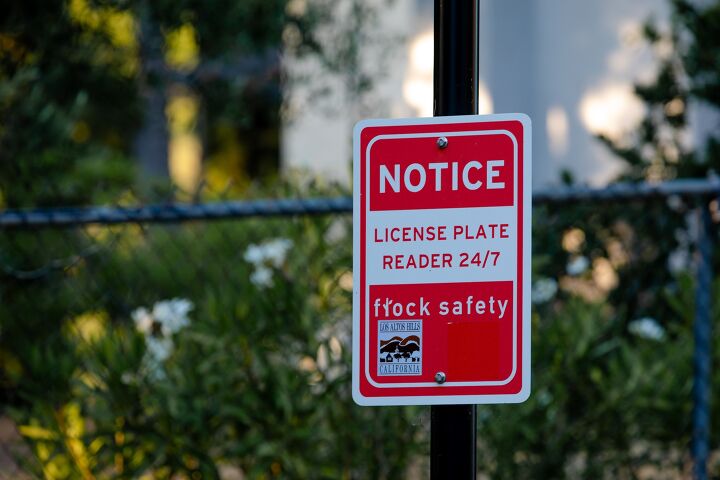
Denver has found itself in a position where it needed to deactivate its automated traffic camera network and the timeout has reportedly resulted in a situation where auto thefts actually declined.
Colorado’s capitol previously had a contract Flock Safety, the AI-supported "license plate readers” that have become a contentious topic across the United States. Denver partnered with the company after enduring several years of elevated vehicle crime, installing over 100 cameras in May 2024. But residents immediately expressed their dismay with the automated traffic cameras.
The deal with Flock expired at the end of March, requiring the preexisting camera network to be shut down and the hardware removed. While the city has since negotiated a new (and smaller) contract with Axon, those 50 units need time to come online. This has resulted in a stretch where Denver police have had to go without any AI-assisted surveillance tools and, rather interestingly, the resulting data seems to suggest that they might not have made that much of a difference in terms of preventing vehicle thefts.
According to state-backed data obtained by Denver News9, auto theft dropped 29 percent in April 2026 relative to April 2025 — when the Flock cameras were still active.
We’ve been extremely critical in regard to automated traffic enforcement and roadside camera systems in the past, with Flock frequently getting the worst of it. However, it was always your author’s assumption that the technology was still useful in terms of deterring crime. Most of the criticisms surrounding traffic cameras focus heavily on the invasion of privacy via widespread implementation and subsequent abuse. The concern was rarely that they’re not effective, but that the relevant technology would continue to be misused by state actors.
The issue wasn’t so much that they’d fail to catch more speeders, it was that they’d catch so many that the whole issue would become a revenue scheme. People weren’t upset because advanced traffic cameras were supposed to act as a criminal deterrent and help identify stolen vehicles, they were mad about officers using the relevant search tools to illegally spy on innocent people they knew as they went about their day.
However, Denver seems to be turning some of those preconceived notions on their head. The city saw a marked decline in car thefts while the cameras were down, suggesting that they don’t actually make much of a difference in terms of encouraging criminals to think twice before acting. Still, Denver police have stated that they remain in support of the cameras.
"License plate readers are a very effective investigative tool used by DPD to address a number of our crime challenges," the department was quoted saying by local outlet Denver 9News. "DPD believes the presence of ALPRs and resulting arrests provide a deterrent effect since the technology has been one component of our auto theft reduction efforts during the steep declines in auto thefts over the past several years."
It’s true that Denver’s automotive theft saw a marked decline in 2025 after spiking for several years. The region actually had one of the highest per capita instances of car theft in the nation by 2021. But rates began to decline in the Denver Metro area by 2023, which is a full year before the city began to implement Flock cameras. While the surveillance network may have played a factor in further reducing crime rates, they assuredly were not responsible for the initial shift.
Vehicle recovery rates during that same timeframe likewise suggest that Flock may not have made a marked difference in terms of investigation. One of the biggest selling points of the system was the claimed ability for the related search tools to track down specific cars, even without their license plate being visible — helping to identify missing vehicles.
But Colorado’s recovery rate for stolen vehicles actually declined through 2025. While still rather good, state data shows that about 86 percent of all stolen vehicles were eventually found in 2023. But that had declined to 80 percent by 2025. Still, it may not be fair to attribute that to decisions being made in Denver — even if it was responsible for the brunt of the criminal cases for the whole of Colorado.
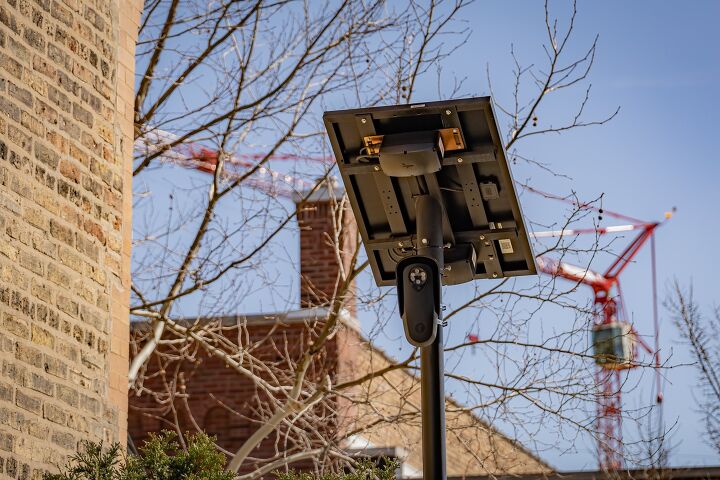
Opponents of enhanced surveillance have touted this as a clear sign that services like Flock are ineffective. City Councilmember Serena Gonzales-Gutierrez, who voted against traffic camera contracts in Denver, suggested that the above proves the cameras were never about preventing street crime.
"I am not surprised to hear that the absence of automatic license plate reader technology in our city has not resulted in an increase in auto theft nor meaningfully changed our police department's ability to investigate and solve crime," she asserted.
"While Flock was originally pitched as a solution to auto theft in our city, we have seen firsthand over the last year how the justifications for continued use of this mass surveillance technology shift frequently and are seldom tied to objective data.”
Objective data is tragically difficult to come by here. Denver police records clearly show that 439 vehicles were stolen in April 2025 (when Flock cameras were operating) and just 312 vehicles being stolen in April 2026 (when the cameras went down). But the true cause may have more to do with changes to the law than the tools being used by the city.
Denver Mayor Mike Johnston likes to point to Flock as a biggest factor in Colorado’s recent decrease in automotive crime. But it’s certainly not the only factor.
From News9:
The April data exists within a much broader statewide decline. According to a May newsletter from the Colorado Auto Theft Prevention Authority, a division of the Colorado State Patrol, auto theft across Colorado fell 39 [percent] in April 2026 compared to April 2025, with 521 fewer vehicles stolen statewide than the same month a year earlier. Year to date through April, statewide auto theft is down 36 [percent] compared to the same period in 2025. Cale Gould, CATPA's public outreach coordinator, told 9NEWS the Denver metro area has seen roughly a 40 [percent] year-over-year decline from January through early June.
But Gould said that no single factor deserves credit for the decline.
"There's not a single reason," Gould said. "It's a huge collaboration of things."
Gould pointed to Senate Bill 23-09, a 2023 state law that reclassified auto theft offenses and removed a dollar-value threshold that had allowed lower-value vehicle thefts to be charged as misdemeanors. He said funding for task forces, investment in training, public awareness, and prioritization at the state and local level have all contributed. Colorado's decline, he said, is outpacing the national average.
There are plenty of other municipalities, likewise using Flock, that haven’t seen the kind of improvements Denver has. Instituting stricter penalties for people stealing cheaper vehicles (which are often taken for little more than joyriding) may have served as a major deterrent from 2023 onward. We likewise know that establishing police task forces that target automotive theft historically tend to move the needle on car crime. Old fashioned police work may have done far more to reduce the problem than Denver paying a bunch to have an automated camera network installed.
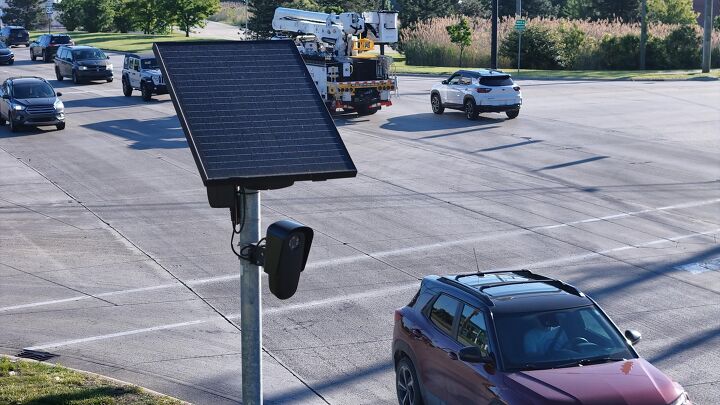
The Axon cameras that have been tapped to replace Flock are reportedly still inactive, meaning we’ll soon have another monthly data point to see if the trends continue. However, we doubt that the resulting information will change the minds of most people. The systems have been overwhelmingly unpopular with the public in general.
Denver has routinely seen town hall events packed with upset residents. Last year, Mayor Johnston even found himself being protested after opting to extend the city’s contract with Flock without the approval of the City Council and snubbing the task force that was created to work with voters to establish Denver’s public surveillance policy. We’re not sure running with Axon will make much of a difference in terms of boosting the popularity of traffic cameras.
[Images: bluestork/Shutterstock; D. Maulding/Shutterstock; Matthew G Eddy/Shutterstock]
Become a TTAC insider. Get the latest news, features, TTAC takes, and everything else that gets to the truth about cars first by subscribing to our newsletter.
via Autobuzz Today
Comments
Post a Comment