
New vehicle sales have been steadily declining since 2025 and the industry sentiment appears to be that this is fine. Despite there formerly being a push to return to the production volumes considered normal prior to 2020, automakers haven’t seemed terribly concerned that they’re still about a million customers shy of what was formerly considered normal. But that could change as the industry is assumed to continue shrinking into next year.
Viewed on a strictly annual basis, things look less bleak. New vehicle sales have improved dramatically since volumes cratered in 2020. They are also much higher than we saw during the 2008-2013 recession rebound. But they’re still about a million annual units below what we considered normal once that recovery period had ended.
From 2015 to 2019, the industry could reliably count on there being at least 17 million U.S. customers each year. While automakers have managed to rebound from the historic lows of 2022, which garnered just 13.6 million sales, last year’s 16.2-million new vehicle deliveries looks like it might have been the high water mark.
According to a recent report from the Wall Street Journal, the industry has grown pessimistic about 2026 seeing continued improvements in terms of new vehicle sales. It estimates that about a million U.S. customers have permanently abandoned the prospect of purchasing a new automobile and that automakers are having to come to terms with that. However, there’s an overwhelming sense that companies had intentionally engineered the situation.
The article states that automakers weren’t bothering to chase volume anymore, which is a claim that would be pretty difficult to argue against. Industry leadership has even stated as much, with CEOs repeatedly acknowledging that their core aspirations are to maximize shareholder value by improving profit margins. Manufacturers even posted record-setting profits well into the phase where volumes were being suppressed after 2020.
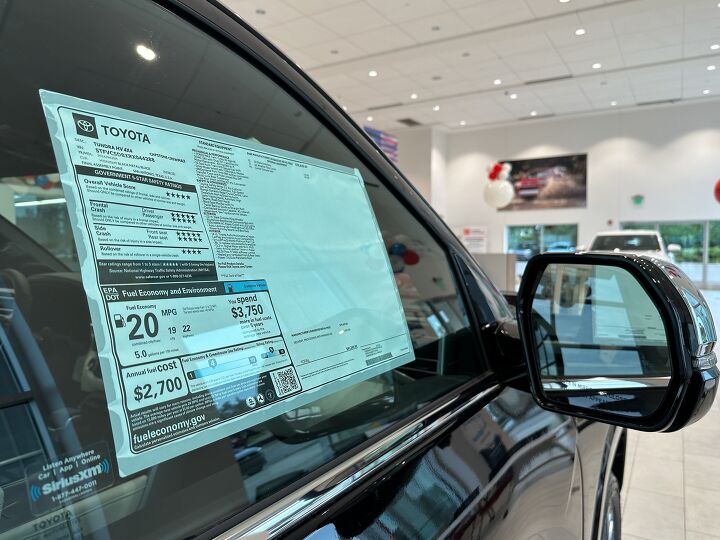
Being an automaker in 2026 isn’t so much about selling vehicles as ensuring that the product boasts sizable margins and can open up additional revenue streams by way of subscriptions and data brokerage. This is why companies have been adamant about their collective pivot toward connectivity features and software defined vehicles. It’s also one reason why we’ve seen automobiles growing in size over the past two decades.
If you’re willing to sell fewer goods, you need to make up the difference in terms of per-unit profitability and recurring billing for services that used to be baked into the purchasing price. But this is something we’ve seen from a plethora of multinational companies since about 2020. Practically all of them have been raising prices while attempting to integrate unnecessary connectivity features (when possible) that open up the door to subscriptions and lucrative data harvesting on their customers. Tech has likewise made modern products less user serviceable, forcing customers to replace units sooner or become further dependent upon the manufacturer.
These factors, along with the industry pushing the average new vehicle transaction price (ATP) to $50,000, have effectively barred more households from buying new vehicles. The bottom of the market has simultaneously been eliminated, with manufacturers culling affordable models to prioritize higher-margin products.
Roughly 10 years ago, the new vehicle market still had a smattering of sub $15,000 efficiency vehicles (e.g. Nissan Versa, Chevrolet Spark, Mitsubishi Mirage) on offer and loads of compact cars (e.g. Honda Civic, Toyota Corolla, Chevrolet Cruze) starting below $20,000.
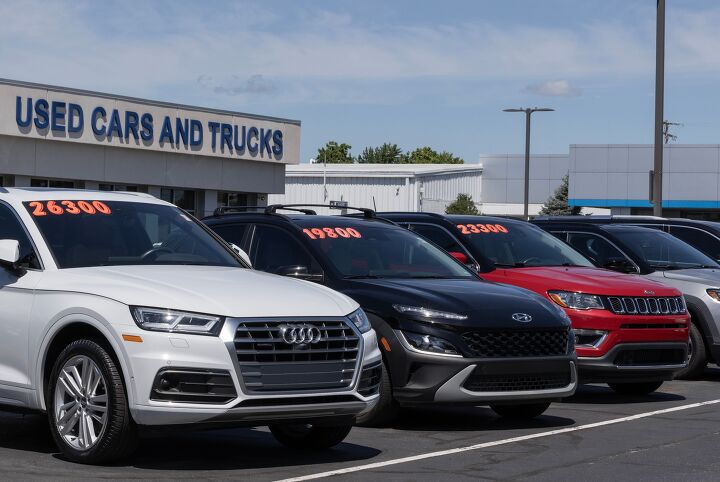
However, finding anything priced below $25,000 seems borderline impossible in 2026. The vast majority of what’s available on dealer lots will be marked closer to $50,000 and the few models that do start just north of $20,000 in their base trim will typically be equipped with the kind of features that encourage dealerships to tack on several thousand to the asking price.
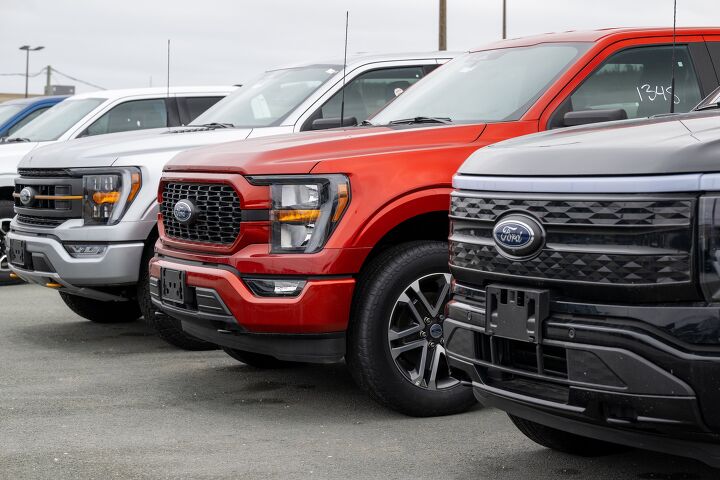
None of that is a coincidence. Automakers have carefully been positioning their lineups to maximize revenue at reduced volumes for years. Small cars were gradually removed from our market and larger, high-margin vehicles (mainly trucks, SUVs, and crossovers) were given priority. It’s a theory they were working on while volumes were high that ended up being tested in earnest after demand collapsed in 2020. The resulting takeaway was that the industry could indeed demand more money for automobiles, increasing profitability while keeping shareholders happy.
Unfortunately, this hasn’t worked out for would-be customers that have effectively been forced upmarket while their own earning potential has been decimated by every other company following similar trends. Prices are up across the board, whereas U.S. earnings have remained largely suppressed — at least insofar as the middle class is concerned.
But there’s a bottom to everything. Automakers may have been able to turn a profit while burning through billions of dollars via costly EV development programs and artificial intelligence. They may have even been able to stay profitable despite there being fewer people willing to buy new vehicles. However, it’s not obvious that they can continue on their current trajectory forever.
Shareholders can be fickle and there’s a sense that younger generations are less inclined to support businesses using the stock market. Demographics under 45 are likewise showcasing a clear disdain for things like artificial intelligence and companies that attempt to leverage technology to gatekeep who has ownership of products.
Meanwhile, general economic pressures continue to mount. Many households are being confronted with astronomical grocery bills and rising electricity prices. Vehicle repairs and fuel prices have risen to a point where it will undoubtedly influence purchasing decisions.

Both Cox Automotive and S&P Global Mobility have projected the United States will see about 15.8 million new vehicle sales through 2026. That’s a 2.5 percent decline against 2025, with many suggesting those estimates are wildly optimistic if finances don’t improve for the average American household. The only real silver lining seems to be that the market saw reduced demand for so long that there’s a meaningful subset of drivers simply needing to replace their aging commuter car.
At present, the average passenger car has been driving on American roads for a record-breaking 14 years. Part of this is due to the fact that the industry made some staggeringly reliable vehicles between the late 1990s and early 2000s. But it has also become clear that many people simply cannot afford to make new car payments.
Monthly car payments were approximately $770 per month at the start of 2026, with about 20 percent of the market spending over $1,000 per month. Meanwhile, subprime delinquencies are at a 32-year high and have contributed to there being 3 million vehicle repossessions per year. The issue has gotten so severe that repossession companies have extensive backlogs in certain regions.
Secondhand vehicles have also come up in price, with older models known for dependability fetching almost comically high sums. Interest rates on used cars have simultaneously come up — averaging between 7 percent and over 15 percent, depending upon the buyer’s credit score.
This paints a portrait where automakers could be in for a series of ultra-lean years if they fail to bring back affordable options. Unless companies are willing to import smaller global models from other markets, development of those vehicles would be years away. However, modern importation tariffs make that a tricky prospect and there’s still not much evidence that companies want to do that when they can still move high-margin SUVs and pickups.
Still, things could change. Demand for affordable vehicles is growing as the MSRPs of pickups and SUVs have ballooned to unsustainable levels. There’s only so much blood one can squeeze from a stone and we look to be approaching the outer limits of what’s realistically possible. We’ve even seen some brands reintroduce purchasing incentives, albeit less than we’ve historically come to expect when sales start to slip.
There’s a growing sense that this has all become a house of cards. Automakers have managed to prop themselves up using share price and per unit profitability while reducing overhead by streamlining operations (layoffs). But it’s not clear how long that can last when their customers are struggling to make payments. Staggeringly high interest rates, consistent inflation, rising fuel prices, and persistent tariffs are all shaping up to knock the whole thing over.
It’s not just the United States that’s struggling, either. Practically every Western market is shrinking for the exact same reasons. All the growth is happening in developing regions, like Southeast Asia, the Middle East, and South America, where customers can ironically still get affordable vehicles.
The only noteworthy exception in Western markets has been with hybrid vehicles, which more manufacturers have begun fielding as a way to cope with emissions compliance as customers shun pure EVs. Hybrid volumes have been surging globally, even doubling their market share in the United States, much in the same way they did prior to the Great Recession.
While much of the above all sounds pretty unappealing for would-be carbuyers, it does set the stage for there being more affordable models in the years to come. During the Great Depression (1929), many automakers had pivoted toward luxury models to maximize revenue. Those that weren't already fielding affordable vehicles (or happened to be large enough to buy out the brand that were) went under.
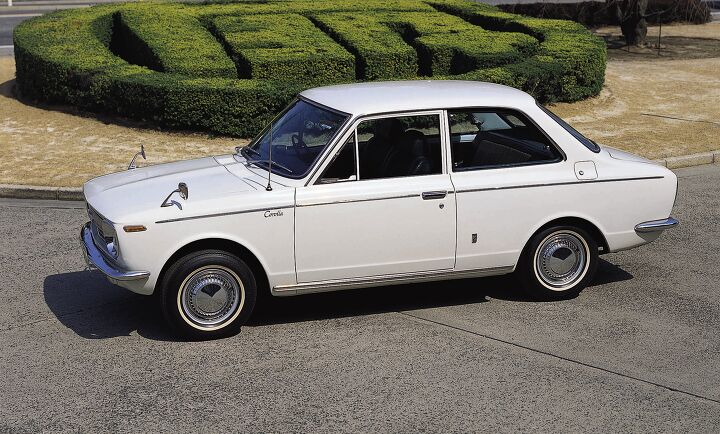
We saw something similar take place after the 1973 Oil Crisis, made worse by the subsequent recession and government regulations that handicapped large, domestic vehicles. This made room for Japanese automakers to take over a meaningful share of the market by simply offering small, simple vehicles with lower MSRPs and higher MPGs. But domestic nameplates also found themselves forced to navigate the new landscape by building competitive alternatives well into the 1980s.
As previously mentioned, all manufacturers placed an added focus on hybrids and affordable cars yielding higher volumes leading up to the Great Recession (2008). It seems plausible that would happen again if volumes remained suppressed to a point where the industry started to notice slipping profitability. Some would even argue that it’s already starting to take place to a limited degree.
However, we may still be years away from the market making sweeping changes to actually accommodate today’s customers. Automakers continue to act unconcerned with the prospect of there being reduced demand on developed markets. The industry likewise still seems wholly preoccupied with implementing as much tech as possible to normalize subscriptions and advanced driving assistance features at the expense of almost everything else. But there doesn’t seem to be a surplus of evidence that modern drivers are actually all that interested.
Speculatively speaking, manufacturers might need to endure several years of financial shortfalls before they start offering products that offer a solid value proposition. The same would be true of institutions that are currently running interest rates that would have been deemed criminal in many states prior to 1980. That may not happen until the stock market tumbles, buyers act extremely conservatively with their spending habits, and customers prove themselves unwilling to interface with modern connectivity features.
While that doesn’t paint the rosiest picture for the average driver, these could be the best markers that real adjustments to the industry are coming. We just hope it happens before there’s a slew of legacy nameplates verging on bankruptcy (asking for bailouts) and mobs of people protesting outside the homes of industry executives.
[Images: Keegan Divant/Shutterstock; Kenishirotie/Shutterstock; Dolores M. Harvey/Shutterstock; RuslanMN/Shutterstock; Toyota; Jonathan Weiss/Shutterstock]
via Autobuzz Today
Comments
Post a Comment