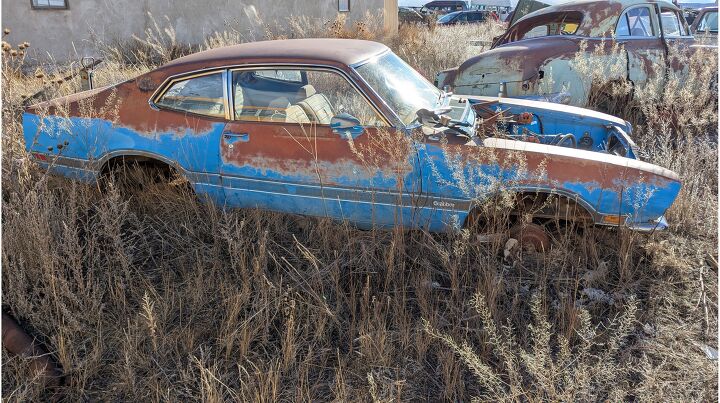
During nearly 20 years of documenting interesting junkyard machinery, I've written about a half-dozen discarded examples of the original Ford Maverick (plus four of the Maverick's Mercury-ized siblings). None of those cars had the Grabber trim package, disappointingly, but now I've found a genuine Grabber in a New Mexican boneyard.
The Grabber package was available for the 1971 through 1975 model years. If you want to get respect for a restored Maverick at a traditional American car show (featuring Time Out dolls mashing their faces against 1968-1972 Chevelle fenders, the Commander Cody cover of "Hot Rod Lincoln" blaring from the public address system on endless repeat, plastic hamburgers on drive-in trays), then that car must be a clean Grabber.
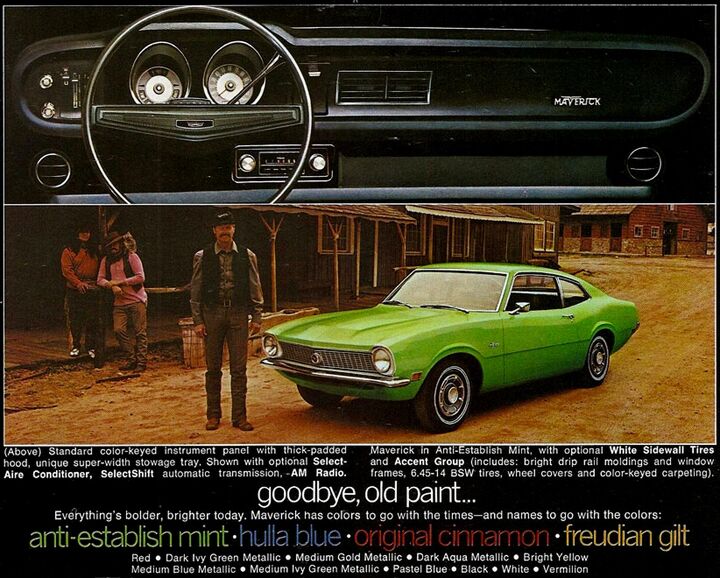
That's because the Maverick was a cheap compact that never had a genuine high-performance production version from the factory. It was available with some slightly rebellious paint color names (Anti-Establish Mint, Hulla Blue, Original Cinnamon and Freudian Gilt) but otherwise an invisible commuter.
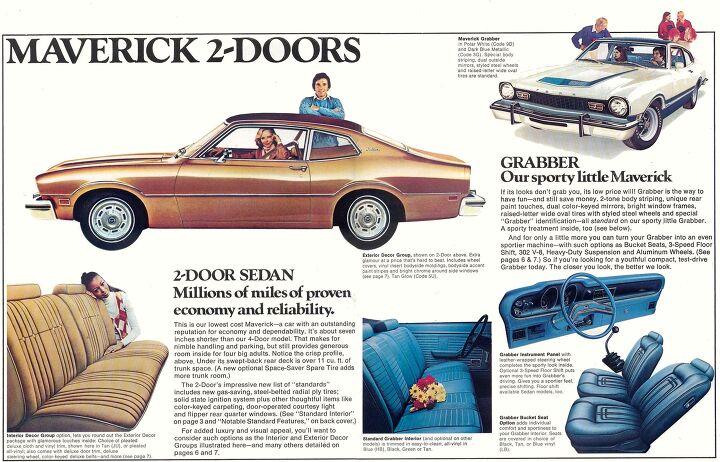
In the early 1970s, the way to make your cheap commuter seem a little cooler and youthful was to make it look something like a muscle car. The Grabber had the hood scoops/bulges and graphics of a Mustang Mach 1 or Super Cobra Jet Torino but without the fat list price … and also without the wild powertrain.
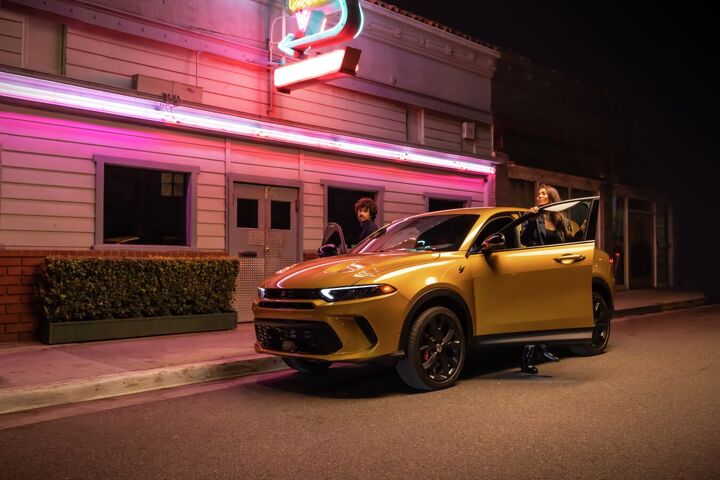
Today, automotive marketers assume that young car buyers (and old car buyers who want to look like they have youthful attitudes) want a crossover that looks outdoorsy and vaguely military when shopping for a cheap commuter. It's the same idea as the Maverick Grabber, because people want to look cool while driving, even if they aren't rich.
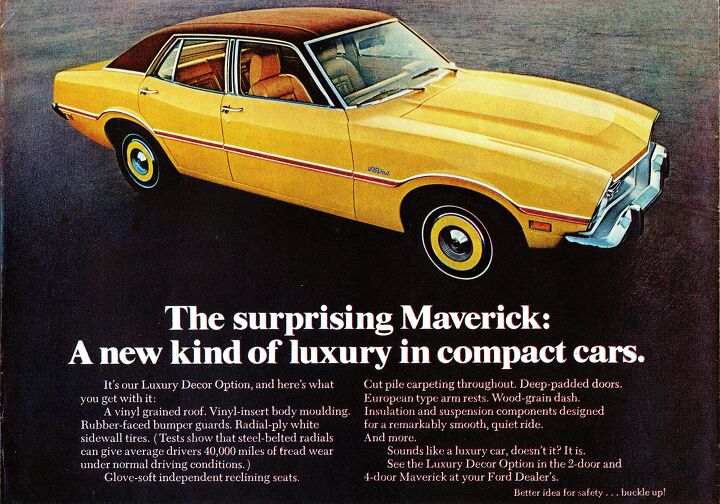
Oh, sure, Mavericks make great drag cars ( especially the four-door models) and you'll turn heads on cruise night with a hot-rodded Maverick stuffed with a built 460. If you want a stock Maverick that impresses the traditionalists sitting on their coolers at the nostalgia-drenched car show, however, the Grabber is the best choice.
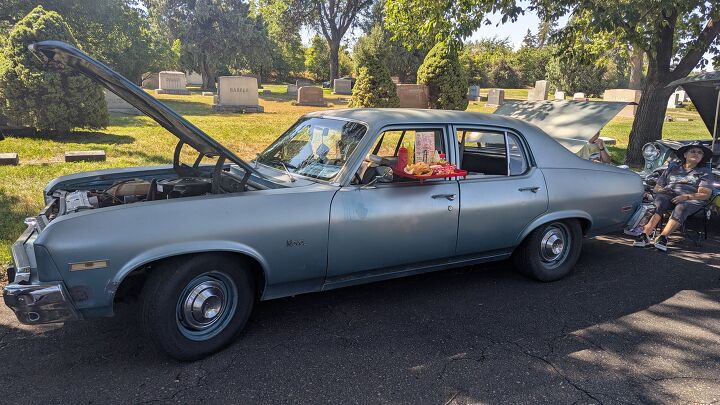
I'd have a lot more fun at car shows if they had many more affordable Detroit sedans of the 1945-1975 period, preferably base models with three-on-the-tree manuals and non-V8 engines. I recognize that this is not a widely held sentiment. OK, end of digression!
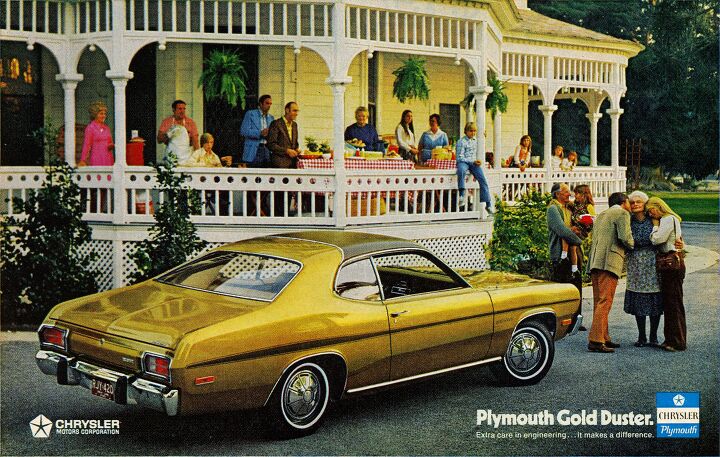
Ford's competitors also got into the game of selling cheap, sporty-looking two-door compacts during the early 1970s. Chrysler offered various A-Bodies (e.g., Duster, Scamp, Demon, Swinger), AMC had the Hornet hatchback and GM sold kicky trim packages for the Nova.
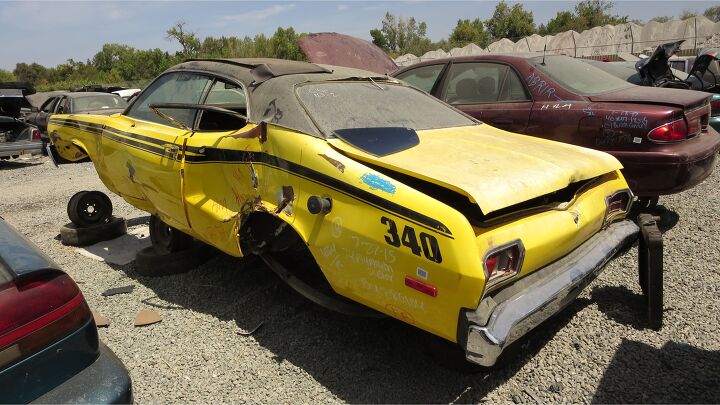
The important difference between those cars and the Maverick was that buyers could get genuine high-performance versions (by the standards of the era). The largest-displacement motor ever offered in the Maverick was the 302-cubic-inch Windsor V8, and even that option wasn't made available until the second model year.
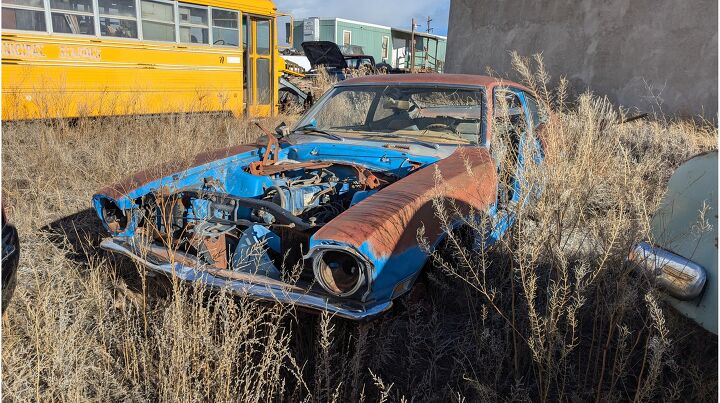
Now we'll take a closer look at this car, which is sufficiently rough that I wouldn't have bothered to shoot if it hadn't been a Grabber. The door with the build tag was gone, so I couldn't get an exact year of manufacture.

I found this car at Aguirre Salvage, which is mostly about metal recycling but has some old iron here and there.
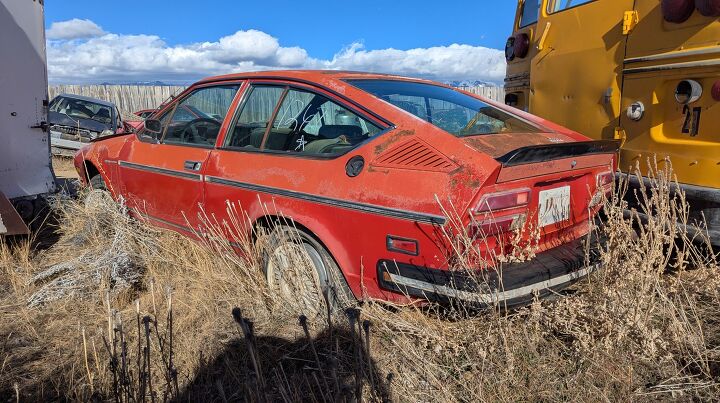
I shot a fairly complete 1978 Alfa Romeo Sprint Veloce during my visit, but I have been told that it got crushed. Maybe the Grabber, which was nearby, got crushed as well.
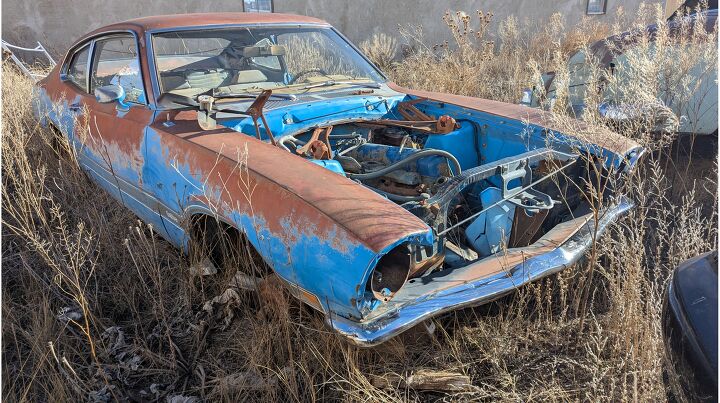
It has the original small bumper, so it's almost certainly a 1971 or 1972 model.

The MSRP for the 1971 Maverick Grabber with three-on-the-tree manual transmission and 170-cubic-inch straight-six engine started at $2,354, or about $19,752 after inflation. The Grabber Blue paint (apparently not the same as Hulla Blue) and "Grabber Racing Stripes" cost extra.
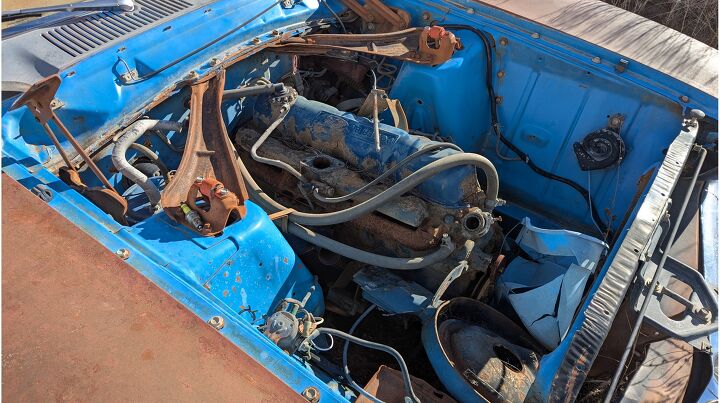
This car has some flavor of Ford straight-six, which could be the 170, the optional 200 or another size that got swapped in later in life (either a 144 or a 250). I didn't feel like checking casting numbers because it was a freezing and windy February day in northern New Mexico, sorry.
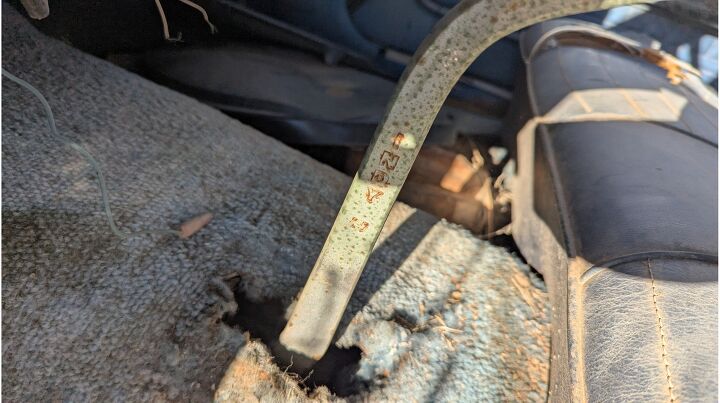
The only transmission choices for the 1971 Maverick were a three-speed manual and a three-speed automatic. This car is manual-equipped, with an old Hurst Indy shifter.
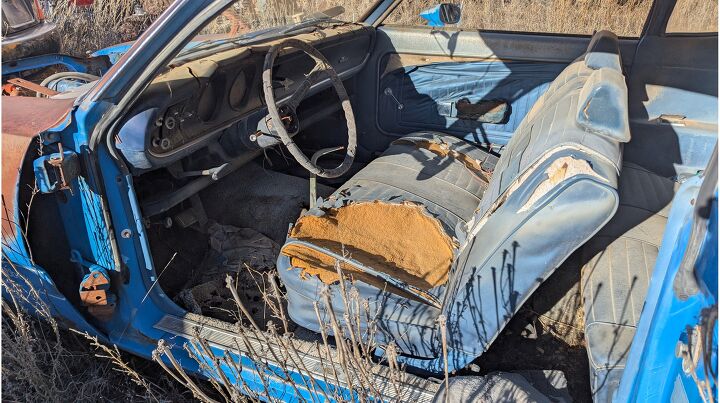
The interior is nuked beyond redemption by all those years in the high-desert sun.
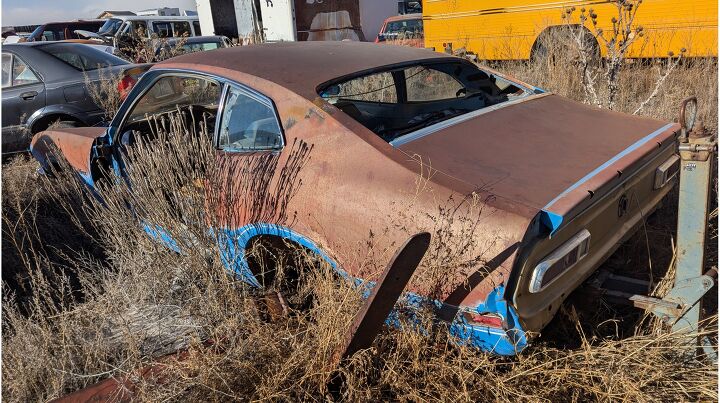
The left side has had more paint burned off than the right, so we can assume that it faced south for decades.
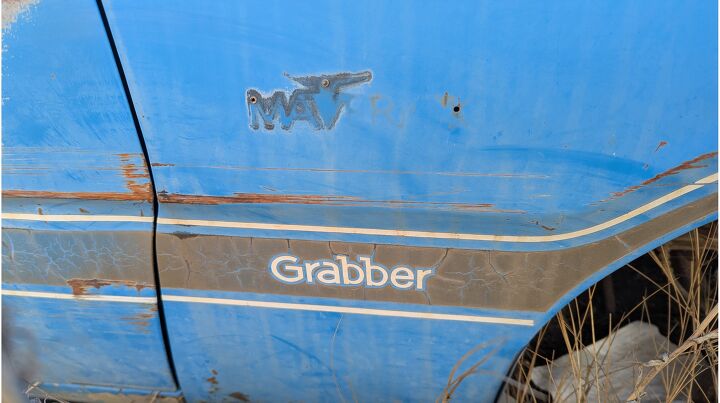
A 1971 Ford Maverick Grabber in a New Mexico junkyard.
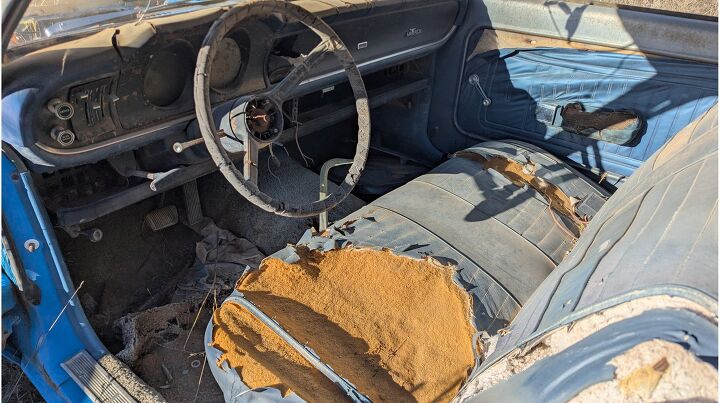
A 1971 Ford Maverick Grabber in a New Mexico junkyard.
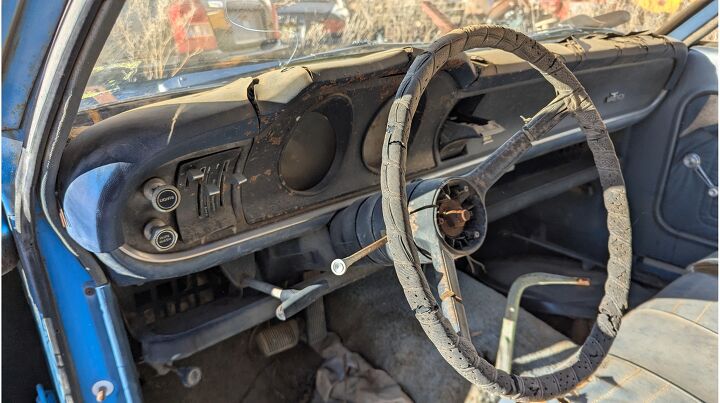
A 1971 Ford Maverick Grabber in a New Mexico junkyard.
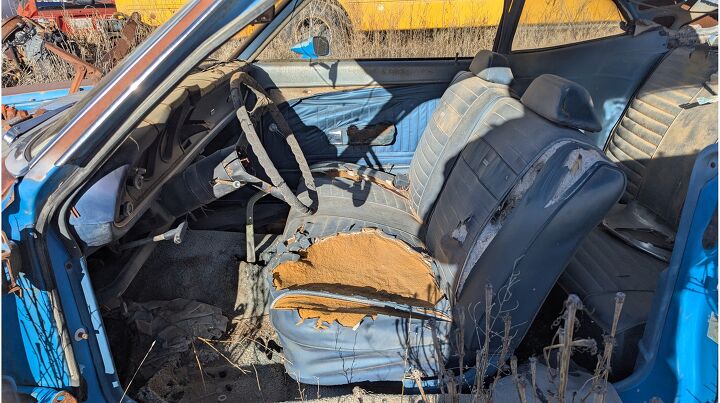
A 1971 Ford Maverick Grabber in a New Mexico junkyard.
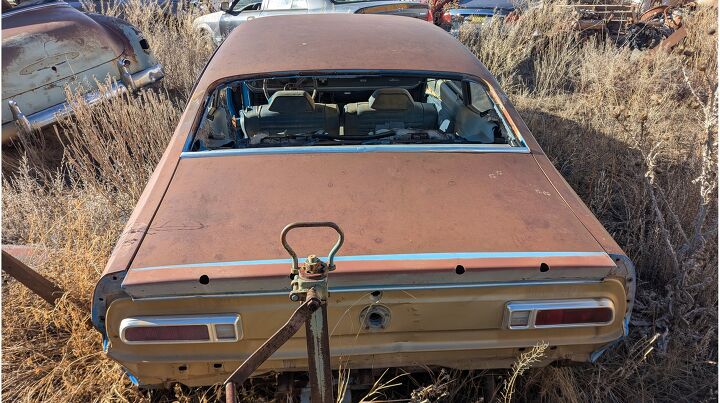
A 1971 Ford Maverick Grabber in a New Mexico junkyard.
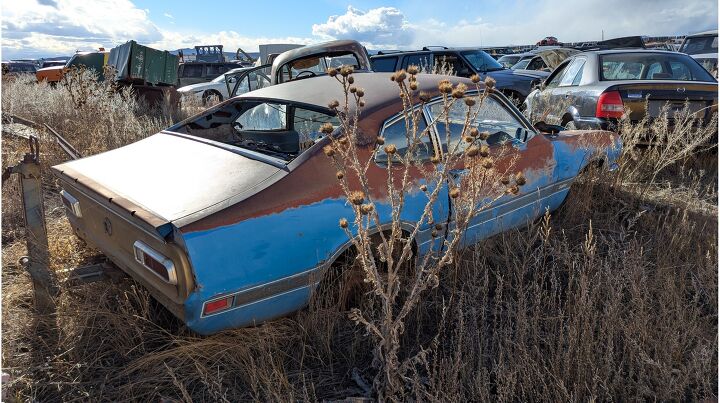
A 1971 Ford Maverick Grabber in a New Mexico junkyard.
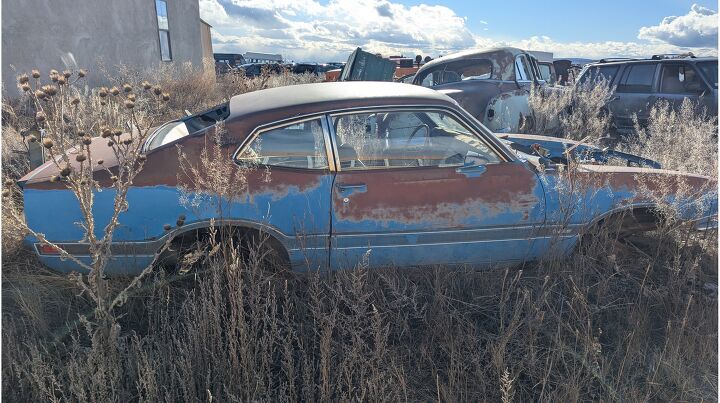
A 1971 Ford Maverick Grabber in a New Mexico junkyard.
via Autobuzz Today
Comments
Post a Comment