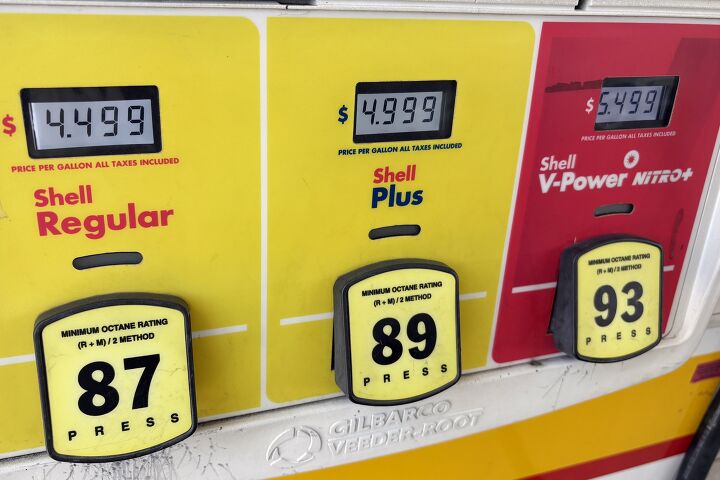
More drivers are reportedly running back to 87 octane as so-called premium fuels continue to outpace North America’s already surging fuel prices.
While literally everyone has noticed fuel prices surging this year, many might have missed the widening gap between regular and premium grade gasoline. If you’re someone who exclusively owns vehicles where the manufacturer recommends running 87 octane, then you’d have little reason to track the price of something like 93 octane. However, if you’re like me and happen to own naturally aspirated and turbocharged automobiles, then you’ve undoubtedly noticed and are presumably quite displeased.
According to Bloomberg, daily sales of premium gas declined by roughly 5 percent between February and June of this year. This is interesting because high-octane gasoline has only become more popular over the years and this is also the period where the United States experienced a sudden spike in fuel prices.
The outlet also noted that, from June 22-25, midgrade sales were down slightly whereas regular gas sales were up by around 10 percent. This is a pretty drastic change from the last decades, where the sale of higher-octane gasoline had increased from being less than 10 percent of all sales in 2014 to representing nearly 16 percent of the whole by 2025.
The popularity of premium fuels is the direct result of automakers fielding more turbocharged and high-compression engines. Meanwhile, rising fuel prices have been attributed primarily to the U.S. and Israeli attacks on Iran that resulted in the closure of the Strait of Hormuz. A speculative oil market being impacted by other global conflicts and some temporary panic has exacerbated the issue. But nobody seems able to pin down exactly what’s causing higher-octane fuels to become significantly more expensive.
Premium fuels had typically retailed for roughly 10-25 cents more per gallon than 87 octane until about 2014. While certainly not equal, the difference was small enough to presumably be offset by automakers moving to smaller turbocharged engines in an effort to achieve emissions compliance. Drivers may have had to do more maintenance on those vehicles and purchase pricier fuels. But they were likewise getting something that should have theoretically gotten better fuel economy and/or offered a little more power.
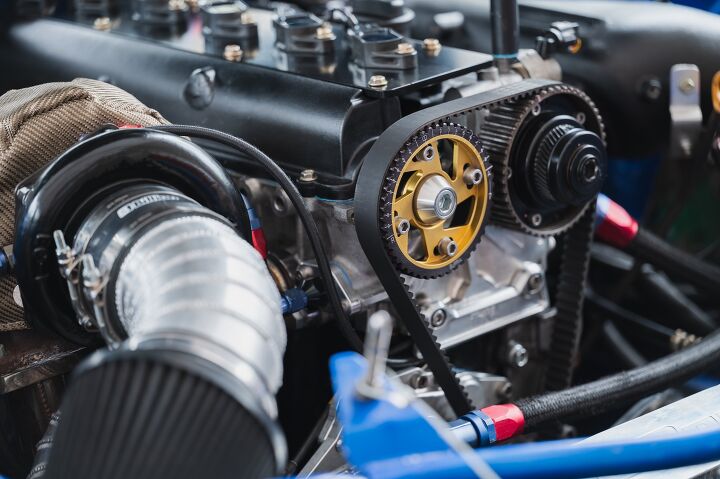
After 2014 we can see premium fuels began to exponentially distance themselves from 87 octane. They would typically retail for over 70 cents more per gallon by the start of 2020 and the difference is now over a dollar in many parts of the United States. This drastically undermines any value propositions associated with turbocharging and undoubtedly explains why more drivers now appear to be shunning premium fuels for 87 octane.
If you’re wondering why premium blends became so much more expensive, there are several possible explanations. As previously mentioned, demand went up as more vehicles became turbocharged. But federal regulations also changed to reduce the content of materials (e.g. sulfur) that were assumed to emit harmful chemicals. In many cases, this reduced the octane content of blended fuels and encouraged refineries to tweak their blends and start incorporating more ethanol. However, ethanol comes with some drawbacks (which we’ve covered before) in terms of localized pollution, vehicle maintenance, storage, and fuel economy. Ethanol also tends to cost a little more, albeit not enough for it to make a significant difference at the pump.
The assumption is that gas stations may just be marking up premium fuels because they can. The Energy Information Administration (EIA) did an analysis in 2018 showing the difference in retail prices was significantly larger than wholesale. CNN recently noticed this and suggested since more vehicles now require higher octane blends, stations have capitalized on those customers by raising prices.
We can even see this being done via marketing. Higher octane fuels are often given labels that would indicate that they’re of a higher quality than “regular” 87 octane. This encourages some drivers to fill up with “premium” grades even when their vehicle will see no practical advantage. But the reality is that it’s always best to run whatever fuel rating the manufacturer recommends. If that’s 87 octane, there’s absolutely no reason to put 93 octane into your fuel tank.
If you happen to own a turbocharged/high-compression vehicle that’s engineered to run higher-octane fuels (typically 91 or above), running 87 could be a serious problem — especially if you’re doing it all the time. However, many modern vehicles can now automatically adjust ignition timing to mitigate engine damage. While you’ll undoubtedly notice reduced acceleration and worsening fuel economy, it’ll help save your turbocharged vehicle from immediately knocking itself into oblivion.
For those wondering if they should swap to 87 octane to save themselves money, it depends entirely on what they’re driving. Review the above paragraphs and do whatever you need to avoid incurring engine knock. If you have a naturally aspirated vehicle that’s optimized for 87 octane, then you shouldn’t be running anything higher anyway. The inverse should be true for those with turbocharged cars, unless the manufacturer specifically states that they’re capable of utilizing lower-octane fuels without issue. Even still, we’d caution against doing this all the time without conducting some extensive research beforehand.
[Images: Adam McCullough/Shutterstock; Mdisk/Shutterstock; Matt Gush/Shutterstock]
Become a TTAC insider. Get the latest news, features, TTAC takes, and everything else that gets to the truth about cars first by subscribing to our newsletter.
via Autobuzz Today
Comments
Post a Comment