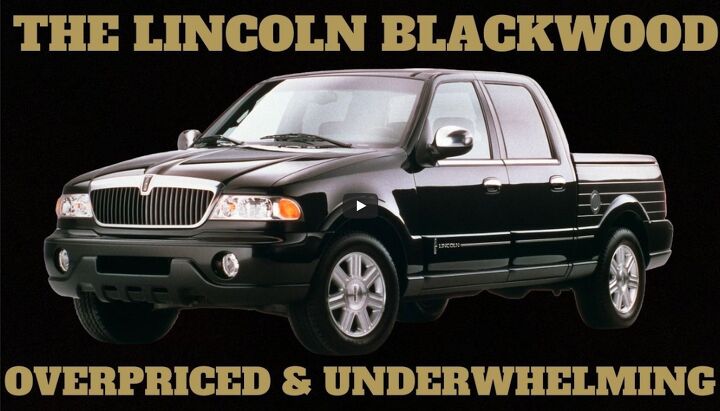
Lincoln stated that they expected to be able to sell 18,000 Blackwoods per year based off the reception of the concept vehicle.
Had Lincoln stated the Blackwood would cost north of 50K the reception would have much, much colder. This is a story of product development without proper research. The Lincoln Blackwood delivered a truck without a useful bed or 4 wheel drive and ultimately was a vehicle no one wanted.
The TTAC Creators Series tells stories and amplifies creators from all corners of the car world, including culture, dealerships, collections, modified builds and more.
An AI-generated transcript summary edited by a staffer is below.
[Image: Tony's Fords and Mustangs/YouTube]
Become a TTAC insider. Get the latest news, features, TTAC takes, and everything else that gets to the truth about cars first by subscribing to our newsletter.
Summary: The Rise and Fall of the Lincoln Blackwood
This video examines the short-lived 2002 Lincoln Blackwood, Lincoln's first and only pickup truck, explaining how it evolved from a promising concept into one of the brand's biggest commercial failures.
Origins
- The success of the 1998 Lincoln Navigator, which helped Lincoln outsell Cadillac for the first time in more than a decade, encouraged Ford to expand Lincoln into new luxury vehicle segments.
- The Blackwood concept debuted at the 1999 North American International Auto Show in Detroit and later appeared at the Los Angeles Auto Show.
- Ford marketed it as the "ultimate utility vehicle," blending pickup-truck capability with Town Car luxury.
- Positive public reaction to the concept convinced Ford executives to approve the vehicle for production.
Design and Features
Built on the 10th-generation Ford F-150 platform, the production Blackwood combined:
- Navigator front-end styling, including the signature grille and hood.
- F-150 cab with unique Lincoln body cladding.
- An exclusive enclosed cargo box replacing a traditional pickup bed.
The concept's African Wedgewood side panels were replaced in production by composite laminate panels to reduce costs.
The cargo area featured:
- Power-operated tonneau cover.
- Side-opening 50/50 rear cargo doors.
- Waterproof composite construction.
- Carpeted interior with polished aluminum trim.
- LED lighting.
- Just 26 cubic feet of cargo capacity.
The truck was sold in only one configuration:
- Black exterior only.
- Single trim level.
- Four-passenger (2+2) seating.
Luxury Interior
The cabin borrowed heavily from the Navigator and included nearly every luxury feature Lincoln offered:
- Heated and cooled leather front seats.
- Memory-adjustable pedals.
- Dual-zone climate control.
- Wood and leather steering wheel.
- Premium Alpine audio system with cassette and six-disc CD changer.
- Real wood interior trim.
- Power accessories throughout.
The only factory option was a navigation system with a 5-inch LCD screen.
Powertrain
The Blackwood was powered by:
- 5.4-liter DOHC InTech V8
- 300 horsepower
- 355 lb-ft of torque
- Four-speed automatic transmission.
- Rear-wheel drive only.
- Independent front suspension with leaf-spring rear suspension and load-leveling airbags.
- Four-wheel ABS disc brakes.
- 5,700-pound curb weight.
- Class III towing capability.
Pricing started at approximately $51,800, rising to about $52,500 with navigation.
Lincoln also produced 50 Neiman Marcus Edition models featuring exclusive luxury upgrades including embroidered headrests, a console cooler/warmer, and a rear-seat DVD player.
Contemporary Reviews
Car and Driver praised:
- Smooth ride quality.
- Quiet luxury.
However, reviewers criticized:
- Vague steering.
- Soft suspension that hurt braking performance.
- Confusing, impractical cargo area.
The magazine recorded:
- Zero-to–60 mph in 8.1 seconds
Why It Failed
The presenter argues the Blackwood failed because it satisfied neither truck buyers nor luxury sedan buyers.
Poor truck utility
- Enclosed cargo box couldn't carry tall items.
- Raised cargo floor reduced usable space.
- Cargo capacity was far smaller than a normal pickup.
- Permanent tonneau and side-opening doors limited practicality.
- Rear-wheel drive only made it unattractive in snowy climates.
Poor luxury value
Compared to a Lincoln Town Car:
- Cost more.
- Seated only four instead of five.
- Offered worse ride, handling, braking, and performance.
Compared to other Ford products:
- An F-150 XLT cost roughly $23,000, meaning buyers could purchase two F-150s for the price of one Blackwood.
- A better-equipped Navigator was also significantly less expensive while offering greater versatility.
Additional drawbacks included:
- Available only in black.
- No trim choices.
- No four-wheel-drive option.
Production Problems
Manufacturing issues compounded weak demand.
- Cargo boxes were supplied by Magna, which initially delivered only 451 units, delaying production.
- Ford ultimately changed suppliers, but by then demand had already fallen well short of expectations.
Sales Results
- Produced for only the 2002 model year.
- Lincoln sold 3,383 Blackwoods.
- Some remained unsold until 2004, highlighting the vehicle's poor market acceptance.
Overall Conclusion
The presenter concludes the Lincoln Blackwood was a fundamentally flawed product that attempted to merge luxury sedan comfort with pickup utility but excelled at neither. Its high price, limited practicality, rear-wheel-drive-only configuration, lack of customization, and awkward cargo design made it unattractive to both traditional truck buyers and Lincoln's existing luxury customers. While the Navigator successfully expanded Lincoln into the SUV market, the Blackwood became one of the company's most notable commercial failures and is remembered today as an ambitious but misguided experiment.
via Autobuzz Today
Comments
Post a Comment