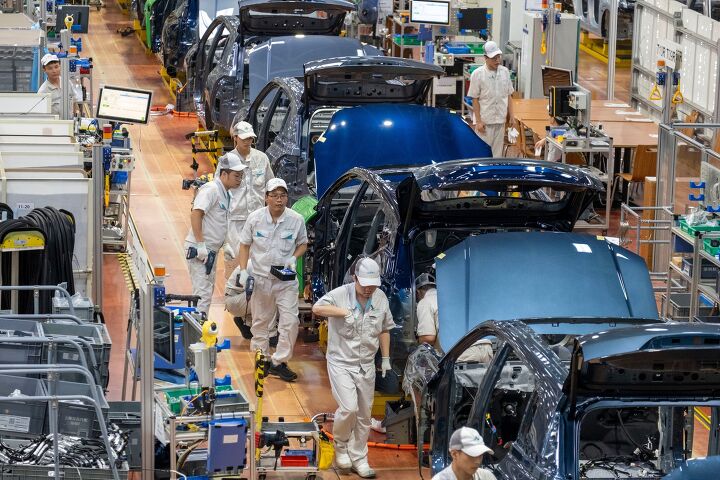
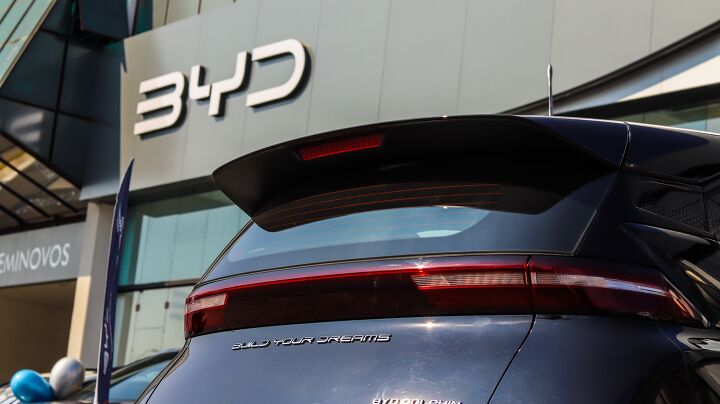
Next week, the Senate Commerce Committee will be voting on legislation that would prohibit Chinese automakers from selling their vehicles inside the United States. This is despite the fact that those cars are already banned from being sold here, even though select models have still managed to slip through the cracks.
Dubbed as the “ Connected Vehicle Security Act of 2026,” the bill focuses primarily on safeguarding the U.S. economy from a claimed influx of Chinese vehicles. Politicians have chanted this mantra before, while also issuing warnings about how foreign intelligence could weaponize connected vehicles. This bill is supposed to tackle both issues by giving the government the ability to ban certain automobiles. But it’s not immediately clear what’s new about any of this.
The Biden administration previously implemented regulations restricting connected-vehicle hardware and software linked to China on the grounds that the requisite data sharing presented a national security risk. It likewise worked to subsidize the automotive and energy sectors in an effort to spur domestically produced electric vehicles as Chinese-made EVs gained traction elsewhere in the world.
Those bans would formally come into effect at the start of 2025, with Donald Trump imposing even more tariffs on Chinese-made cars shortly thereafter. More recently, the president has criticized Canadian Prime Minister Mark Carney for negotiating a deal with President Xi Jinping that would permit up to 49,000 Chinese EVs to be imported into Canada annually at a 6.1 percent tariff rather than the standard 100 percent.
Needless to say, opposing vehicles coming out of China has been a largely bipartisan issue. Whether the focus is on protecting domestic manufacturers or cautioning against foreign intelligence gathering via connected vehicles, it’s easy to find someone inside the U.S. government that’s making a stink about Chinese vehicles.
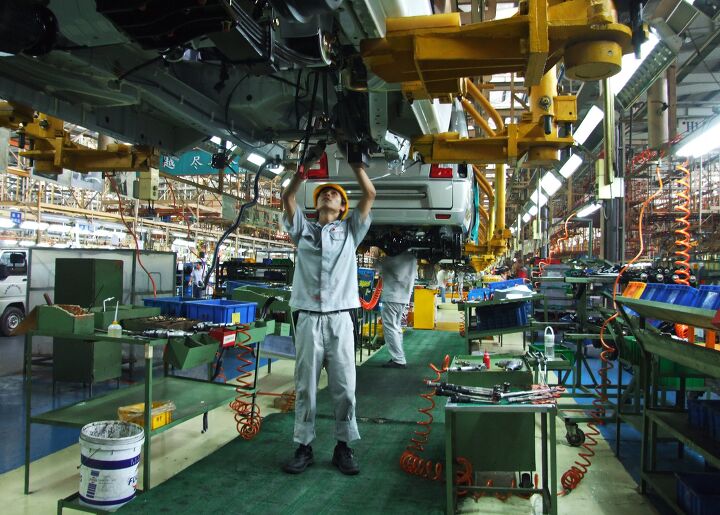
Considering China likewise protects its own industrial interests, this is arguably fine. But it’s not likely to encourage Western manufacturers to become more competitive and the resulting rules don’t appear to be implemented all that consistently inside the U.S.
We previously covered how these rules would be pushing Polestar out of the U.S. market by 2027 for failing to adhere to the above content rules. However, Volvo Cars was deemed acceptable despite both companies being majority owned by China’s Geely while also sharing a lot of their Chinese-sourced hardware/software.
Explanations as to why Volvo got a pass revolve around the automaker issuing numerous assurances U.S. regulators found to be agreeable. The biggest of these was the fact that Volvo uses European servers for its data while Polestar is more dependent upon centers located in China. This is presumably something the latter automaker could have changed, leading many to assume that the U.S. is playing favorites or that Polestar wanted a good excuse to get out of a market that had not been particularly kind.
But we have domestic manufacturers that already use loads of Chinese-sourced parts, they just tend not to be purchased directly from Chinese companies. For example, China’s SMIC manufactures semiconductors for scads of global companies that serve as parts suppliers for domestic automakers. While the resulting parts may not be considered Chinese, they’re likely to have some Chinese-made chips embedded within them. The question is whether this poses some inherent security risk sufficient to have those vehicles banned.
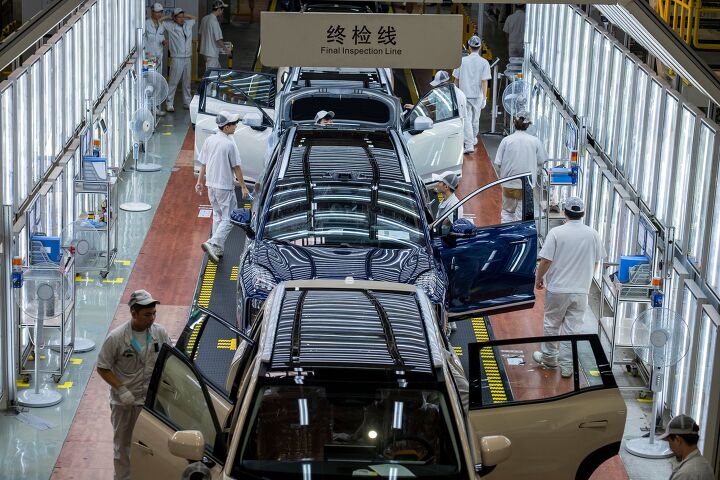
Things get even more complicated when you consider that loads of automotive brands have joint ventures with China that require extensive technology sharing (e.g. SAIC-GM). There are even examples of domestic models that were built in China and sold inside the United States. For example, Ford has been petitioning the Commerce Department in a manner similar to Volvo to make sure the Lincoln Nautilus can be sold within the U.S. after 2027. This is despite the vehicle being assembled in China.
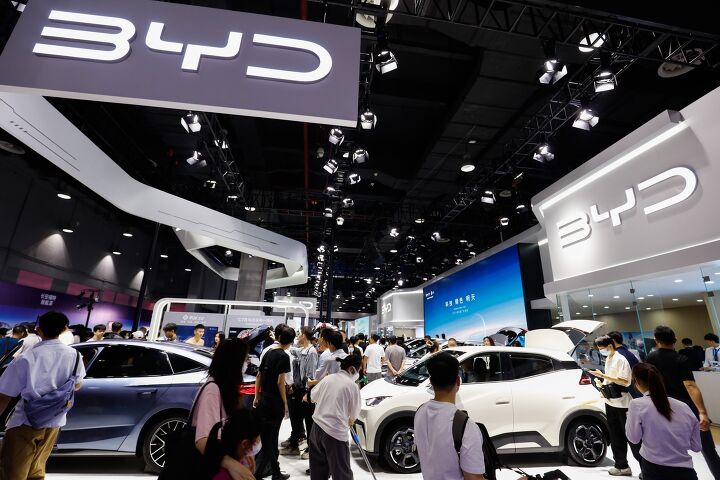
The Connected Vehicle Security Act of 2026 looks to be an attempt to increase government control over what’s allowed to come into this country.
Proposed by Senators Bernie Moreno (R-Ohio) and Elissa Slotkin (D-Michigan) in April, the legislation is supposed to ban “foreign adversary vehicles” by prohibiting the importation, manufacturing, sale, and resale of connected vehicles, software, and hardware linked to China or any “other foreign adversaries.” This leaves the door open for subsequent vehicle bans based upon whoever the federal government doesn’t like at the present time.
Additionally, the bill seeks to give the Department of Commerce more power to unilaterally block technologies it seems particularly risky. It likewise mimics preexisting restrictions on foreign-sourced software that will be taking effect in 2027 and the subsequent hardware restrictions.
If you’d like to read the full text of the proposed legislation, it’s refreshingly short and not one of those 1,000-page omnibus documents we’re pretty sure most senators don’t even bother to read. But the gist is that it makes the claim that connected vehicles pose vulnerabilities that need to be addressed and that the growth of China’s automotive market has become a threat to legacy automakers, which undoubtedly lobbied to advance this bill.
Slotkin’s involvement and voting history practically guarantees this. Even without her, we already know that the Alliance for Automotive Innovation supports the core components of the bill. General Motors even went out of its way to praise the legislation from the moment it was introduced.
“GM commends Senators Moreno and Slotkin on the introduction of the Connected Vehicle Security Act of 2026,” stated the company. “General Motors supports policies that protect and strengthen American manufacturing and the global competitiveness of U.S. automakers, and we remain committed to long-term investments in our domestic workforce, facilities, and technology. As we have said many times, we can compete with anyone in the world when we are given a level playing field. We look forward to continuing to work with both offices through the legislative process.”
Automakers simply want enough time to adjust their supply chains to accommodate the new restrictions. Afterwards, they’ll be able to enjoy a scenario where their growing Chinese competitors lack access to a significant automotive market.
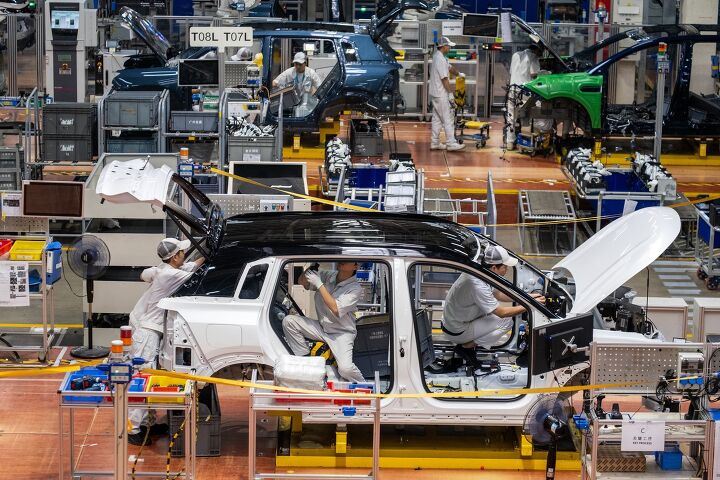
Meanwhile, the U.S. gets to crack down even harder on connected vehicles that “incorporate advanced information and communications technologies that collect, process, and transmit vast amounts of sensitive data, including geolocation, operational, and personal information, and are capable of being remotely accessed and controlled” by piggy backing on Executive Order 13873.
Issued by Trump in 2019, the executive order basically set the stage for the Department of Commerce to control trade tied to connected services deemed relevant to national security issues. However, since practically all vehicles sold in the United States now offer extensive levels of connectivity, the resulting rules can theoretically be applied extremely broadly. Unless the Connected Vehicle Security Act of 2026 undergoes some fine tuning, that will probably remain the case.
“Chinese cars are a serious threat to America’s national security and Michigan’s economic security,” said Slotkin in a release. “Chinese cars are surveillance packages on wheels, with the ability to collect on American citizens and sensitive sites. The Chinese Communist Party’s playbook of heavily subsidizing their product, underselling the competition, and then having a monopoly over that sector puts Michigan’s auto industry and our millions of workers at risk. We need to act now, and get this right. I look forward to continued work on this bill with Senator Moreno, our workers, our manufacturers and anyone else to stop Chinese vehicles from ever coming into the United States.”
One could make the same argument about American automobiles, which have likewise become “surveillance packages on wheels.” We also know that the U.S. government has paid an estimated $42 billion in cumulative subsidies to the automotive sector over the last three decades. This was the direct result of industry bailouts, EV related subsidies, grants awarded for retooling old factories, grants awarded for pursuing novel technologies, tax breaks for building new facilities, and more.
One could argue all day about whether that’s been a good or bad thing for the country. However, it seems reasonable to assume that the legislation could help bolster domestic employment — which is harder to criticize.
Global supply chains have outsourced a significant amount of U.S. labor over the years and strictly prohibiting where vehicle hardware and software stems from should help bring back some jobs. But it’s not quite a guarantee and we have no way of knowing how the government will implement these rather vague content rules. While the legislators make it sound like they’re drawing a hard line in the sand, the actual legislation makes it seem like the Commerce Department can do whatever it wants.
Regardless, leadership from the United Auto Workers (UAW) seems reasonably pleased with what the bill is supposed to offer.
“Our national and economic security relies on a strong US auto industry,” said UAW President Shawn Fain in a release. “The American Dream was launched and sustained out of good union auto jobs here in the United States. If we want to rebuild U.S. manufacturing and raise standards for the working class, we can’t keep offshoring and outsourcing our auto industry, driving a global race to the bottom for short term corporate profits. Our U.S. auto industry must invest in cutting-edge technology and build affordable, high-quality vehicles for the American consumer, built by UAW autoworkers. We can’t keep selling out the U.S. working class to transnational corporations that have no respect for labor rights. By building on and strengthening the existing connected vehicles rule, this legislation puts common sense guardrails on a major threat to our nation’s auto industry.”
Properly implemented, these rules may indeed bolster domestic jobs and ensure that foreign entities cannot control the kind of sensitive data obtained by modern vehicles. But none of the pending or preexisting legislation seems to do much about securing American drivers’ domestic privacy or establishing a regulatory framework that sets any hard rules for what will and will not be allowed.
Fain may claim that the legislation offers “common sense guardrails” but the relevant documents effectively just give the federal government the ability to limit vehicle tech from China, Russia, Iran, North Korea, and any other nation someone decides to add to that list at a later date. Our presumption is how that’s conducted will depend on whoever happens to be running the Department of Commerce at the time.
We do know that the bill wants to make special exemptions for test vehicles. Restrictions are only supposed to pertain to automobiles being sold or resold (possibly showcasing concerns about future Chinese EVs stemming from Canada) inside the United States.
Based on the legislation, the Secretary of Transportation, the Secretary of State, and the Secretary of Energy will also be influential in terms of decision making — with the Federal Communications Commission (FCC) and “other relevant Federal agencies” helping to establish scope. However, we cannot possibly use that information to predict how that might impact the subsequent vehicle bans.
But these are still early days for the bill. The Senate Commerce Committee is scheduled to vote on the Connected Vehicle Security Act of 2026 on July 15. Should they approve the bill, which seems likely, it’ll then see numerous reports and revisions as it’s placed on the Senate Legislative Calendar.
[Images: Ringo Chiu/Shutterstock; Alexander Gafarro/Shutterstock; humphery/Shutterstock; Ringo Chiu/Shutterstock; rafaelnlins/Shutterstock; Ringo Chiu/Shutterstock]
Become a TTAC insider. Get the latest news, features, TTAC takes, and everything else that gets to the truth about cars first by subscribing to our newsletter.
via Autobuzz Today
Comments
Post a Comment